
1. Meaning of Drawing
Drawing is the process of creating pictures, shapes, or images using lines and marks on a surface.
Drawing materials include pencils, charcoal, crayons, pastels, and pens.
2. Meaning of Painting
Painting is the process of applying color to a surface to create an artistic image or composition.
Materials used in painting include paint, brushes, palettes, water, and suitable painting surfaces.
3. Meaning of a Picture Composition
A picture composition is the arrangement of visual elements within an artwork.
A composition may include people, buildings, trees, hills, rivers, animals, and other objects.
4. Meaning of Harmony and Unity
Harmony is a principle of art achieved when visual elements relate pleasingly to one another.
Unity occurs when the elements of an artwork appear connected and work together to create a complete composition.
Harmony and unity can be achieved through:
- Repetition of colors.
- Use of related colors.
- Similar shapes.
- Consistent patterns.
- Balanced arrangement.
- Related textures.
- Common themes.
- Appropriate proportions.
5. Difference Between Harmony and Unity
|
Harmony |
Unity |
|---|---|
|
Concerned with pleasing relationships between elements. |
Concerned with the overall sense of completeness. |
|
May be achieved through related colors or shapes. |
Achieved when all parts work together. |
|
Creates visual agreement. |
Creates a coherent whole. |
6. Meaning of a Color Wheel
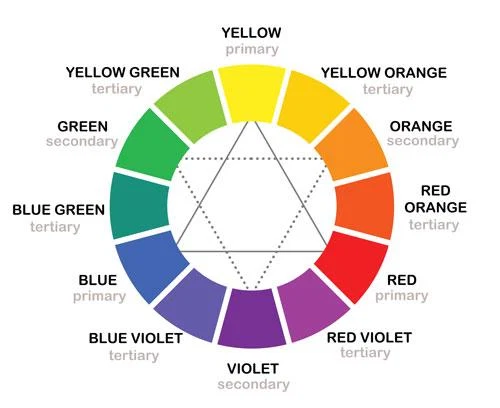
A color wheel is a circular arrangement of colors showing their relationships.
7. Classification of Colors
Primary colors: Red, yellow, and blue in the traditional school painting color model.
Secondary colors: Orange, green, and violet. They can be made by mixing pairs of traditional primary colors.
Tertiary colors: Colors created by mixing a primary color with a neighboring secondary color, such as yellow-green or red-orange.
8. Meaning of Analogous Colors
Analogous colors are colors that are next to one another on a color wheel.
They generally have a close visual relationship and can create harmony in a painting.
Examples of analogous color groups:
- Yellow, yellow-green, green.
- Blue, blue-green, green.
- Red, red-orange, orange.
- Yellow, yellow-orange, orange.
- Blue, blue-violet, violet.
9. Importance of Analogous Colors
- Create color harmony.
- Produce smooth color relationships.
- Help unify compositions.
- Communicate mood.
- Create pleasing scenery paintings.
- Help artists develop balanced color schemes.
10. Meaning of Color Gradation
Color gradation is the gradual transition from one color, tone, or intensity to another.
Gradation can occur:
- From dark to light.
- From light to dark.
- From one hue to a related hue.
- From a strong color to a less intense version.
11. Color Gradation Strip
Example: Gradation from dark blue to pale blue
Procedure for making a color gradation strip:
- Draw a long rectangle on paper.
- Divide it into equal sections.
- Select a suitable color.
- Paint the first section with the darkest tone.
- Gradually add white or dilute appropriately to make lighter tones.
- Paint each section to show a gradual change.
- Allow the painting to dry.
12. Meaning of Scenery Composition
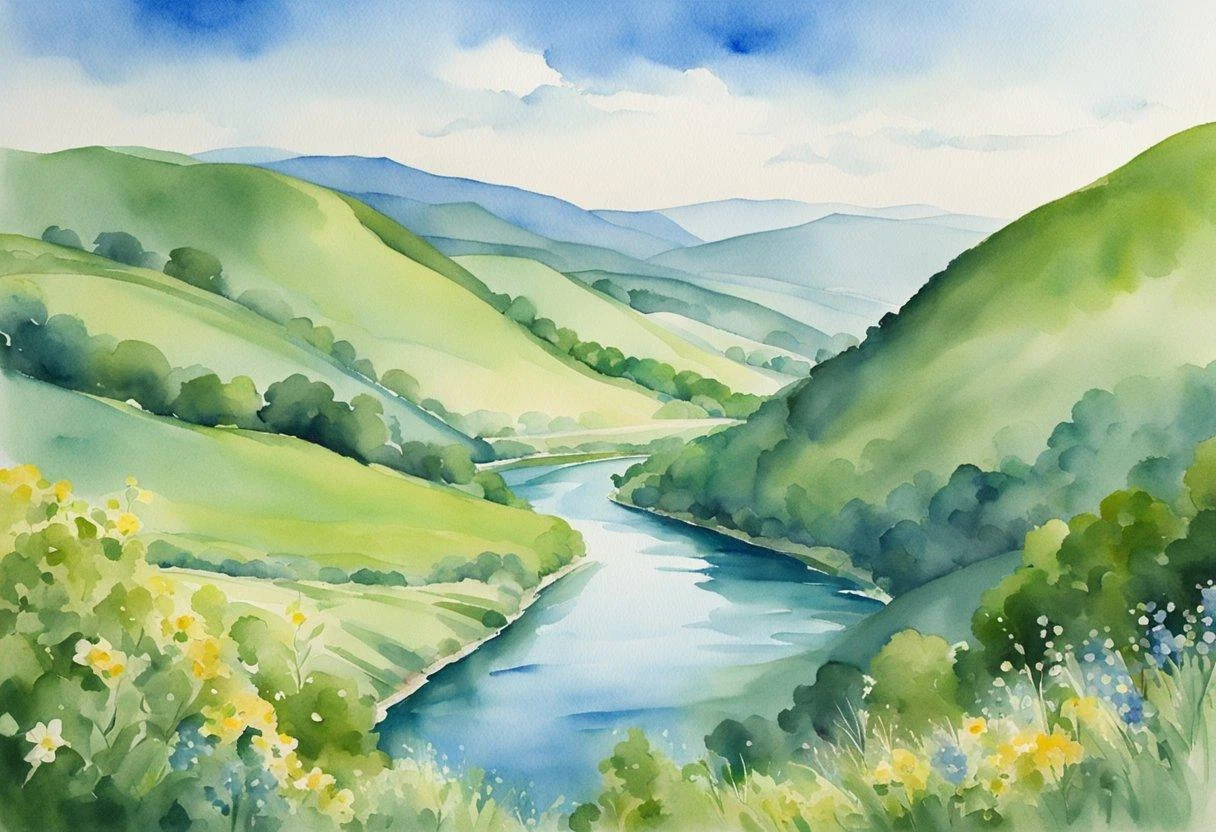
A scenery composition is a picture representing natural or built surroundings.
Examples of scenery features include:
- Mountains.
- Rivers.
- Lakes.
- Trees.
- Buildings.
- Roads.
- Fields.
- Clouds.
- People and animals.
13. Procedure for Painting a Scenery Composition
- Select a scenery subject.
- Observe the important features.
- Sketch the main shapes lightly.
- Choose an analogous color scheme.
- Arrange objects to create a balanced composition.
- Paint the background.
- Paint the middle ground.
- Paint the foreground.
- Introduce color gradation where appropriate.
- Add important details.
- Allow the work to dry.
- Display and appreciate the completed artwork.
14. Importance of Harmony and Unity in Painting
- Makes artworks attractive.
- Creates visual organization.
- Helps communicate ideas.
- Guides the viewer's attention.
- Establishes a consistent mood.
- Improves the overall appearance of an artwork.
15. Appreciating Own and Others' Artwork
Art appreciation involves observing, understanding, and responding respectfully to artworks.
When appreciating artwork, consider:
- Color selection.
- Arrangement of objects.
- Creativity.
- Harmony.
- Unity.
- Technique.
- Neatness.
- Message communicated.
Appreciation should include positive observations and constructive suggestions.
Revision Questions
- Define drawing and painting.
- Explain harmony in a picture.
- Differentiate between harmony and unity.
- What are analogous colors?
- Identify five groups of analogous colors.
- Define color gradation.
- Describe how to prepare a color gradation strip.
- Explain how to paint a scenery composition.
- State six ways of appreciating an artwork.