
1. Meaning of a wave
A wave is a travelling disturbance that transfers energy from one place to another without producing a corresponding overall transfer of matter.
Waves occur in water, air, solids and electromagnetic fields.
2. Generation of waves in nature
Waves can be produced by vibrations, disturbances or oscillating fields.
Examples include:
- Water waves generated by wind and disturbances.
- Sound waves generated by vibrating objects.
- Seismic waves produced by earthquakes.
- Light waves emitted by the Sun and other sources.
- Waves travelling along a stretched rope when one end is shaken.
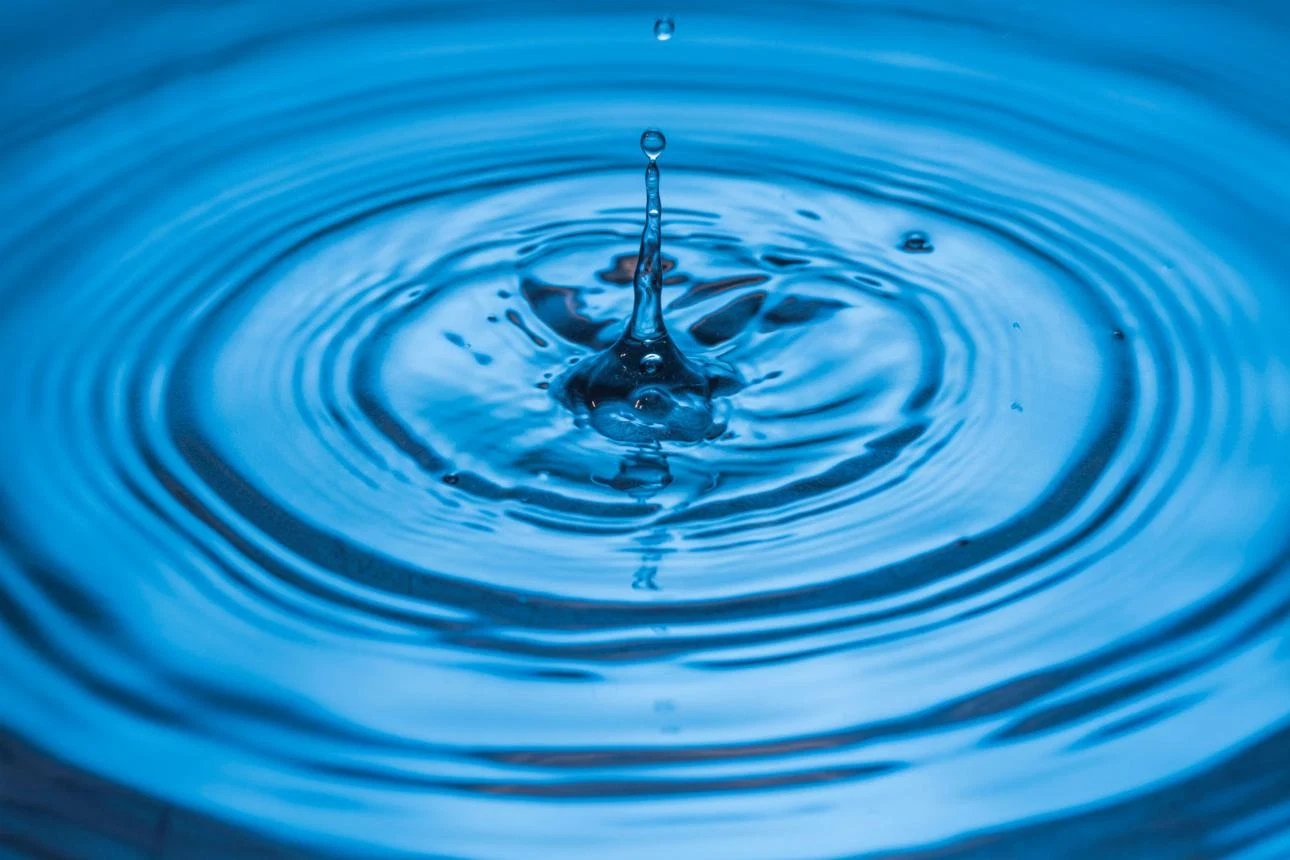
Water waves

Sound waves from vibrating strings
3. Classification of waves
Waves can be classified according to the direction of vibration relative to their direction of travel.
A. Transverse waves
A transverse wave is a wave in which the vibration or disturbance is perpendicular to the direction of wave propagation.
Examples include waves along a stretched rope and electromagnetic waves such as light.
Transverse wave diagram
Characteristics
- The disturbance is perpendicular to propagation.
- It has crests and troughs.
- It transfers energy along the direction of travel.
B. Longitudinal waves
A longitudinal wave is a wave in which particles of a medium vibrate parallel to the direction of wave propagation.
Examples include sound waves in air and compressional waves in springs.
Longitudinal wave diagram
Compression: A region where particles are closer together and pressure or density is higher.
Rarefaction: A region where particles are farther apart and pressure or density is lower.
4. Differences between transverse and longitudinal waves
|
Feature |
Transverse waves |
Longitudinal waves |
|---|---|---|
|
Direction of vibration |
Perpendicular to travel direction |
Parallel to travel direction |
|
Main features |
Crests and troughs |
Compressions and rarefactions |
|
Examples |
Rope waves, light |
Sound in air, compression waves in a spring |
|
Polarisation |
Possible for suitable transverse waves |
Not for ordinary longitudinal sound waves in air |
Water-surface waves have more complex particle motion and should not be treated as perfectly transverse in every situation.
5. Basic characteristics of waves
Wavelength (λ)
The distance between two successive points in the same phase of a wave, such as two adjacent crests or compressions.
SI unit: metre (m).
Amplitude (A)
The maximum displacement from the equilibrium position.
For many waves, greater amplitude means more energy is being carried.
Frequency (f)
The number of complete oscillations per second.
SI unit: hertz (Hz).
Period (T)
The time taken for one complete oscillation.
SI unit: second (s).
Wave speed (v)
The distance travelled by a wave disturbance per unit time.
SI unit: metres per second (m/s).
The wave equation is:
6. Worked examples on waves
Example 1: Calculating wave speed
A wave has a frequency of 5 Hz and wavelength of 2 m.
Example 2: Calculating wavelength
A wave travels at 300 m/s and has a frequency of 100 Hz.
Example 3: Calculating frequency
A wave has a period of 0.02 seconds.
7. Wave behaviour
Waves demonstrate several important behaviours.
Reflection: A wave changes direction after encountering a boundary and returns into its original medium. Example: echoes.
Refraction: A wave changes direction when its speed changes as it enters another medium at an angle. Example: light passing from air into water.
Diffraction: The spreading of waves around obstacles or through openings.
Absorption: Energy carried by waves is transferred to materials, often as heat.
8. Electromagnetic waves
Electromagnetic waves can travel through a vacuum. They do not require a material medium.
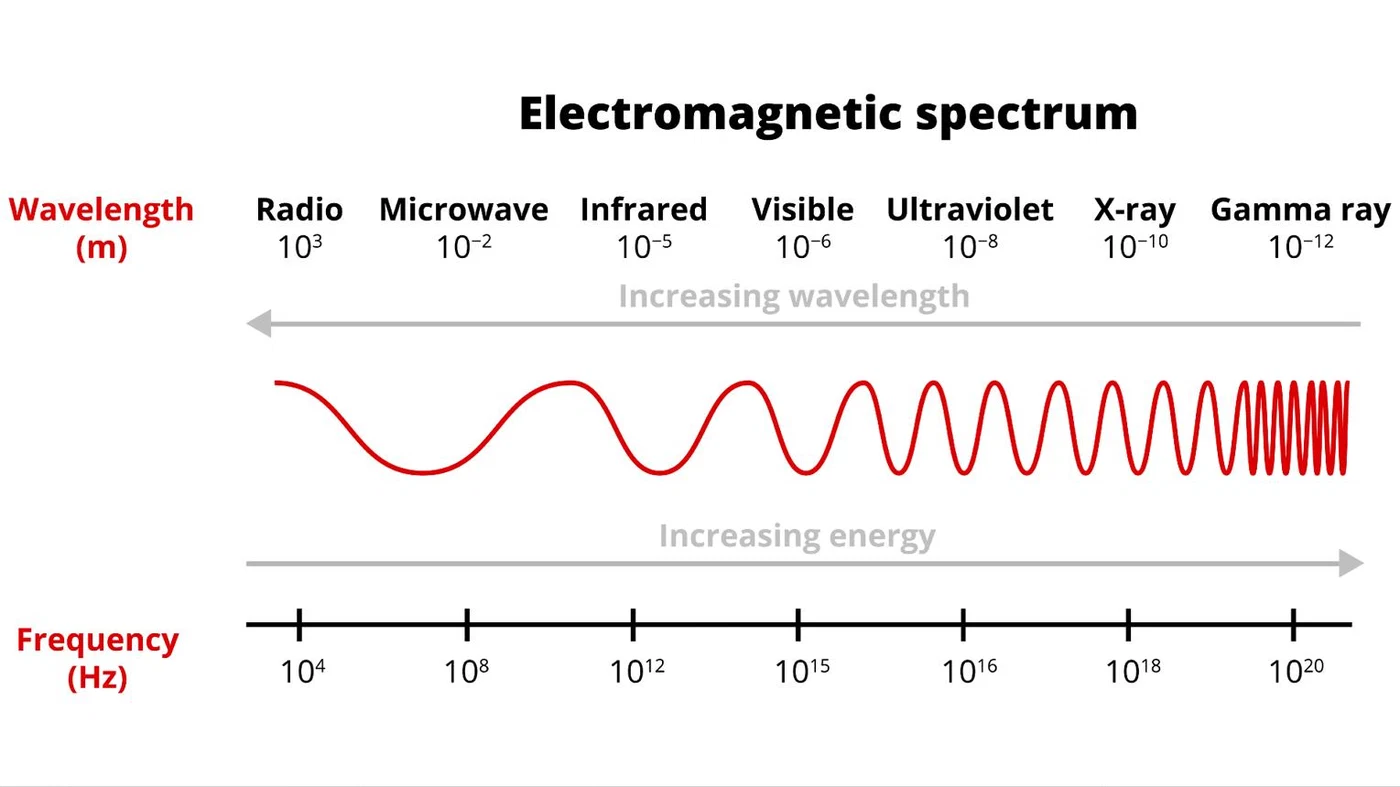
space.com
The electromagnetic spectrum includes radio waves, microwaves, infrared radiation, visible light, ultraviolet radiation, X-rays and gamma rays.
|
Type of wave |
Common applications |
|---|---|
|
Radio waves |
Radio broadcasting and communication |
|
Microwaves |
Radar, microwave ovens and wireless communication |
|
Infrared |
Thermal imaging and remote controls |
|
Visible light |
Vision, photography and optical instruments |
|
Ultraviolet |
Certain sterilisation processes and security markings |
|
X-rays |
Medical and industrial imaging |
|
Gamma rays |
Selected medical treatments and sterilisation |
Some electromagnetic radiation, especially X-rays and gamma rays, is ionising and can damage living tissue. It must be used with appropriate safeguards.
9. Meaning of remote sensing
Remote sensing is the collection of information about an object, area or phenomenon without making direct physical contact with it.
It commonly uses sensors on satellites, aircraft, drones or ground-based instruments that detect reflected or emitted electromagnetic radiation.
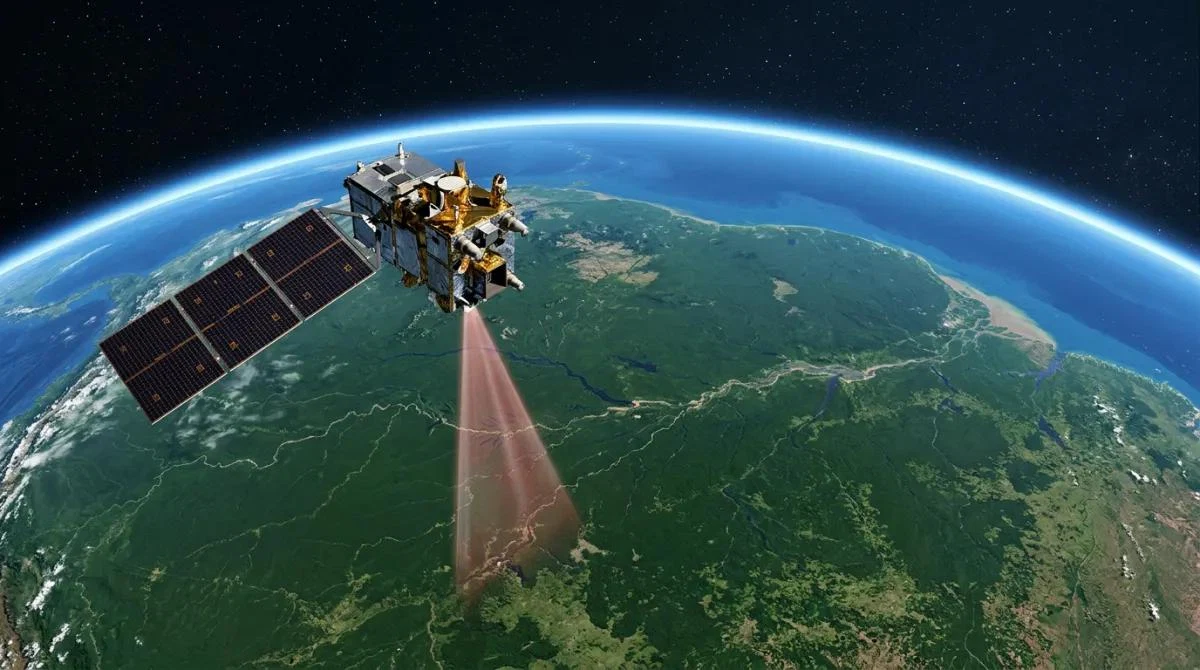
silvatrace.com
10. How remote sensing works
Energy source
Sunlight or an active sensor such as radar
Earth's surface
Radiation is reflected, scattered or emitted
Sensor
Measures the electromagnetic radiation received
Data analysis
Information is processed into images, maps or measurements
There are two main types of remote sensing:
Passive remote sensing: Measures naturally reflected sunlight or emitted radiation.
Active remote sensing: Sends out energy and measures the returned signal. Radar is an example.
11. Applications of remote sensing
- Monitoring forests and deforestation.
- Studying drought and vegetation changes.
- Mapping flooding and other natural hazards.
- Observing land use and urban growth.
- Monitoring crop health.
- Weather forecasting.
- Mapping water bodies.
- Supporting wildlife and habitat conservation.
Example from Kenya: Satellite observations can help monitor vegetation conditions in arid and semi-arid counties, providing useful evidence for drought assessment.
12. Everyday applications of waves

Medical ultrasound
Uses high-frequency sound waves to create images of structures inside the body.

Wireless communication
Radio-frequency electromagnetic waves carry information.
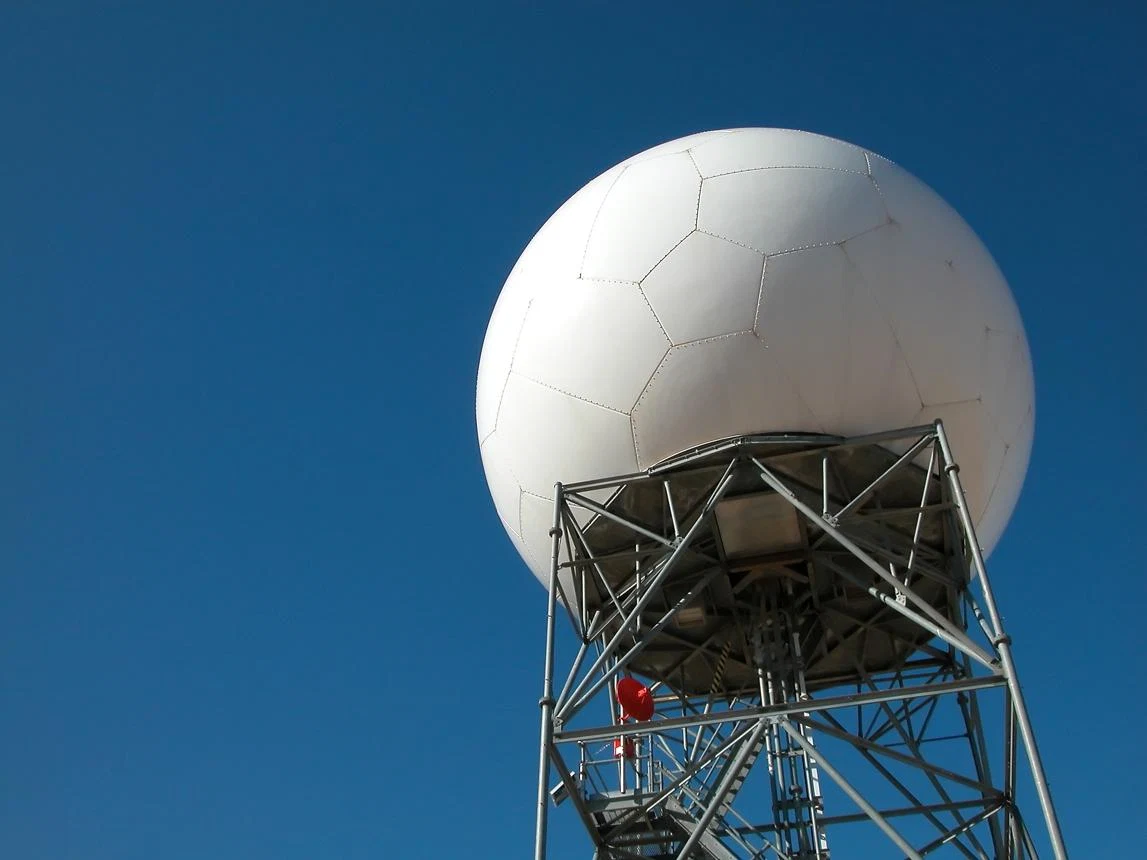
Radar systems
Use radio or microwave signals to detect objects and measure their movement.

Solar energy
Solar panels convert energy from sunlight into electrical energy.
13. Practical investigation: Waves on a rope
Materials: A long, flexible rope and a partner.
Procedure
- Hold opposite ends of a rope.
- Keep the rope moderately stretched.
- Move one end up and down.
- Observe the disturbance travelling along the rope.
- Increase the vibration frequency.
- Compare wave patterns.
Observations
- The disturbance travels along the rope.
- Points on the rope move mainly up and down.
- Faster oscillations increase the frequency.
- The rope does not travel with the wave over the entire distance.
Conclusion: A wave transfers energy through a medium while the medium's particles oscillate around their positions.
Activity 3.2
- Define a wave.
- Differentiate between transverse and longitudinal waves.
- Explain amplitude, frequency, wavelength and period.
- Calculate the speed of a wave with frequency 20 Hz and wavelength 4 m.
- Define remote sensing.
- State five applications of waves in everyday life.
- Explain how electromagnetic waves differ from sound waves.
GRADE 9 INTEGRATED SCIENCE REVISION
Summary of the Nine Sub-strands
|
Sub-strand |
Important concepts to remember |
|---|---|
|
1. Structure of the atom |
Protons, neutrons, electrons, mass number, electron arrangements, metals and non-metals |
|
2. Metals and alloys |
Metal properties, alloy composition, uses, rusting and corrosion prevention |
|
3. Water hardness |
Hard and soft water, temporary and permanent hardness, water-softening methods |
|
4. Nutrition in plants |
Leaf structures, photosynthesis, adaptations and experiments |
|
5. Nutrition in animals |
Feeding modes, teeth, digestion, absorption and enzymes |
|
6. Reproduction in plants |
Flower structures, pollination, fertilisation, seed and fruit dispersal |
|
7. Interdependence of life |
Ecosystems, biotic and abiotic factors, food chains, food webs and conservation |
|
8. Curved mirrors |
Concave and convex mirrors, ray diagrams, image characteristics and applications |
|
9. Waves |
Transverse and longitudinal waves, wave properties, wave equations and remote sensing |
Important Science Formulae
Mass number
Copy
Number of neutrons
Copy
Focal length of a spherical mirror
Copy
Wave speed
Copy
Wave period
Copy
Interactive Revision Questions
Integrated Science Quiz
12 questions • 12 marks
0/12 completed
1. Which subatomic particle has no electrical charge?
A. Proton
B. Electron
C. Neutron
D. Ion
2. An atom has 12 protons and 13 neutrons. What is its mass number?
A. 12
B. 13
C. 25
D. 1
3. Which of the following is an alloy?
A. Oxygen
B. Brass
C. Carbon
D. Sulphur
4. Which conditions are necessary for ordinary rusting?
A. Light and heat
B. Oxygen and water
C. Nitrogen and light
D. Carbon dioxide and heat
5. Which process can remove temporary water hardness?
A. Freezing
B. Boiling
C. Filtering through paper only
D. Stirring
6. Which tissue transports water from roots to leaves?
A. Phloem
B. Xylem
C. Epidermis
D. Palisade
7. Which gas is absorbed during photosynthesis?
A. Oxygen
B. Nitrogen
C. Carbon dioxide
D. Hydrogen
8. Which type of tooth is mainly used for tearing food?
A. Molar
B. Premolar
C. Incisor
D. Canine
9. What does pollination involve?
A. Fusion of gametes
B. Transfer of pollen to a stigma
C. Development of a fruit
D. Breaking of a seed coat
10. In a food chain, arrows indicate which direction?
A. Movement of organisms
B. Direction of energy transfer
C. Direction of rainfall
D. Direction of wind
11. What image does a convex mirror form for an ordinary real object?
A. Real and inverted
B. Virtual, upright and diminished
C. Real and enlarged
D. Virtual and inverted
12. A wave has frequency 10 Hz and wavelength 3 m. Calculate speed.
A. 3 m/s
B. 10 m/s
C. 13 m/s
D. 30 m/s
Mark my answers Reset
End-of-Strand Assessment
|
Assessment area |
Marks |
|---|---|
|
Structure of the atom and electron arrangement |
10 |
|
Properties of metals, alloys and rusting |
10 |
|
Water hardness and softening methods |
10 |
|
Nutrition in plants and photosynthesis |
15 |
|
Nutrition in animals and digestion |
15 |
|
Reproduction in plants |
10 |
|
Interdependence of living organisms |
10 |
|
Curved mirrors and ray diagrams |
10 |
|
Wave properties and applications |
10 |
|
Total |
100 |
Suggested Practical Projects
- Atom models: Use locally available materials to construct labelled models of selected atoms and explain their electron arrangements.
- Rusting investigation: Observe iron nails under different controlled conditions and record changes over several days.
- Water hardness investigation: Compare the lather-forming properties of different water samples.
- Leaf investigation: Study external leaf structures and conduct a supervised starch test.
- Ecosystem study: Construct food chains and food webs from organisms observed near the school.
- Mirror experiment: Investigate how image size and orientation change when an object moves in front of a concave mirror.
- Wave demonstration: Use a rope or slinky spring to demonstrate transverse and longitudinal waves.
Learning Outcomes
By the end of Grade 9 Integrated Science, learners should be able to explain basic atomic structure, identify metals and alloys, investigate water hardness, describe nutrition and reproduction in organisms, interpret ecological relationships, explain image formation by curved mirrors, and describe wave behaviour and applications.