
Definition
A raised platform is any elevated surface, structure, or equipment that provides a stable working area above ground level to perform tasks safely at heights.
Types of Raised Platforms
There are various types of raised platforms used in different environments:
|
Platform |
Description |
|---|---|
|
Ladders |
Portable climbing devices with rungs (straight, step, extension, tripod, A-frame). |
|
Trestles |
A pair of supporting frames with a plank placed on top to form a working surface. |
|
Steps/Staircases |
Series of small steps for moving between short height differences. |
|
Work Benches |
Strong, elevated tables designed for holding workpieces during manual tasks. |
|
Ramps |
Sloping surfaces without steps, used for access or loading (wheelchairs, trolleys). |
|
Stands |
Small portable raised surfaces (e.g., podiums, music stands, tool stands). |
|
Scaffolding |
Temporary framework of poles, platforms, and fittings for construction/repair work. |
|
Cradle Platforms |
Suspended platforms hung by ropes or cables from a building roof or structure. |
|
Mobile Elevated Work Platforms (MEWPs) |
Powered platforms like scissor lifts and boom lifts used in construction and maintenance. |
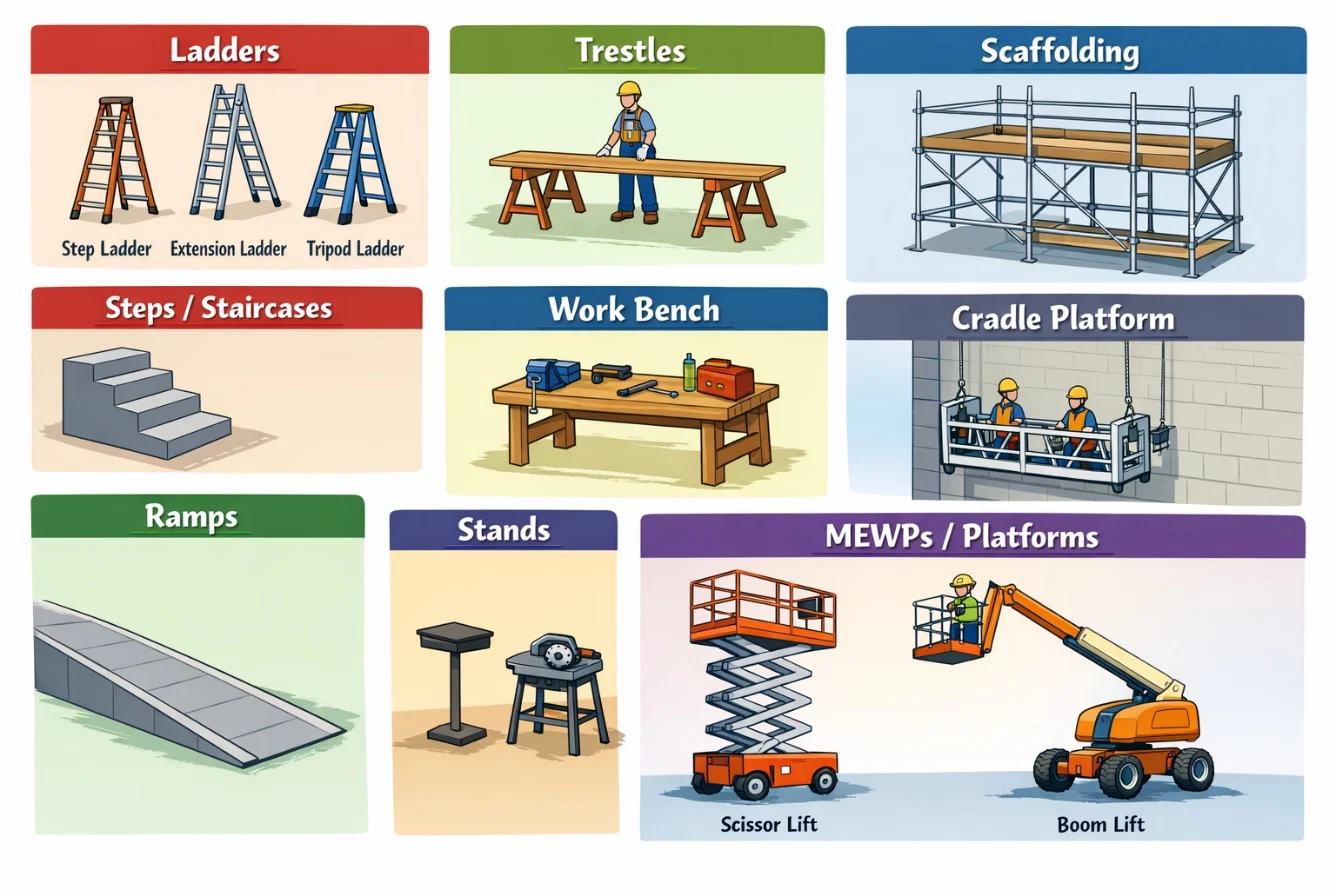
Figure 1: Raised Platforms
Common Uses of Raised Platforms
- Reaching high places (painting, repairs, shelving, changing bulbs).
- Holding materials/tools comfortably (carpentry, assembly).
- Providing access for people or equipment (wheelchairs, loading/offloading trucks).
- Supporting workers and materials during large-scale work (building construction, window cleaning).
Risks Associated with Working on Raised Platforms
- Falling from Height: Slipping, over-reaching, or loss of balance leading to serious injury or death.
- Falling Objects: Tools or materials falling and injuring people below.
- Platform Collapse: Overloading, faulty parts, or unstable ground causing tilting or overturning.
- Slips and Trips: Wet/oily surfaces, clutter, or poor footwear causing loss of footing.
- Electrical Hazards: Working near power lines (electrocution).
- Weather-Related Risks: Strong winds, rain, or ice affecting balance and stability.
- Unstable Surface: Uneven or soft ground where the platform is placed.
- Lack of Guardrails: No physical barrier to prevent falls from edges.
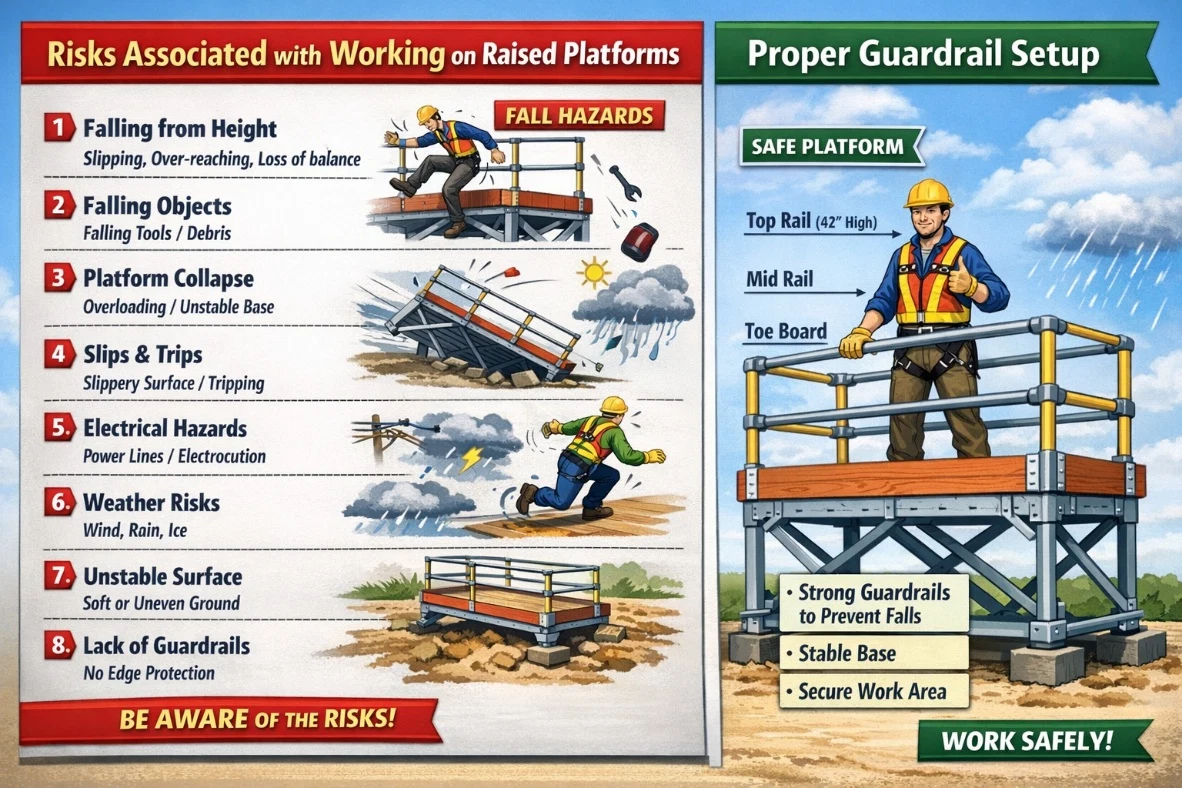
Figure 2: Diagram illustrating fall hazards and proper guardrail setup
Safety Practices / Precautions
To minimize risks, observe the following:
- Inspect Before Use: Check for cracks, loose bolts, damaged rungs, and stable legs.
- Placement: Place only on firm, level, non-slippery ground.
- Load Limit: Never exceed the maximum load/weight capacity.
- Ladder Safety: Use the Three Points of Contact Rule (Two hands + one foot, or two feet + one hand). Face the ladder while climbing.
- Avoid Over-reaching: Move the platform instead of leaning too far.
- PPE: Wear appropriate Personal Protective Equipment: hard hat/helmet, non-slip safety boots, gloves, and safety harness (for high work).
- Guardrails: Install guardrails, toe-boards, or use fall-arrest systems where required.
- Housekeeping: Keep platform clean (remove oil, grease, debris) and barricade the area below.
Importance of Observing Safety
- Prevents serious injuries, permanent disability, or death from falls.
- Protects workers, co-workers, and passers-by from falling objects.
- Reduces medical expenses, lost working days, and compensation claims.
- Minimizes damage to tools, materials, and platforms.
- Increases worker confidence, efficiency, and productivity.
- Supports national goals (Vision 2030).