
Definition
Hazardous substances are materials that can cause harm to people, animals, plants, property, or the environment when mishandled, spilled, inhaled, swallowed, or absorbed through skin.
Hazardous Substances in the Environment
- At Home/School: Cleaning agents (bleach, drain openers), Fuels (paraffin, methylated spirit), Paints and thinners, Pesticides, Fertilizers, LPG cooking gas, Battery acid.
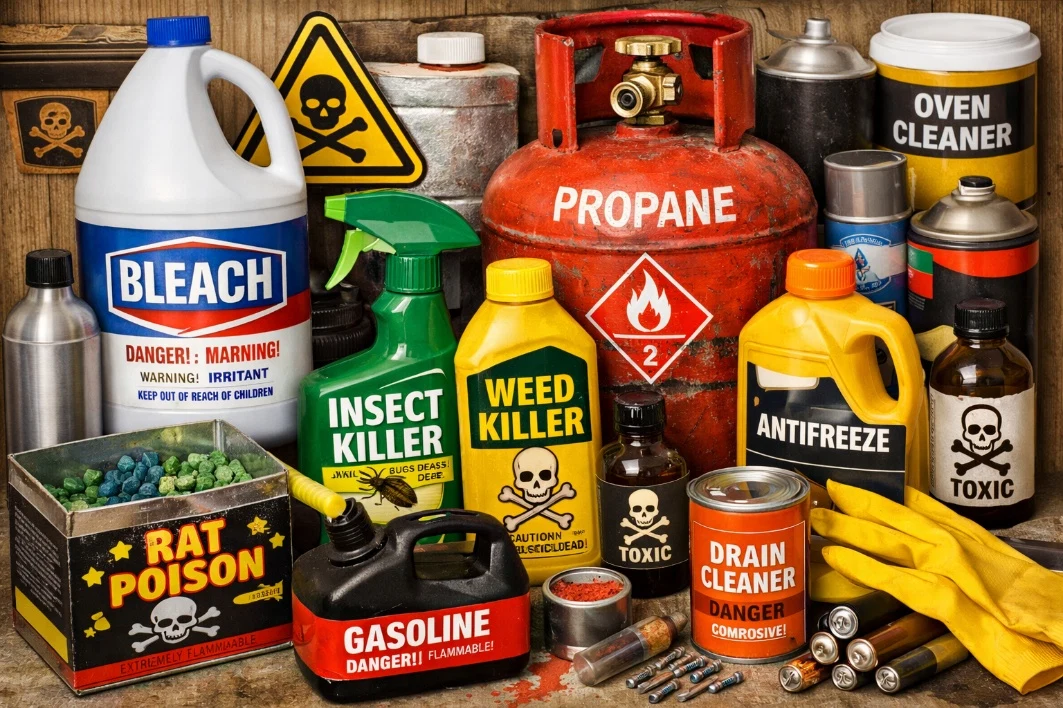
Figure 3: Hazardous Substances
Classification of Hazardous Substances
|
Class |
Symbol |
Description |
Common Examples |
Hazard Symbol |
Effects if Mishandled |
|---|---|---|---|---|---|
|
Poisonous (Toxic) |
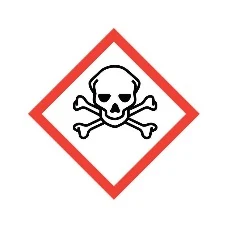 |
Can cause illness, organ damage, or death if swallowed, inhaled, or absorbed. |
Pesticides, Rat poison, Certain fertilizers |
Skull & Crossbones |
Vomiting, convulsions, respiratory failure, death |
|
Corrosive |
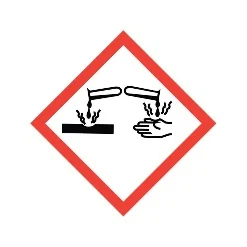 |
Burns or destroys living tissue (skin, eyes) or corrodes materials (metal). |
Battery acid, Bleach, Drain cleaners |
Hand & Metal being corroded |
Severe chemical burns, blindness, permanent scarring |
|
Flammable |
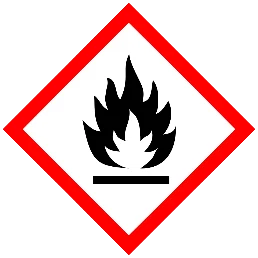 |
Easily ignites or explodes near heat, sparks, or flames. |
Petrol, Kerosene, Methylated spirit, LPG |
Flame |
Fires, explosions, severe burn injuries |
Safe Ways of Handling Hazardous Substances
- Read Labels and Manuals: Always read safety instructions before use.
- Wear PPE: Use chemical-resistant gloves, safety goggles, face mask/respirator, apron, and closed shoes.
- Ventilation: Work only in well-ventilated areas (open windows/outdoors).
- Storage: Store in original, labeled containers in a cool, dry, locked place away from children, food, and heat sources.
- Never Mix: Do not mix different chemicals (e.g., bleach + acid = toxic gas).
- Hygiene: Wash hands thoroughly after use. Do not eat or drink while handling.
- Disposal: Dispose of containers and leftovers at designated collection points (never pour down drains or burn openly).
- Spill Management: Contain spill immediately, ventilate area, and seek help.
Importance of Observing Safety
- Prevents poisoning, chemical burns, respiratory diseases, fires, and explosions.
- Protects family, community, animals, and the environment (soil, water, air).
- Reduces medical costs and long-term health problems.
- Promotes responsible behavior and supports environmental conservation (PCIs).