
Definition
Wood is a natural, renewable, organic material obtained from the trunks, branches, and roots of trees.
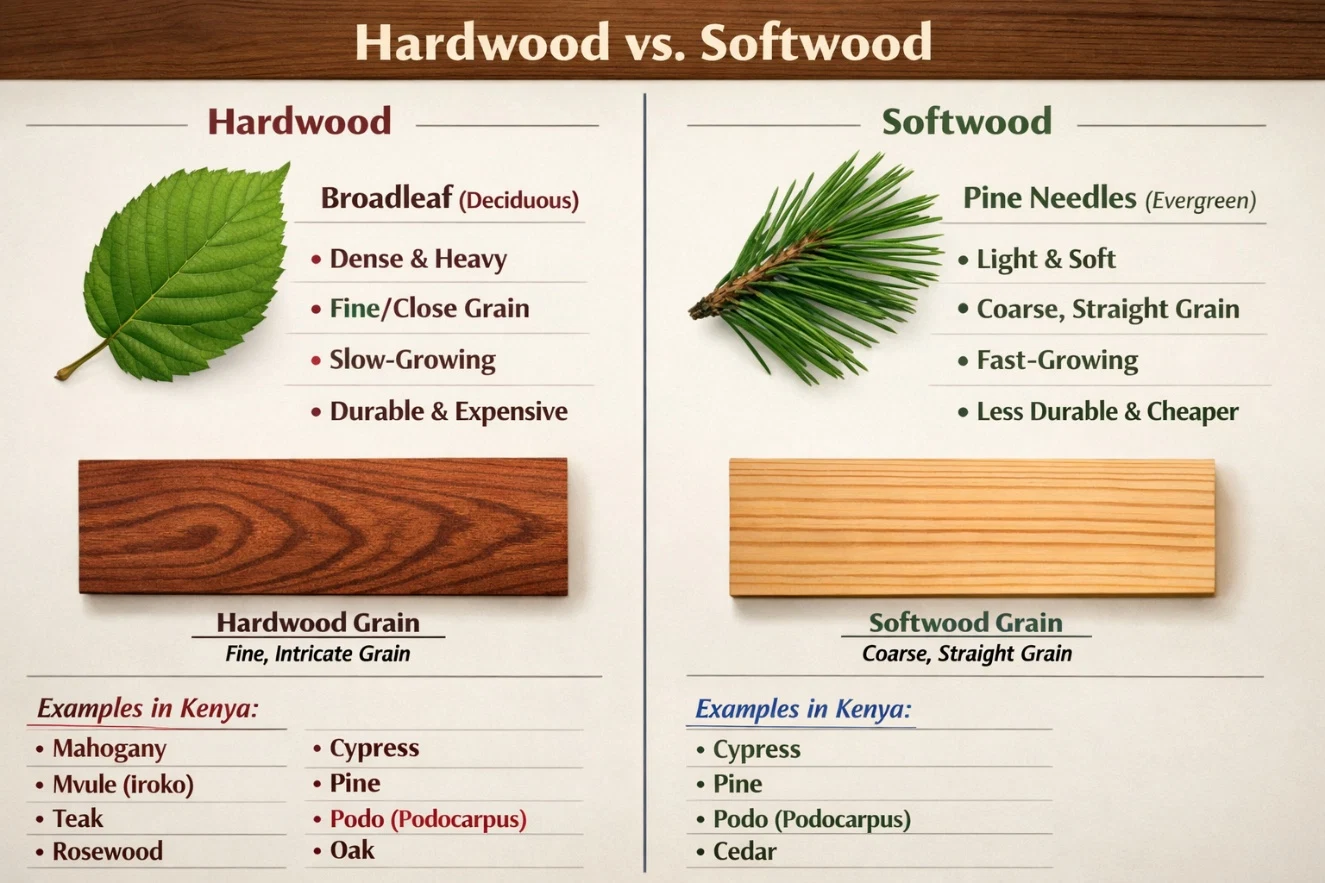
Classification of Wood (Hardwood vs. Softwood)
|
Feature |
Hardwood |
Softwood |
|---|---|---|
|
Source Tree |
Broad-leaved trees (Deciduous - shed leaves) |
Coniferous trees (Evergreen - needle-like leaves, cones) |
|
Density/Weight |
Dense, heavy, hard |
Less dense, lighter, softer |
|
Grain |
Fine/close grain, often intricate |
Coarse/straight grain |
|
Growth Rate |
Slow-growing |
Fast-growing |
|
Durability |
High strength, durable, more resistant to decay |
Less durable, prone to rot if untreated |
|
Cost |
Generally, more expensive |
Generally cheaper |
|
Kenyan Examples |
Mahogany, Mvule (Iroko), Teak, Camphor, Rosewood, Oak, Mango |
Cypress, Pine, Podo (Podocarpus), Cedar, Eucalyptus |
Preparation of Wood for Use
- Conversion (Sawmilling): Cutting felled trees into logs, then into marketable sizes (planks, boards).
- Methods: Plain sawing (through-and-through), Quarter sawing.
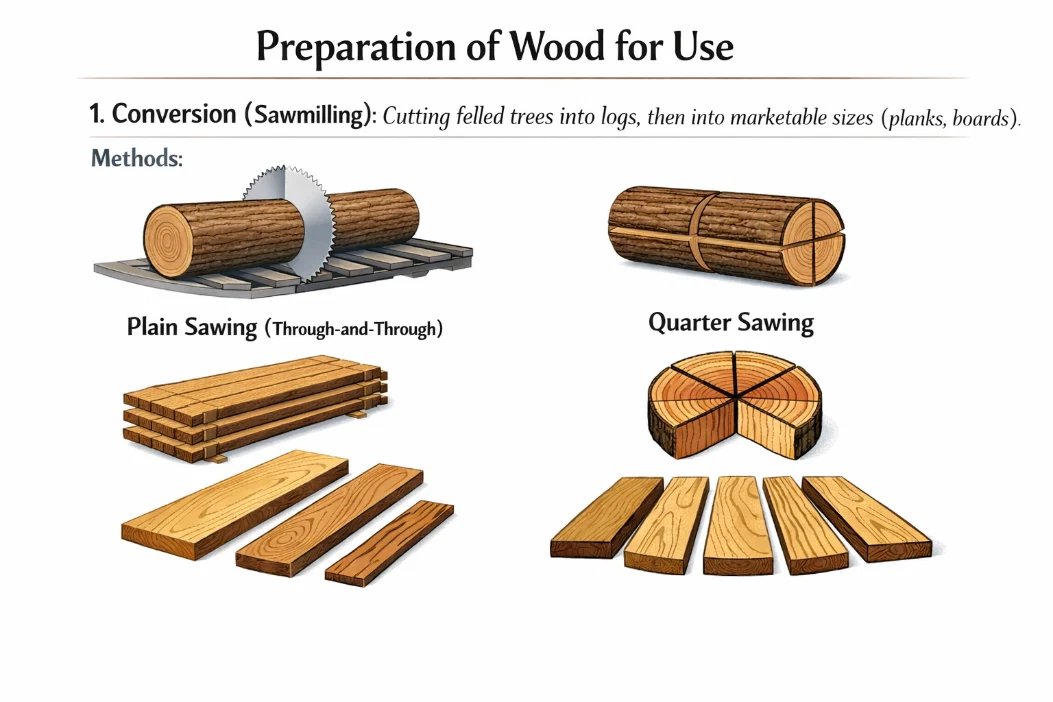
Figure 9: Conversion (Sawmilling)
- Seasoning (Drying): Reducing moisture content from green wood (50-60%) to usable levels (10-15%). This prevents shrinking, warping, cracking, and rotting.
- Natural/Air Seasoning: Stacking timber outdoors with spacers for airflow (slow, 6-18 months).
- Artificial/Kiln Seasoning: Using heated chambers/kilns for controlled drying (fast, 1-4 weeks).
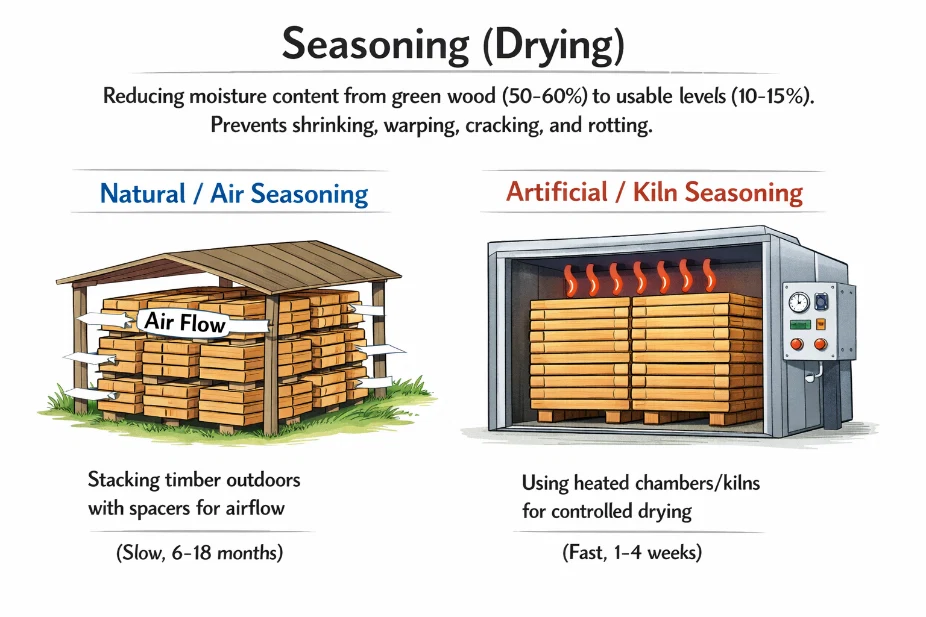
Figure 10: Seasoning (Drying)
Uses of Wood in Day-to-Day Life
- Hardwood Uses: High-quality furniture (tables, chairs), flooring, doors/windows, carving (sculptures), tool handles, musical instruments (guitars, pianos).
- Softwood Uses: Construction (roof trusses, framing), paper manufacturing, packing crates/pallets, interior finishing (skirting), fencing poles.
Importance of Wood
- Provides essential materials for shelter, furniture, and tools.
- Renewable and sustainable if managed (afforestation).
- Economic value: Jobs in logging, sawmilling, carpentry, and furniture industry.
- Environmental benefits: Carbon storage (climate change mitigation).