
1. Meaning of internal land-forming processes
Internal land-forming processes are geological processes driven mainly by energy and forces within the Earth.
They include tectonic movements, folding, faulting, volcanism and earthquakes.
2. Structure of the Earth
The Earth's main internal layers are:
- Crust.
- Mantle.
- Outer core.
- Inner core.
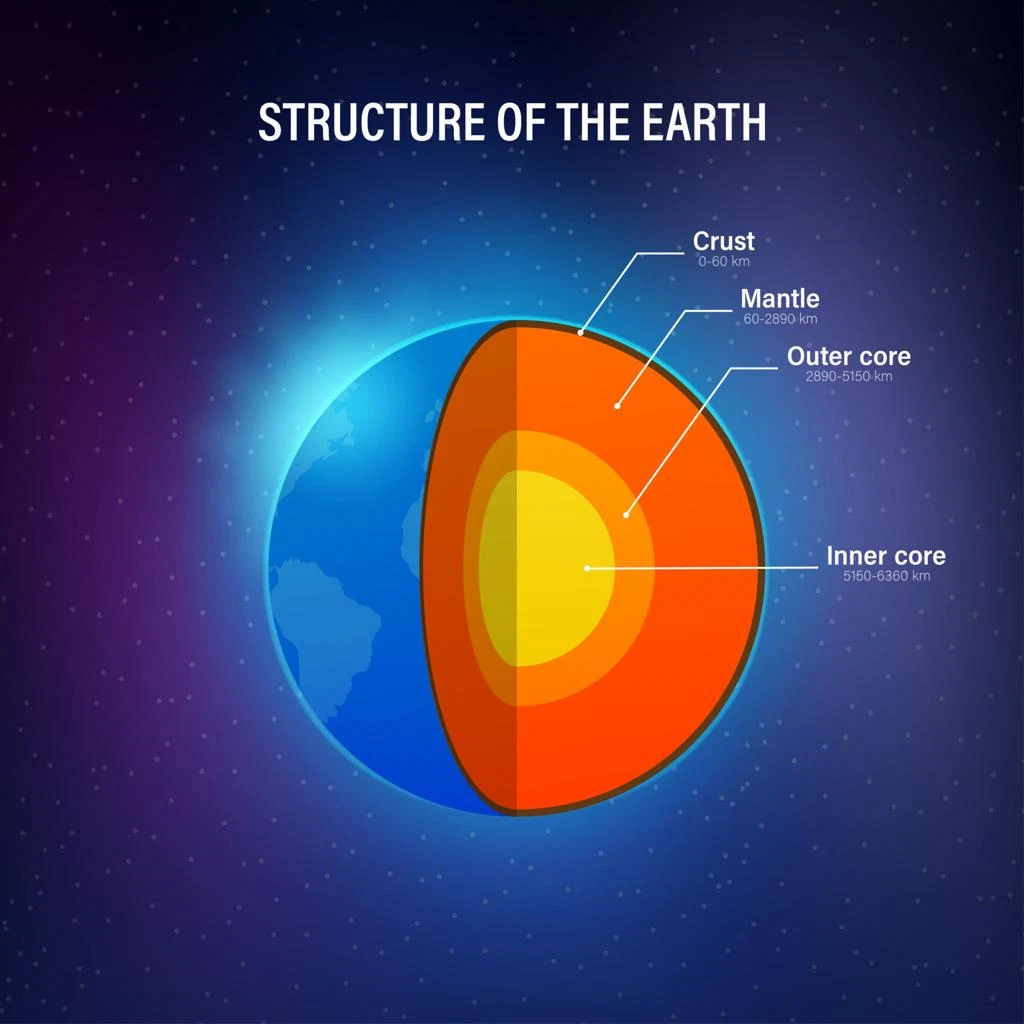
The lithosphere consists of the crust and rigid uppermost mantle. It is divided into tectonic plates.
3. Types of earth movements
Horizontal movements: Mainly involve forces that compress, stretch or cause rocks to slide past one another.
Vertical movements: Involve the upward or downward movement of parts of the Earth's crust.
4. Causes of earth movements
Plate movement is driven by forces associated with Earth's internal heat and gravity, including mantle flow, slab pull and ridge push.
These movements create stress in rocks and can cause folding, faulting, earthquakes and volcanism.
5. Continental drift theory
Continental drift was proposed by Alfred Wegener in 1912.
He suggested that Earth's continents were once joined in a large landmass, commonly called Pangaea, which later separated.
6. Evidence for continental drift
- Similar rock formations on separated continents.
- Matching fossils found on continents now divided by oceans.
- Geological similarities between mountain belts.
- Evidence of past glaciation in currently separated regions.
- The broad jigsaw-like fit of some continental margins.
Continental drift provided important historical ideas, while modern plate tectonics explains continental movement through the motion of lithospheric plates.
7. Plate tectonics theory
Plate tectonics explains how Earth's lithosphere is divided into plates that move relative to one another.
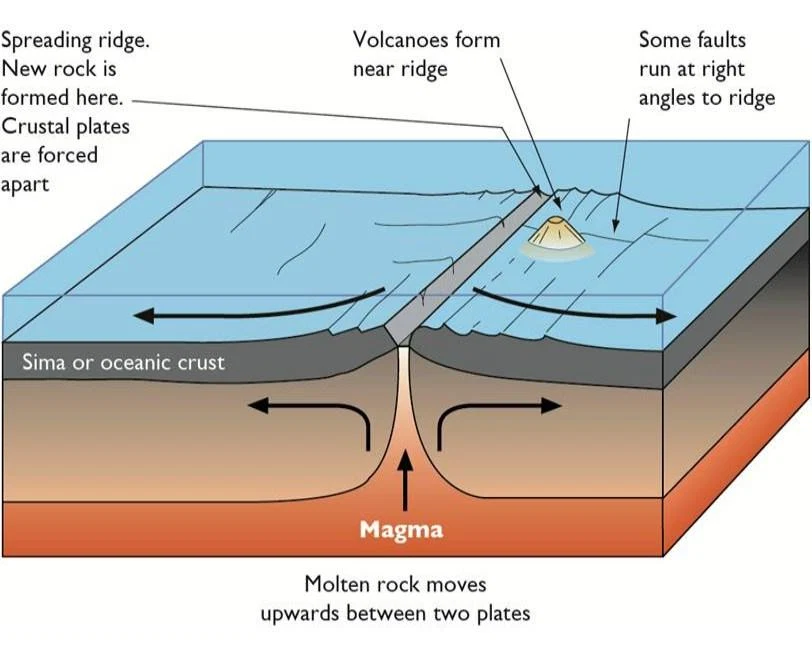
Divergent
Plates move apart.
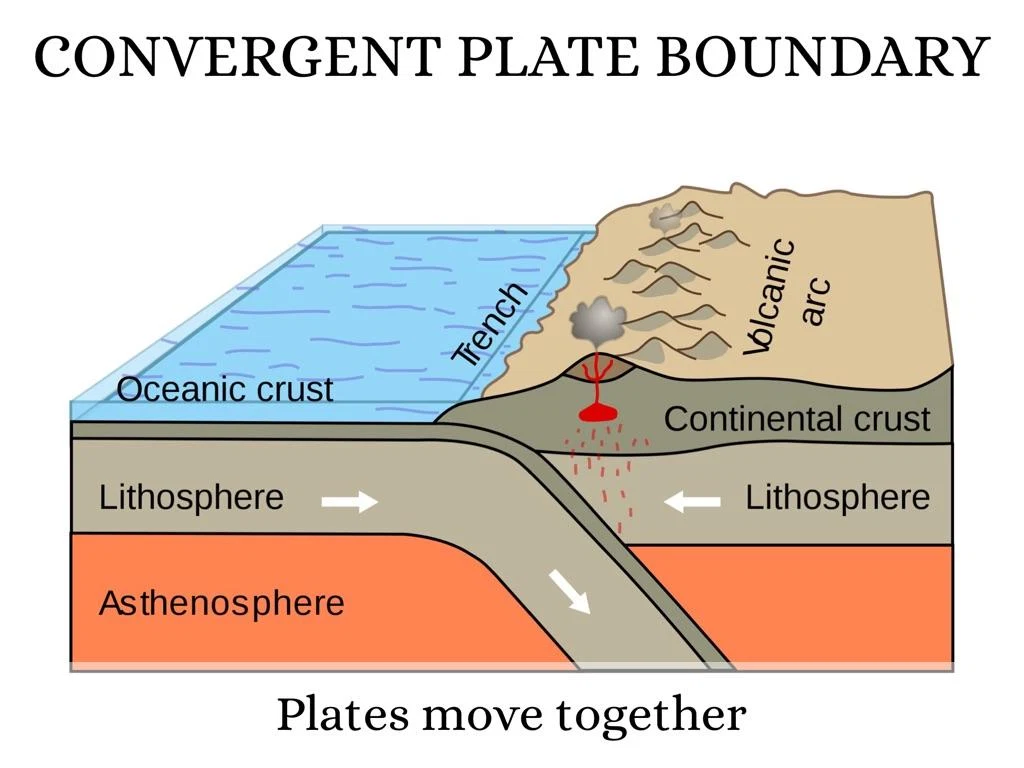
Convergent
Plates move towards each other.
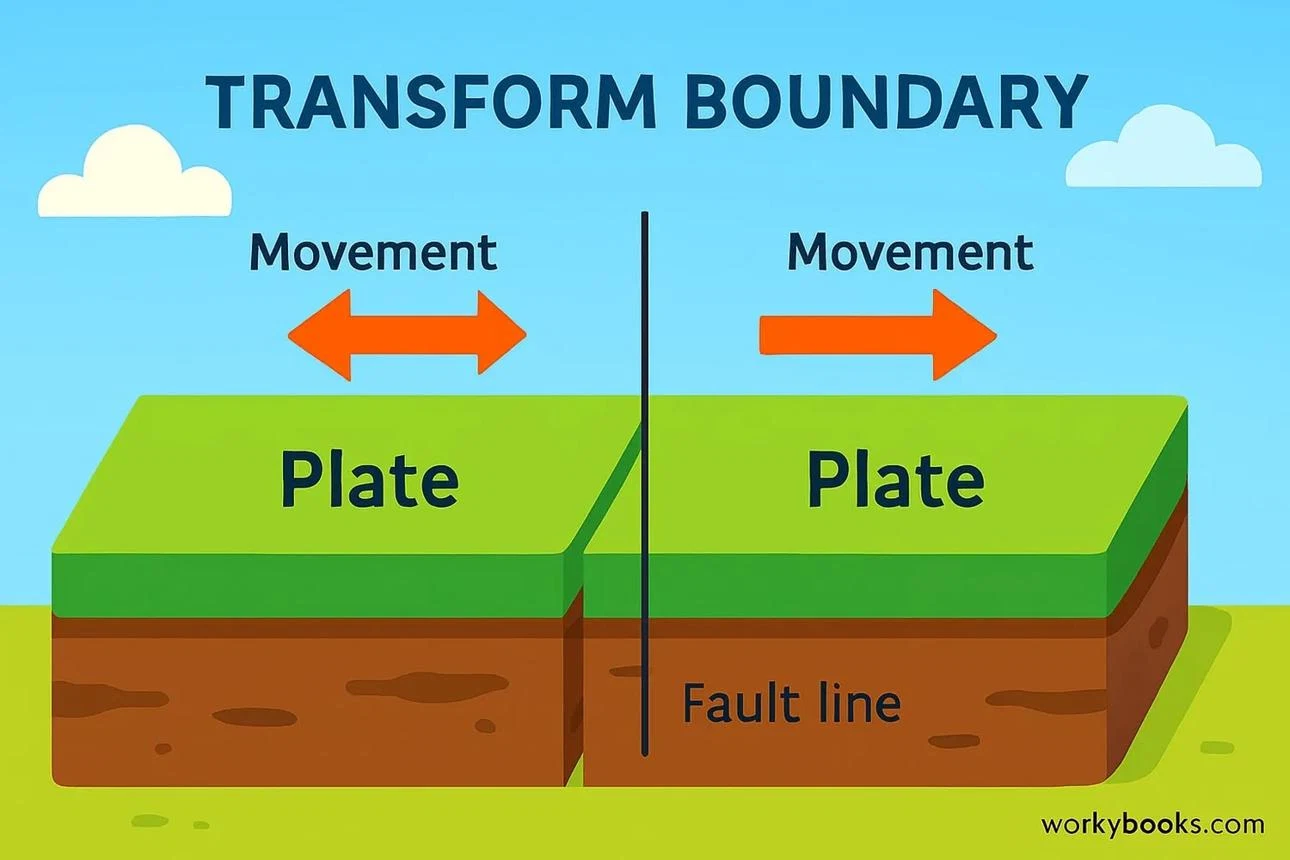
Transform
Plates slide past each other.
8. Meaning of faulting
Faulting is the fracturing and displacement of rocks in the Earth's crust along a fault.
Faulting commonly occurs when accumulated tectonic stress overcomes rock strength.
9. Types of faults
|
Fault |
Main movement |
|---|---|
|
Normal fault |
Hanging wall moves downward relative to footwall |
|
Reverse fault |
Hanging wall moves upward relative to footwall |
|
Strike-slip fault |
Rocks move mainly horizontally past one another |
10. Landforms resulting from faulting
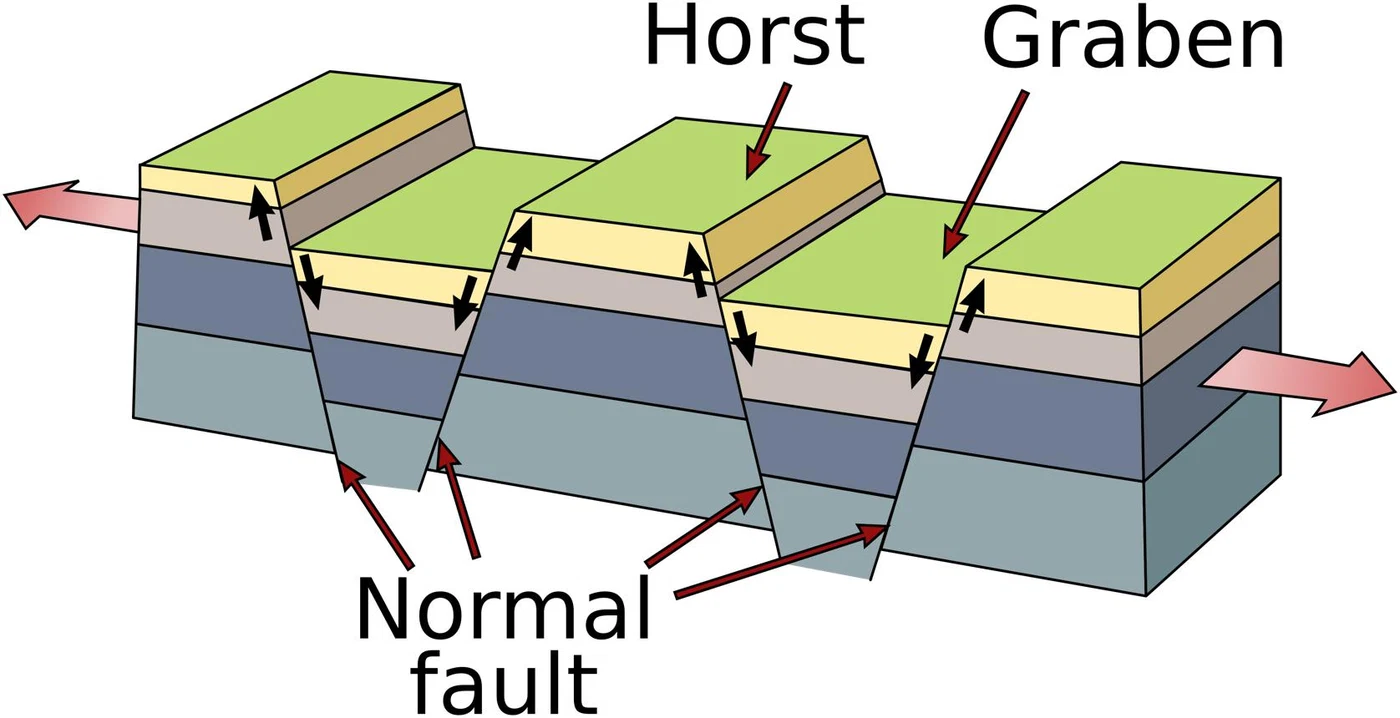
Rift valley: An elongated depression formed by tectonic extension and faulting.
Block mountain or horst: A relatively raised block between faults.
Graben: A down-dropped block between faults.
Fault scarp: A steep slope or step associated with fault displacement.
Tilted block: A block of crust inclined through fault movement.
commons.wikimedia.org
11. Formation of a rift valley
A simplified sequence is:
- Tensional forces affect the crust.
- Faults develop.
- Blocks move relative to one another.
- A central block subsides or adjacent blocks become relatively elevated.
- An elongated fault-bounded depression develops.
Actual rift development often involves multiple faults and complex tectonic processes.
12. Examples from Kenya
The Kenyan Rift Valley forms part of the East African Rift System.
It contains numerous fault-related landscapes, escarpments, volcanoes and lakes.
Examples of nearby landscapes include the escarpments around the central Rift Valley and the fault-influenced terrain near Lake Naivasha.
13. Effects of faulting on human activities
Positive effects
- May create scenic landscapes that support tourism.
- Can contribute to the development of geothermal resources.
- Influences the location of some lakes and groundwater systems.
- Provides opportunities for geological research.
Negative effects
- Earthquakes can damage buildings and infrastructure.
- Steep escarpments may complicate transport construction.
- Fault movement may damage roads or pipelines.
- Unstable slopes can increase certain geological hazards.
Activity 4.2
Draw and label normal, reverse and strike-slip faults. Explain the formation of a rift valley and describe three effects of faulting on human activities.