
Introduction
The periodic table is one of the most useful tools in Chemistry. It arranges chemical elements systematically according to atomic number and allows scientists to identify patterns in their electron arrangements and properties.
The position of an element provides useful information about its atomic structure, likely chemical behaviour and the types of compounds it may form.
Specific Learning Outcomes
The learner should be able to relate periodic-table position to electron arrangement, illustrate ion formation, derive chemical formulae, write balanced chemical equations and appreciate the importance of the periodic table.
Key Inquiry Question
Why is the study of the periodic table important?
1.3.1 Development of the Periodic Table
The modern periodic table developed through the work of several scientists.
Johann Döbereiner identified groups of three elements with related properties, known as triads.
John Newlands proposed the law of octaves after observing repeating patterns among elements arranged largely in order of atomic mass.
Dmitri Mendeleev organised elements using their atomic masses and chemical properties. He left spaces for elements not yet discovered and predicted some of their properties.
Henry Moseley demonstrated the importance of atomic number, providing the basis for the modern arrangement.
Modern Periodic Law
The modern periodic law states that the properties of elements show periodic relationships when elements are arranged in increasing atomic number.
1.3.2 Structure of the Modern Periodic Table
The modern periodic table consists of horizontal rows called periods and vertical columns called groups.
There are seven periods and eighteen numbered groups.
Groups
Elements in the same group often have similar chemical properties because of similarities in their outer electron configurations.
Periods
For the first 20 elements, the period number corresponds to the highest occupied principal energy level in the ground-state electron configuration.
Example
Sodium has the electron configuration:
The highest occupied principal energy level is 3.
Therefore, sodium is in Period 3.
It belongs to Group 1 because its outer electron configuration is .
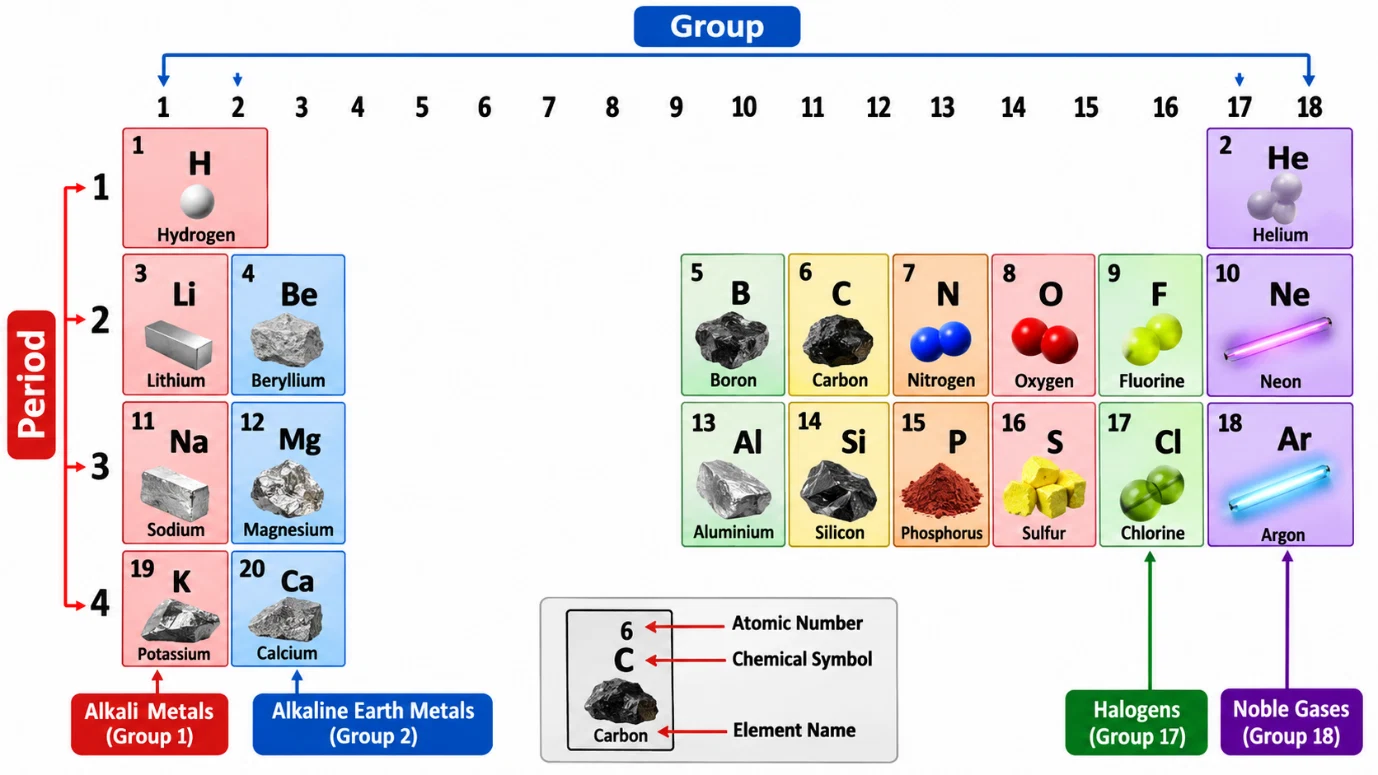
Figure 1.11: Simplified Periodic Table of the First 20 Elements
1.3.3 Chemical Families
A chemical family is a group of elements with related properties.
Group 1: Alkali Metals
Examples include lithium, sodium and potassium.
They commonly form ions with a charge of +1.
Their outer electron configuration is .
Group 2: Alkaline Earth Metals
Examples include beryllium, magnesium and calcium.
They commonly form ions with a charge of +2.
Their outer electron configuration is .
Group 17: Halogens
Examples include fluorine, chlorine, bromine and iodine.
They commonly form ions with a charge of −1 when reacting with appropriate metals.
Their outer electron configuration is .
Group 18: Noble Gases
Examples include helium, neon and argon.
They generally have relatively low chemical reactivity because of their stable filled valence shells.
Helium has the configuration , while the other common noble gases have filled outer s and p subshells.
Transition Elements
Transition elements occupy much of the central region of the periodic table.
Many exhibit variable oxidation states and form coloured compounds.
However, not every element in the d-block meets the strict chemical definition of a transition element.
1.3.4 Electron Arrangement and Position
Consider the following examples:
|
Element |
Electron configuration |
Group |
Period |
|---|---|---|---|
|
Lithium |
1s² 2s¹ |
1 |
2 |
|
Magnesium |
1s² 2s² 2p⁶ 3s² |
2 |
3 |
|
Aluminium |
1s² 2s² 2p⁶ 3s² 3p¹ |
13 |
3 |
|
Chlorine |
1s² 2s² 2p⁶ 3s² 3p⁵ |
17 |
3 |
|
Argon |
1s² 2s² 2p⁶ 3s² 3p⁶ |
18 |
3 |
The configurations allow learners to predict chemical behaviour and identify periodic relationships.
1.3.5 Formation of Ions
An ion is an atom or group of atoms carrying an overall electrical charge.
Ions form when electrons are gained or lost, or when a group of atoms possesses a net charge.
Cations
A cation is a positively charged ion.
It forms when an atom loses one or more electrons.
Example:
Na → Na⁺+e⁻
Anions
An anion is a negatively charged ion.
It forms when an atom gains one or more electrons.
Example:
Cl+e⁻ → Cl⁻
Formation of Magnesium Ion
Magnesium has 12 electrons.
Its electron configuration is:
It may lose its two outer electrons:
Mg → Mg²⁺+2e⁻
The resulting ion has ten electrons.
Electron configuration of Mg²⁺:
Formation of Oxide Ion
Oxygen has eight electrons:
It gains two electrons:
O+2e⁻ → O²⁻
Electron configuration of O²⁻:
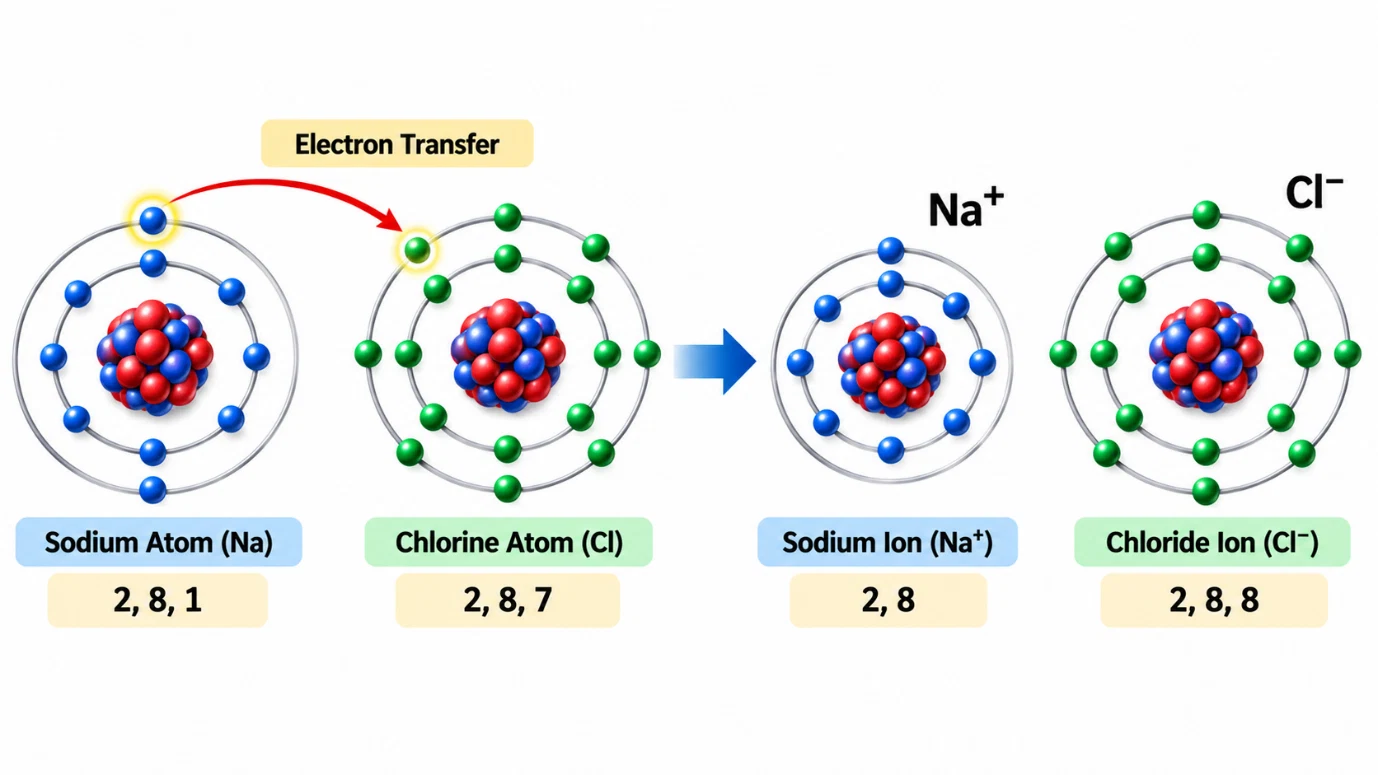
Figure 1.12: Formation of Sodium and Chloride Ions
1.3.6 Valency
Valency describes an atom's combining capacity in forming chemical compounds.
In introductory Chemistry, valency is commonly represented as a positive whole number without a sign.
Examples include:
|
Element |
Common valency |
|---|---|
|
Hydrogen |
1 |
|
Oxygen |
2 |
|
Sodium |
1 |
|
Magnesium |
2 |
|
Aluminium |
3 |
|
Chlorine |
1 |
Some elements exhibit more than one valency in different compounds.
1.3.7 Oxidation Number
An oxidation number is a formal number assigned to an atom according to electron-accounting rules.
It helps describe electron transfer and chemical changes.
Common Rules
- An element in its uncombined form has oxidation number 0.
- A monatomic ion has an oxidation number equal to its ionic charge.
- Oxygen commonly has oxidation number −2, with exceptions such as peroxides.
- Hydrogen commonly has oxidation number +1, but it is −1 in many metal hydrides.
- The sum of oxidation numbers in a neutral compound is zero.
- The sum of oxidation numbers in a polyatomic ion equals its overall charge.
Worked Example 1.6: Oxidation Number of Sulfur in Sulfuric(VI) Acid
Formula:
Hydrogen = +1.
Oxygen = −2.
Let sulfur be .
The oxidation number of sulfur is +6.
1.3.8 Radicals or Polyatomic Ions
A polyatomic ion is a charged group of two or more covalently bonded atoms acting together as an ion.
|
Name |
Formula |
Charge |
|---|---|---|
|
Ammonium |
NH₄⁺ |
+1 |
|
Hydroxide |
OH⁻ |
−1 |
|
Nitrate |
NO₃⁻ |
−1 |
|
Carbonate |
CO₃²⁻ |
−2 |
|
Sulfate |
SO₄²⁻ |
−2 |
|
Hydrogen carbonate |
HCO₃⁻ |
−1 |
|
Phosphate |
PO₄³⁻ |
−3 |
The term radical is used in some introductory curricula for these groups, but polyatomic ion is more precise in this context.
1.3.9 Writing Chemical Formulae
A chemical formula shows the types of atoms or ions and their proportions in a substance.
For ionic compounds, the overall charge must be zero.
Worked Example 1.7: Magnesium Chloride
Magnesium ion:
Mg²⁺
Chloride ion:
Cl⁻
Two chloride ions are required to balance one magnesium ion.
Therefore:
Worked Example 1.8: Aluminium Oxide
Aluminium ion:
Al³⁺
Oxide ion:
O²⁻
The smallest whole-number charge balance is:
Formula:
Worked Example 1.9: Calcium Nitrate
Calcium ion:
Ca²⁺
Nitrate ion:
NO₃⁻
Two nitrate ions are needed.
Parentheses indicate that the nitrate group occurs twice.
1.3.10 Chemical Equations
A chemical equation represents a chemical reaction using chemical symbols and formulae.
The substances initially present are called reactants.
The substances produced are called products.
For example:
2Mg+O₂ → 2MgO
This equation shows magnesium reacting with oxygen to produce magnesium oxide.
1.3.11 Balancing Chemical Equations
Balanced equations obey the law of conservation of mass.
In ordinary chemical reactions, atoms are rearranged rather than created or destroyed.
Steps
- Write the correct reactant and product formulae.
- Count atoms of each element.
- Change coefficients to balance the equation.
- Do not change subscripts within correct formulae.
- Check the final atom counts.
Worked Example 1.10
Balance:
H₂+O₂ → H₂O
Place 2 before water:
H₂+O₂ → 2H₂O
Balance hydrogen:
2H₂+O₂ → 2H₂O
Check:
Hydrogen atoms = 4 on each side.
Oxygen atoms = 2 on each side.
Worked Example 1.11
Balance:
Fe+O₂ → Fe₂O₃
Balanced equation:
4Fe+3O₂ → 2Fe₂O₃
Check:
Iron = 4 atoms on each side.
Oxygen = 6 atoms on each side.
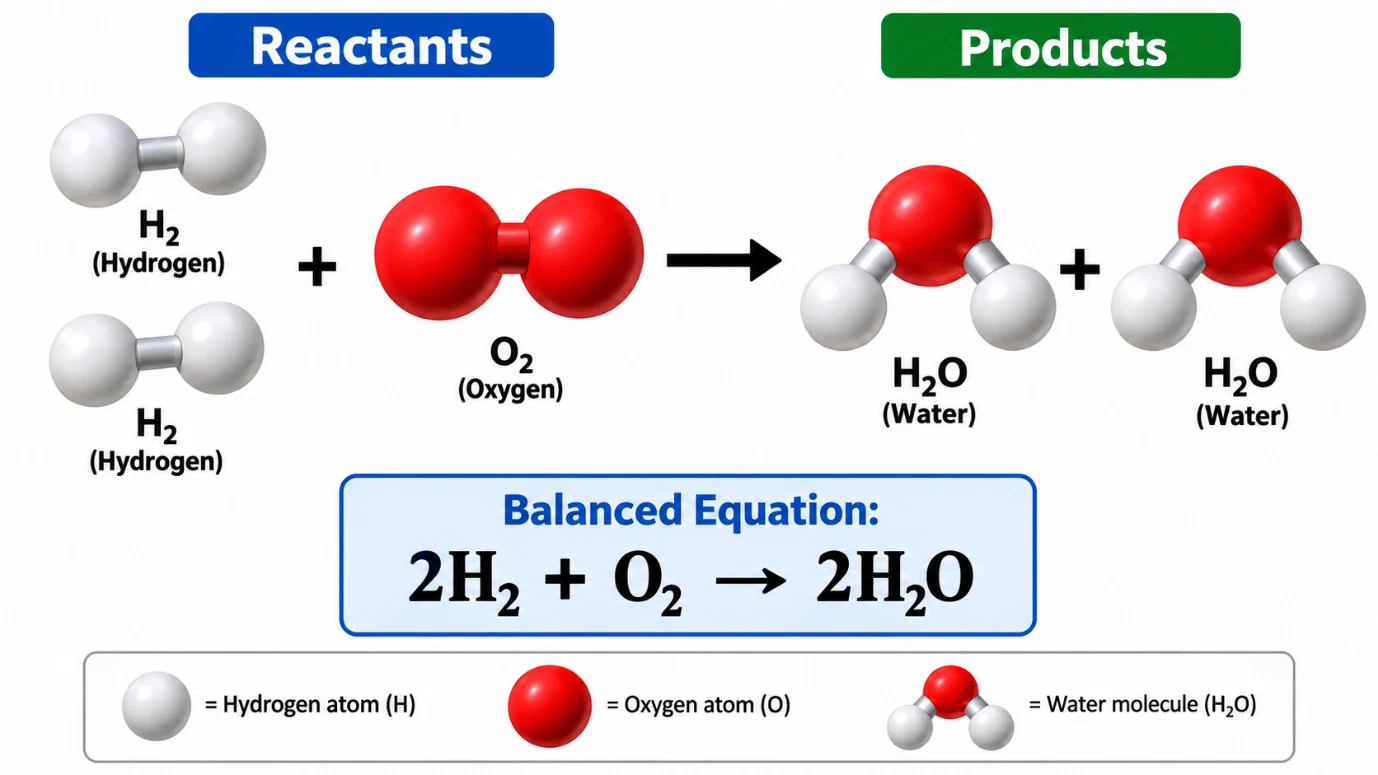
Figure 1.13: Balancing Chemical Equations
Practical Activity 1.3: Arranging Elements in the Periodic Table
Aim: To relate atomic number and electron configuration to periodic-table position.
Materials: Element cards for the first 20 elements, periodic-table chart and writing materials.
Procedure:
- Prepare a card for each element.
- Write its atomic number.
- Write its electron configuration.
- Arrange the cards in increasing atomic number.
- Identify elements with related outer electron configurations.
- Place the elements in correct groups and periods.
- Compare the arrangement with the accepted periodic table.
Summary of Sub-strand 1.3
The modern periodic table arranges elements by increasing atomic number.
Groups and periods reflect patterns in electron arrangement.
Ions form when atoms gain or lose electrons.
Valency and oxidation numbers help describe chemical combinations.
Chemical formulae represent the composition of substances, while balanced equations represent chemical reactions in accordance with conservation principles.
Revision Questions
- State the modern periodic law.
- Explain the difference between groups and periods.
- Name four chemical families.
- Describe how sodium forms a sodium ion.
- Explain the formation of the oxide ion.
- Differentiate between valency and oxidation number.
- Determine the oxidation number of nitrogen in HNO₃.
- Write the formula of magnesium oxide.
- Write the formula of aluminium chloride.
- Write the formula of calcium carbonate.
- Balance the equation: Al+O₂ → Al₂O₃.
- Balance the equation: Na+Cl₂ → NaCl.
- Explain why chemical equations must be balanced.
Selected Answers
Question 7
Questions 8–10
Question 11
4Al+3O₂ → 2Al₂O₃
Question 12
2Na+Cl₂ → 2NaCl