
1. Introduction to stewardship
Stewardship refers to the responsible management and care of resources entrusted to someone.
In Christianity, stewardship means taking care of God's creation and using it responsibly.
According to the Bible, God created human beings and gave them responsibilities over other living things.
Human beings are expected to protect animals, fish, birds, plants and the natural environment.
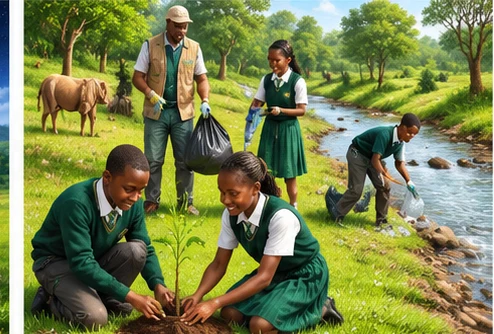
Learners and community members caring for the environment and protecting creation.
Stewardship does not mean destroying or exploiting creation. It means managing it carefully for the benefit of present and future generations.
2. Meaning of important terms
Steward: A person entrusted with the responsibility of managing something belonging to another person.
Stewardship: Responsible care and management of resources.
Wildlife: Animals and other living organisms that exist in their natural environments.
Habitat: The natural home or environment where an organism lives.
Conservation: Protection and responsible management of natural resources.
Extinction: The complete disappearance of a particular species from the earth.
Animal cruelty: Treating animals in a way that causes unnecessary pain, suffering or injury.
3. Biblical teachings on human responsibility over creation
The Bible gives human beings responsibilities over other creatures.
A. Genesis 2:15–20
God placed man in the Garden of Eden to cultivate it and take care of it.
The passage also describes God bringing animals and birds to the man for naming.
Lessons from the passage:
- Human beings should care for the environment.
- Work is part of God's plan for humanity.
- Human beings have a special responsibility towards animals.
- People should manage natural resources responsibly.
- Human beings should appreciate the diversity of creation.
B. James 3:7
This passage explains that human beings have been able to tame different kinds of animals.
Lessons from the passage:
- Human beings have the ability to interact with animals.
- Animals should be handled responsibly.
- Human abilities should be used wisely.
- People should avoid abusing animals.
- Humans should recognise their responsibility towards other creatures.
C. Genesis 1:28
God gave human beings authority over other living creatures.
This authority should be exercised responsibly.
Lessons:
- Protect animals.
- Avoid unnecessary destruction of wildlife.
- Use natural resources wisely.
- Maintain ecological balance.
- Appreciate God's creation.
4. Responsibilities of human beings over animals
Animals are important parts of God's creation.
Human beings have a responsibility to protect and care for them.
The following are ways of caring for animals.
A. Providing food
Domestic animals require suitable food for growth, health and productivity.
People should provide adequate and appropriate feeds.
B. Providing clean drinking water
Animals require clean water for normal body functions.
Water containers should be cleaned regularly.
C. Providing suitable shelter
Domestic animals require shelter that protects them from harsh weather, predators and other dangers.
D. Providing veterinary care
Sick and injured animals should receive appropriate veterinary attention.
Vaccination and other preventive measures help protect animal health.
E. Avoiding animal cruelty
Animals should not be beaten, starved or deliberately injured.
They should be handled carefully.
F. Maintaining clean animal housing
Animal houses should be cleaned regularly to prevent diseases and discomfort.
G. Protecting endangered species
People should avoid illegal hunting and activities that threaten the survival of endangered animals.
H. Providing sufficient space
Animals should have suitable space for movement and resting.
I. Protecting animal habitats
Forests, grasslands and wetlands should be protected because they provide food and shelter for wild animals.
5. Responsibilities of human beings over fish
Fish are important aquatic creatures found in rivers, lakes, oceans and fish farms.
They provide food and income to many communities.
Human beings have a responsibility to protect fish and their habitats.
Ways of protecting fish
- Avoid dumping waste into rivers and lakes.
- Prevent oil and chemical pollution.
- Avoid illegal fishing methods.
- Observe recommended fishing regulations.
- Avoid catching immature fish.
- Protect fish breeding areas.
- Maintain clean fish ponds.
- Avoid overfishing.
- Protect wetlands and aquatic habitats.
- Support responsible fish farming.
6. Responsibilities of human beings over birds
Birds are important creatures that contribute to environmental balance.
Some birds help disperse seeds, pollinate flowers and control pests.
Ways of protecting birds
- Protect nesting sites.
- Avoid destroying bird eggs and nests.
- Plant trees that provide shelter.
- Avoid unnecessary hunting.
- Prevent pollution of bird habitats.
- Avoid poisoning birds.
- Protect wetlands and forests.
- Provide suitable food and water for domestic birds.
- Maintain clean poultry houses.
- Protect endangered bird species.
7. Importance of protecting animals, fish and birds
A. Maintaining ecological balance
Different organisms depend on one another for survival.
Protecting them helps maintain the balance of ecosystems.
B. Providing food
Animals, fish and birds provide food such as meat, milk, eggs and fish.
C. Supporting economic activities
Wildlife tourism, fishing and livestock farming provide employment and income.
D. Supporting agriculture
Some birds and animals help control pests and disperse seeds.
E. Preserving biodiversity
Protecting different species ensures that they continue to exist.
F. Supporting scientific research
Animals and other organisms provide opportunities for scientific study.
G. Preserving God's creation
Protecting living creatures demonstrates respect for God's work.
8. Human-wildlife conflict
Human-wildlife conflict occurs when human activities and the needs of wild animals interfere with one another.
It may happen when wild animals enter farms, destroy crops, kill livestock or threaten human safety.
Causes of human-wildlife conflict
- Destruction of natural habitats.
- Expansion of human settlements into wildlife areas.
- Competition for water and food.
- Drought and climate change.
- Illegal hunting.
- Poor waste disposal that attracts wild animals.
- Blocked wildlife migration routes.
Effects of human-wildlife conflict
- Destruction of crops.
- Loss of livestock.
- Injury or death of people.
- Injury or death of wild animals.
- Financial losses.
- Fear among communities.
- Retaliatory killing of wildlife.
- Disruption of local economic activities.
9. Ways of reducing human-wildlife conflict
- Protecting natural animal habitats.
- Constructing suitable fences around farms.
- Avoiding settlement in important wildlife corridors.
- Properly disposing of waste.
- Creating awareness among communities.
- Reporting dangerous wildlife encounters.
- Using approved wildlife deterrent methods.
- Protecting water sources.
- Supporting wildlife conservation programmes.
- Working with Kenya Wildlife Service and other relevant authorities.
10. Good stewardship practices in the community
- Planting trees.
- Protecting rivers and lakes.
- Feeding and caring for domestic animals.
- Avoiding illegal hunting.
- Protecting bird nests.
- Maintaining clean surroundings.
- Avoiding destruction of natural habitats.
- Supporting wildlife conservation.
- Preventing pollution.
- Using natural resources responsibly.
11. Practical activities
Activity 1: Visiting an animal facility
Visit a farm, zoo or animal park with the teacher's permission.
Observe how animals, fish and birds are cared for.
Write a report describing the practices observed.
Activity 2: Preparing a conservation poster
Prepare a poster encouraging people to protect animals, fish and birds.
Activity 3: Writing a poem
Compose a poem explaining how human beings can care for God's creatures.
Activity 4: Community sensitisation
Prepare messages encouraging people to avoid environmental destruction and animal cruelty.
12. Summary
Stewardship means responsibly caring for resources entrusted to human beings.
God gave people responsibilities over animals, fish, birds and other parts of creation.
Christians should protect living organisms, conserve their habitats and use natural resources responsibly.
Good stewardship helps maintain ecological balance and protects God's creation for future generations.
13. Revision questions and answers
Q1. Define stewardship.
Stewardship is the responsible care and management of resources entrusted to someone.
Q2. What does Genesis 2:15 teach about stewardship?
It teaches that human beings should cultivate and take care of God's creation.
Q3. State five ways of caring for domestic animals.
- Providing food.
- Providing clean water.
- Providing shelter.
- Seeking veterinary care.
- Maintaining clean housing.
Q4. Give five ways of protecting fish.
- Avoiding water pollution.
- Preventing overfishing.
- Protecting breeding areas.
- Avoiding illegal fishing.
- Maintaining clean fish ponds.
Q5. State five ways of protecting birds.
- Protecting nests.
- Planting trees.
- Avoiding unnecessary hunting.
- Protecting wetlands.
- Preventing habitat destruction.
Q6. What is human-wildlife conflict?
It is a situation where human activities and the needs of wild animals interfere with one another.
Q7. Identify four causes of human-wildlife conflict.
Habitat destruction, human settlement expansion, drought and competition for resources.
Q8. Explain four ways of reducing human-wildlife conflict.
Protect habitats, construct suitable fences, manage waste and avoid blocking wildlife corridors.
Q9. Why should Christians protect animals?
Because animals are part of God's creation and human beings have a responsibility to care for them.
Q10. State four benefits of wildlife conservation.
It maintains ecological balance, protects biodiversity, supports tourism and preserves natural habitats.