
1. Introduction to natural resources
Natural resources are materials and features obtained from the natural environment that are useful to human beings and other living organisms.
They are important for survival, economic development and environmental sustainability.
Examples include:
- Land.
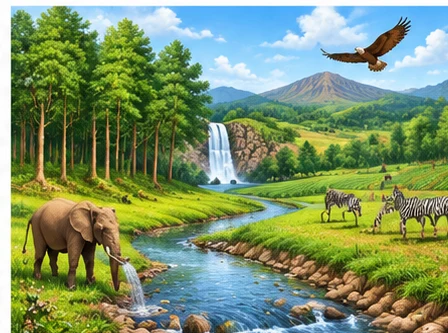
Natural resources support life and should be used responsibly.
- Water.
- Air.
- Forests.
- Wildlife.
- Soil.
- Minerals.
- Sunlight.
- Wind.
- Natural vegetation.
Human beings depend on these resources for food, shelter, energy, transportation, industries and other needs.
The Bible teaches that people should use natural resources responsibly because they are part of God's creation.
2. Meaning of important terms
Natural resources: Useful materials and features obtained from the natural environment.
Renewable resources: Resources that can naturally replenish themselves when properly managed.
Non-renewable resources: Resources that exist in limited quantities and cannot be replaced within a short human timescale.
Resource conservation: Responsible management and protection of natural resources.
Resource depletion: Reduction in the quantity of natural resources due to excessive use or destruction.
Pollution: Introduction of harmful substances into the environment.
Sustainability: Using resources in ways that meet present needs without compromising the ability of future generations to meet their needs.
3. Types of natural resources
Natural resources can be grouped into renewable and non-renewable resources.
A. Renewable natural resources
These are resources that can naturally replenish themselves over time when properly managed.
Examples include:
Water: Water is renewed through the water cycle.
Forests: Trees can be replanted to replace harvested trees.
Wildlife: Animal populations can increase through reproduction when habitats are protected.
Sunlight: Solar energy is continuously available.
Wind: Wind is naturally generated by atmospheric processes.
Soil: Soil can be maintained and improved through responsible land management, although its formation is very slow.
B. Non-renewable natural resources
These are resources that occur in limited quantities and take very long periods to form.
Examples include:
- Petroleum.
- Coal.
- Natural gas.
- Gold.
- Copper.
- Iron ore.
- Limestone.
Once these resources are exhausted, they cannot be replaced quickly.
4. Uses of natural resources
Human beings use natural resources in many ways.
A. Land
Land is used for:
- Crop farming.
- Livestock keeping.
- Building homes.
- Constructing roads.
- Establishing industries.
- Recreation.
B. Water
Water is used for:
- Drinking.
- Cooking.
- Washing.
- Irrigation.
- Industrial production.
- Generating hydroelectric power.
- Supporting aquatic life.
C. Forests
Forests provide:
- Timber.
- Firewood.
- Medicinal plants.
- Fruits.
- Wildlife habitats.
- Tourism opportunities.
D. Minerals
Minerals are used in:
- Construction.
- Manufacturing.
- Electrical equipment.
- Jewellery production.
- Transportation industries.
E. Air
Air is important for:
- Breathing.
- Combustion.
- Plant growth through carbon dioxide.
- Wind energy generation.
F. Sunlight
Sunlight is used for:
- Drying agricultural produce.
- Solar electricity generation.
- Supporting photosynthesis.
- Providing natural light.
- Warming the environment.
G. Wildlife
Wildlife provides:
- Tourism opportunities.
- Ecological benefits.
- Scientific research opportunities.
- Some food and other products under regulated conditions.
H. Soil
Soil is used for:
- Growing crops.
- Supporting vegetation.
- Construction.
- Supporting organisms.
- Storing and filtering water.
5. Misuse of natural resources
Misuse of natural resources occurs when people use, exploit or destroy resources irresponsibly.
Examples include:
A. Deforestation
This is the excessive clearing or removal of trees and forest vegetation.
It may occur through uncontrolled logging, charcoal production and agricultural expansion.
B. Water pollution
Water pollution occurs when harmful substances enter rivers, lakes, oceans and other water sources.
Examples include sewage, industrial waste and agricultural chemicals.
C. Overfishing
Overfishing occurs when fish are harvested at a rate that prevents their populations from recovering.
D. Overgrazing
Overgrazing occurs when too many livestock feed on vegetation in an area for too long.
It can destroy plant cover and expose soil to erosion.
E. Soil pollution
This occurs when harmful substances contaminate the soil.
Examples include excessive chemical use and improper waste disposal.
F. Excessive mining
Mining can damage land, destroy habitats and pollute water when poorly managed.
G. Bush burning
Uncontrolled fires destroy vegetation, kill organisms and damage soil.
H. Wastage of water
Leaving taps running and using water carelessly leads to unnecessary water loss.
I. Air pollution
Smoke, dust and harmful gases released into the atmosphere reduce air quality.
J. Illegal hunting
Illegal hunting threatens wildlife populations and may cause some species to become endangered.
6. Effects of misusing natural resources
A. Environmental degradation
Irresponsible use of resources damages the natural environment.
B. Soil erosion
Deforestation and overgrazing expose soil to wind and water erosion.
C. Loss of biodiversity
Destruction of habitats threatens the survival of plants and animals.
D. Water shortages
Overuse and pollution of water reduce the availability of clean water.
E. Climate change
Activities such as deforestation and burning fossil fuels increase greenhouse gas emissions and contribute to climate change.
F. Reduced agricultural production
Soil degradation and water shortages reduce crop yields.
G. Increased diseases
Polluted water and air can cause diseases among human beings and animals.
H. Food insecurity
Destruction of natural resources can reduce agricultural production and food availability.
I. Economic losses
Environmental destruction can affect farming, fishing, tourism and other economic activities.
J. Human-wildlife conflict
Habitat destruction forces wild animals to move into human settlements in search of food and shelter.
7. Biblical teachings on responsible use of natural resources
The Bible teaches that human beings should take care of God's creation.
The following passages provide important guidance.
A. Genesis 2:15
God placed man in the Garden of Eden to cultivate it and take care of it.
Lessons:
- Human beings should protect the environment.
- Natural resources should be used responsibly.
- People should work to maintain the environment.
- Environmental conservation is a human responsibility.
B. Exodus 23:10–11
The passage teaches about allowing agricultural land to rest during the seventh year.
The land was to be left unused for a period so that poor people could obtain food and wild animals could feed.
Lessons:
- Land should be managed responsibly.
- Soil requires opportunities to recover.
- Resources should be shared with needy people.
- Human beings should consider the needs of other creatures.
- Agricultural practices should support long-term sustainability.
C. Deuteronomy 20:19
The passage warns against destroying fruit-bearing trees during a siege.
Lessons:
- Trees are valuable resources.
- People should avoid unnecessary destruction of vegetation.
- Food-producing plants should be protected.
- Natural resources should be preserved for future generations.
8. Ways of conserving natural resources
A. Planting trees
Tree planting helps replace vegetation and protect the soil.
B. Practising sustainable agriculture
Farmers should use farming methods that maintain soil fertility and conserve water.
C. Conserving water
People should repair leaking taps, harvest rainwater and avoid unnecessary water wastage.
D. Proper waste disposal
Waste should be disposed of appropriately to prevent environmental pollution.
E. Protecting wildlife
People should protect natural habitats and avoid illegal hunting.
F. Using renewable energy
Solar and wind energy can reduce dependence on some non-renewable energy sources.
G. Practising controlled grazing
Livestock should be managed to prevent overgrazing.
H. Avoiding unnecessary tree cutting
Trees should be harvested responsibly, and suitable replanting programmes should be encouraged.
I. Recycling materials
Materials such as paper, glass, metal and suitable plastics should be recycled.
J. Preventing soil erosion
Terracing, planting grass strips and maintaining vegetation help protect soil.
9. Responsibilities of Christians in conserving natural resources
- Following biblical teachings on environmental care.
- Participating in tree-planting activities.
- Avoiding environmental pollution.
- Protecting animals and their habitats.
- Conserving water.
- Practising responsible waste disposal.
- Supporting environmental awareness programmes.
- Using natural resources responsibly.
- Encouraging other people to protect creation.
- Participating in community clean-up activities.
10. Practical activities
Activity 1: Community resource survey
Identify natural resources used in your community.
Explain how people use them and identify examples of misuse.
Activity 2: Bible study
Read Genesis 2:15, Exodus 23:10–11 and Deuteronomy 20:19.
Write down the lessons about responsible resource management.
Activity 3: Environmental conservation
Participate in cleaning the school compound.
Identify how the activity contributes to responsible environmental management.
Activity 4: Preparing a sensitisation chart
Prepare a chart showing ways of conserving natural resources.
11. Summary
Natural resources are materials and features obtained from the environment.
They include land, water, air, forests, wildlife and minerals.
Human beings depend on these resources for survival and economic development.
However, misuse causes pollution, environmental degradation, biodiversity loss and resource depletion.
The Bible teaches that people should manage natural resources responsibly and protect God's creation.
12. Revision questions and answers
Q1. Define natural resources.
Natural resources are useful materials and features obtained from the natural environment.
Q2. Give five examples of renewable resources.
Water, forests, wildlife, sunlight and wind.
Q3. State four examples of non-renewable resources.
Petroleum, coal, gold and copper.
Q4. What is deforestation?
It is the excessive clearing or removal of forest vegetation.
Q5. State five ways human beings misuse natural resources.
Deforestation, overfishing, overgrazing, water pollution and excessive mining.
Q6. Explain four effects of misusing natural resources.
Environmental degradation, soil erosion, loss of biodiversity and water shortages.
Q7. What does Exodus 23:10–11 teach about natural resources?
It teaches the importance of allowing agricultural land to rest and sharing resources with needy people and other creatures.
Q8. State five ways of conserving natural resources.
Planting trees, conserving water, recycling, protecting wildlife and preventing soil erosion.
Q9. Why should natural resources be conserved?
They support life, economic development and the needs of future generations.
Q10. Explain the teaching of Deuteronomy 20:19.
It teaches that fruit-bearing trees should not be destroyed unnecessarily, even during difficult situations.