Learning Outcomes
By the end of this sub-strand, the learner should be able to:
- a) Identify sources of income for an individual
- b) Explain the importance of budgeting in day-to-day life
- c) Prepare a simple budget for personal finance management
- d) Explore ethical and unethical practices in budgeting
- e) Practice financial planning in income management
a) Identify Sources of Income for an Individual
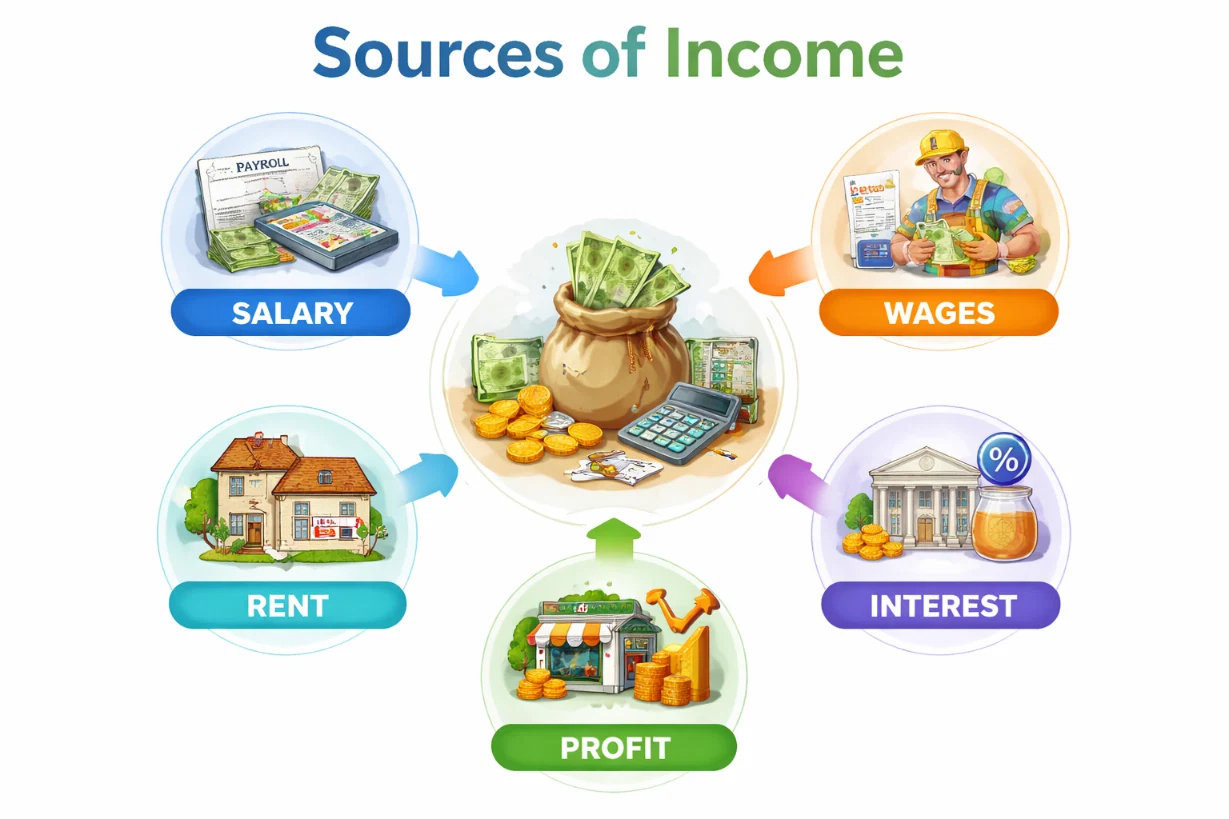
Income is money received on a regular basis from work, investments, or other sources.
Categories of Income Sources:
|
Category |
Description |
Examples |
|---|---|---|
|
Active Income (Earned Income) |
Money earned by actively working or providing a service. It requires your direct time and effort. |
• Salary (fixed monthly payment from employer) |
|
Passive Income |
Money earned from assets or activities that do not require daily active involvement. Initial effort or investment is often required. |
• Rental income from property you own |
Sources of Income for Different Individuals:
|
Individual |
Potential Sources of Income |
|---|---|
|
Student |
Pocket money from parents/guardians, gifts, small jobs (e.g., washing cars for neighbors), selling handmade crafts. |
|
Employed Adult |
Monthly salary, overtime pay, bonuses, allowances (transport, housing). |
|
Self-Employed Person (e.g., Barber) |
Fees from haircuts, sale of hair products. |
|
Farmer |
Sale of crops, milk, eggs, livestock. |
|
Retired Person |
Pension payments, rental income, investment income, support from family. |
|
Artist/Musician |
Sale of artwork, performance fees, royalties from music sales/streaming. |
b) Explain the Importance of Budgeting in Day-to-Day Life
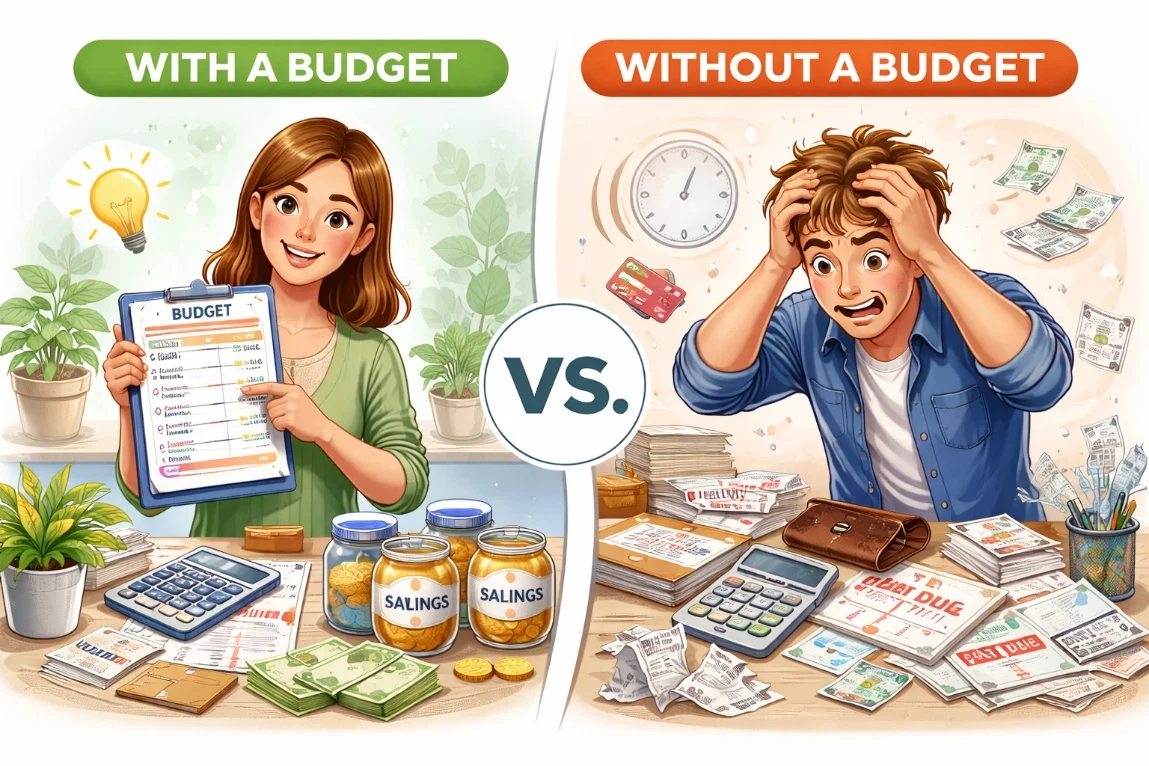
A budget is a plan for how to spend and save money over a specific period. Budgeting is the process of creating and following this plan.
Importance of Budgeting:
|
Importance |
Explanation |
|---|---|
|
Provides Financial Clarity |
Shows exactly how much money is coming in and where it is going. Prevents wondering "Where did all my money go?" |
|
Controls Spending |
Helps you live within your means. By allocating money to specific categories, you are less likely to overspend. |
|
Enables Saving |
A budget includes a line for savings, making it a priority rather than an afterthought. |
|
Helps Achieve Financial Goals |
Whether saving for a phone, school fees, or a holiday, a budget provides a roadmap to reach those goals. |
|
Avoids Unnecessary Debt |
Planning expenses reduces the need to borrow money for everyday needs. |
|
Identifies Wasteful Spending |
Tracking expenses reveals where money is being spent on non-essential items (impulsive buying). |
|
Reduces Financial Stress |
Knowing you have a plan and are in control of your finances provides peace of mind. |
|
Prepares for Emergencies |
A budget that includes an emergency fund helps you handle unexpected expenses (e.g., medical bills, car repair) without derailing your finances. |
c) Prepare a Simple Budget for Personal Finance Management
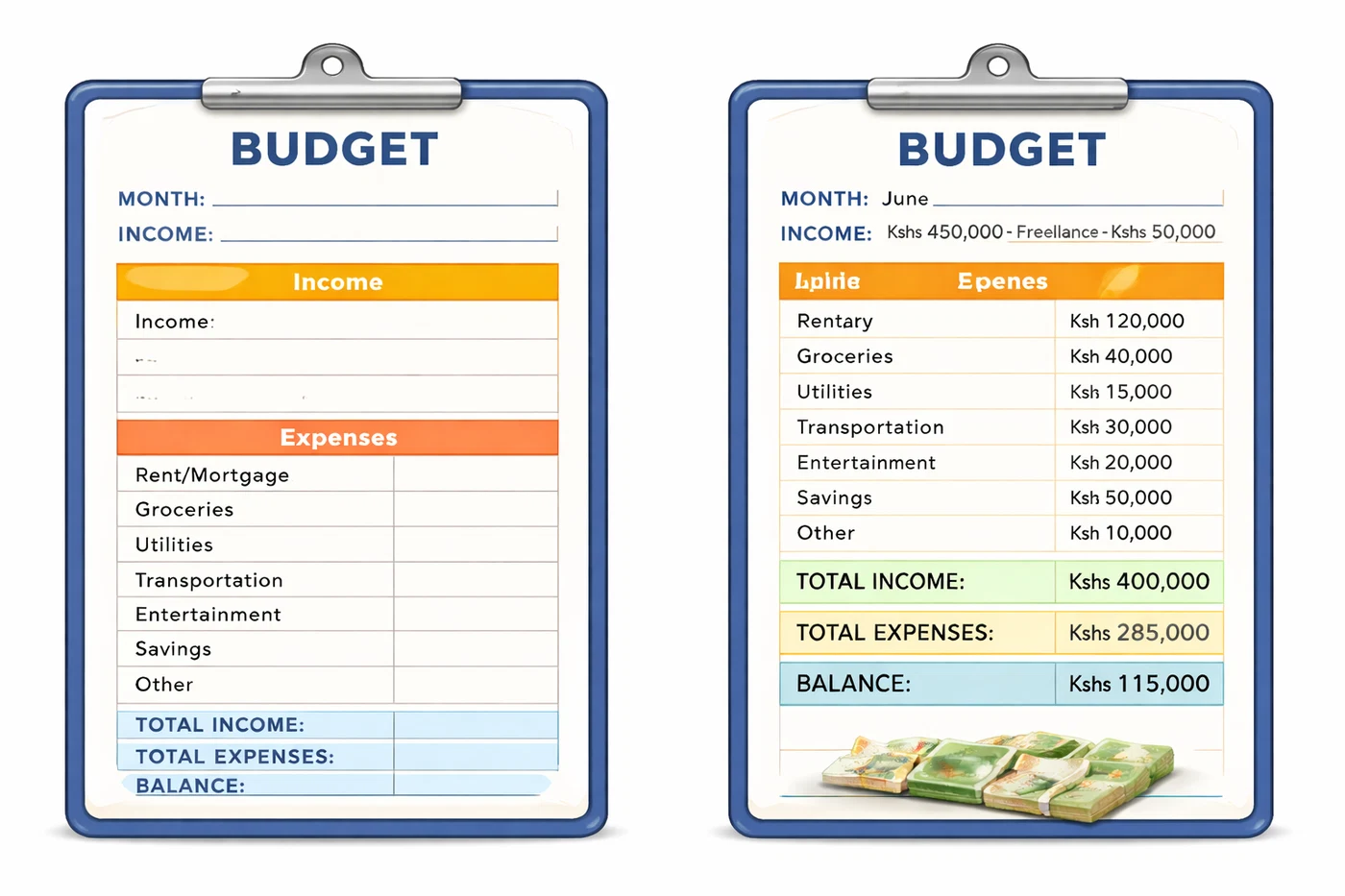
Steps to Create a Personal Budget:
Step 1: List All Sources of Income
Write down all the money you expect to receive during the month. This could be pocket money, earnings from a small job, or gifts.
Step 2: List All Planned Expenses
Categorize your spending. Start with essential needs, then savings, then wants.
- Needs (Essential): Food, transport, school supplies, rent contribution, airtime for essential communication.
- Savings: Money set aside for future goals (new shoes, a trip, emergency fund).
- Wants (Discretionary): Entertainment, snacks, movies, games, non-essential shopping.
Step 3: Assign Amounts to Each Category
Estimate how much you will spend in each category. Be realistic.
Step 4: Calculate the Difference
Subtract total expenses from total income.
- If Income > Expenses, you have a surplus. You can save more or allocate to wants.
- If Income < Expenses, you have a deficit. You must reduce spending, especially on wants, or find ways to increase income.
Step 5: Track and Adjust
Record your actual spending and compare it to your budget. Adjust future budgets based on what you learn.
Example Personal Budget for a Student (Monthly):
|
Item |
Budgeted Amount (Ksh) |
Actual Amount (Ksh) |
Difference |
|---|---|---|---|
|
INCOME | |||
|
Pocket money from parents |
2,000 |
2,000 |
0 |
|
Money from weekend chores |
500 |
600 |
+100 |
|
Total Income |
2,500 |
2,600 |
+100 |
|
EXPENSES | |||
|
Needs: | |||
|
Transport to/from school |
600 |
550 |
-50 |
|
Airtime |
200 |
200 |
0 |
|
School snacks/lunch contribution |
800 |
800 |
0 |
|
Savings: | |||
|
Savings for new school bag |
300 |
300 |
0 |
|
Wants: | |||
|
Weekend outing with friends |
400 |
550 |
+150 |
|
Mobile game credit |
100 |
100 |
0 |
|
Total Expenses |
2,400 |
2,500 |
+100 |
|
SURPLUS / (DEFICIT) |
+100 |
+100 |
Analysis: The student received more income than planned and spent more on the outing than budgeted. They should adjust next month's budget to reflect actual spending habits or control spending on wants.
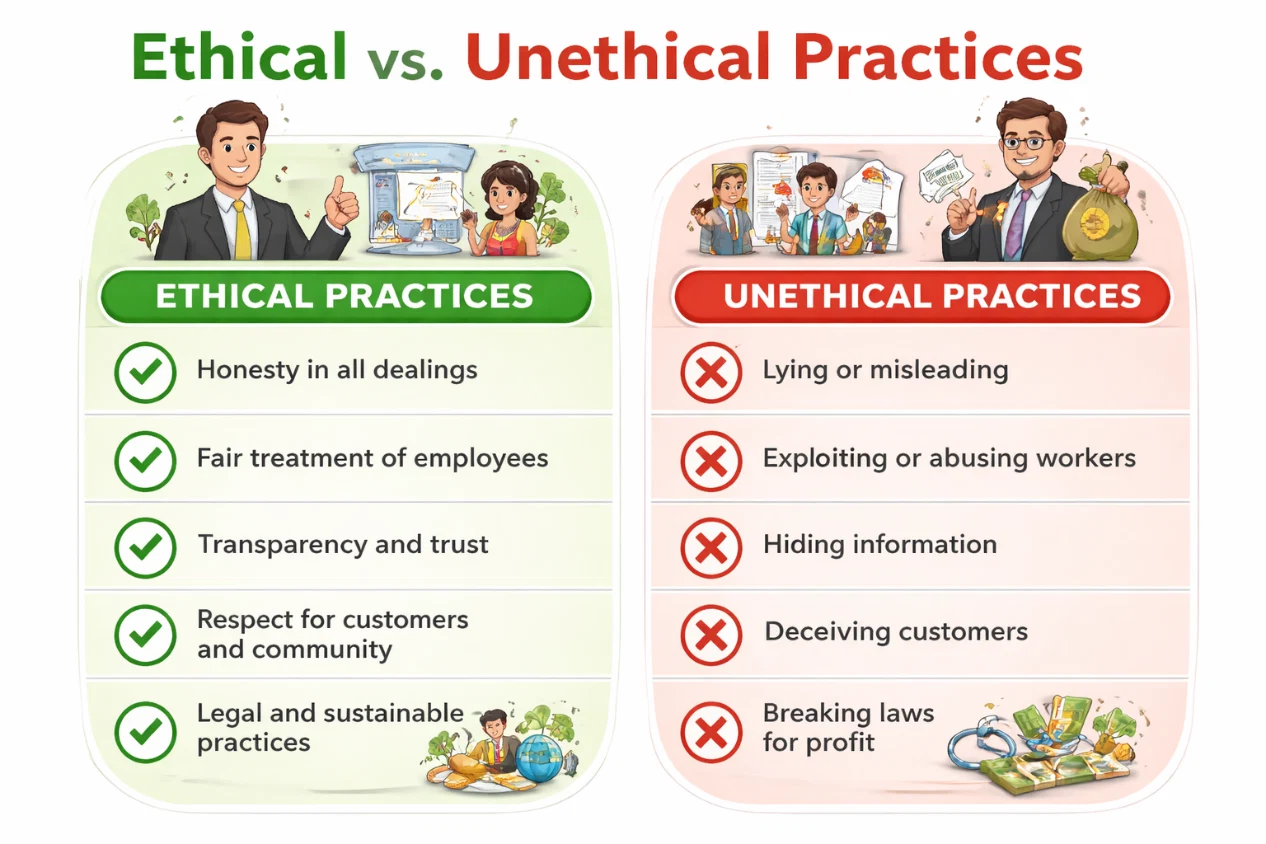
d) Explore Ethical and Unethical Practices in Budgeting and Spending
Ethical Practices are good habits that lead to financial well-being and responsibility.
Unethical Practices are bad habits that can lead to financial trouble and affect others negatively.
|
Ethical Practices |
Unethical Practices |
|---|---|
|
Creating and following a budget. |
Spending without any plan or budget. |
|
Prioritizing needs over wants. |
Buying wants before needs are met. |
|
Saving a portion of income regularly. |
Spending all income with no savings. |
|
Comparing prices before buying to get best value. |
Impulse buying without considering price or necessity. |
|
Avoiding unnecessary debt; borrowing only when essential and with a repayment plan. |
Accumulating debt for non-essential items; borrowing to repay other debts. |
|
Paying bills and debts on time. |
Delaying or avoiding bill payments even when you have the money. |
|
Being honest about your financial situation with family members who depend on you. |
Hiding spending or debt from family members. |
|
Returning borrowed money as promised. |
Defaulting on loans from friends, family, or institutions. |
|
Living within your means. |
Trying to "keep up with the Joneses" by spending beyond your income. |
Consequences of Unethical Budgeting/Spending Practices:
|
Unethical Practice |
Potential Consequences |
|---|---|
|
Spending without a budget |
Running out of money before month end, inability to pay essential bills. |
|
Impulse buying |
Accumulating unnecessary items, debt, financial stress. |
|
Defaulting on loans |
Damaged credit rating, difficulty getting future loans, legal action, loss of assets, strained relationships with lenders. |
|
Hiding spending from family |
Erosion of trust, relationship conflicts. |
e) Practice Financial Planning in Income Management
Financial planning involves setting goals and creating a strategy to achieve them. Income management is a key part of this.
Steps in Personal Financial Planning:
- Set Financial Goals:
- Short-term: Saving for a new pair of shoes in 3 months.
- Medium-term: Saving for a school trip in 1 year.
- Long-term: Saving for university fees or starting a business after school.
- Create a Budget: Use the budget you prepared to guide your spending and saving.
- Build an Emergency Fund: Aim to save a small amount regularly to cover unexpected expenses (e.g., a broken phone screen, medical costs).
- Manage Debt Wisely: If you must borrow, understand the terms (interest rate, repayment period) and have a clear plan to repay.
- Invest for the Future: As income grows, learn about safe investment options to grow wealth over time (e.g., savings accounts, SACCOs, government bonds).
- Review and Adjust: Regularly review your financial plan and budget to ensure you are on track. Life changes, and your plan should adapt.
Practical Tips for Income Management:
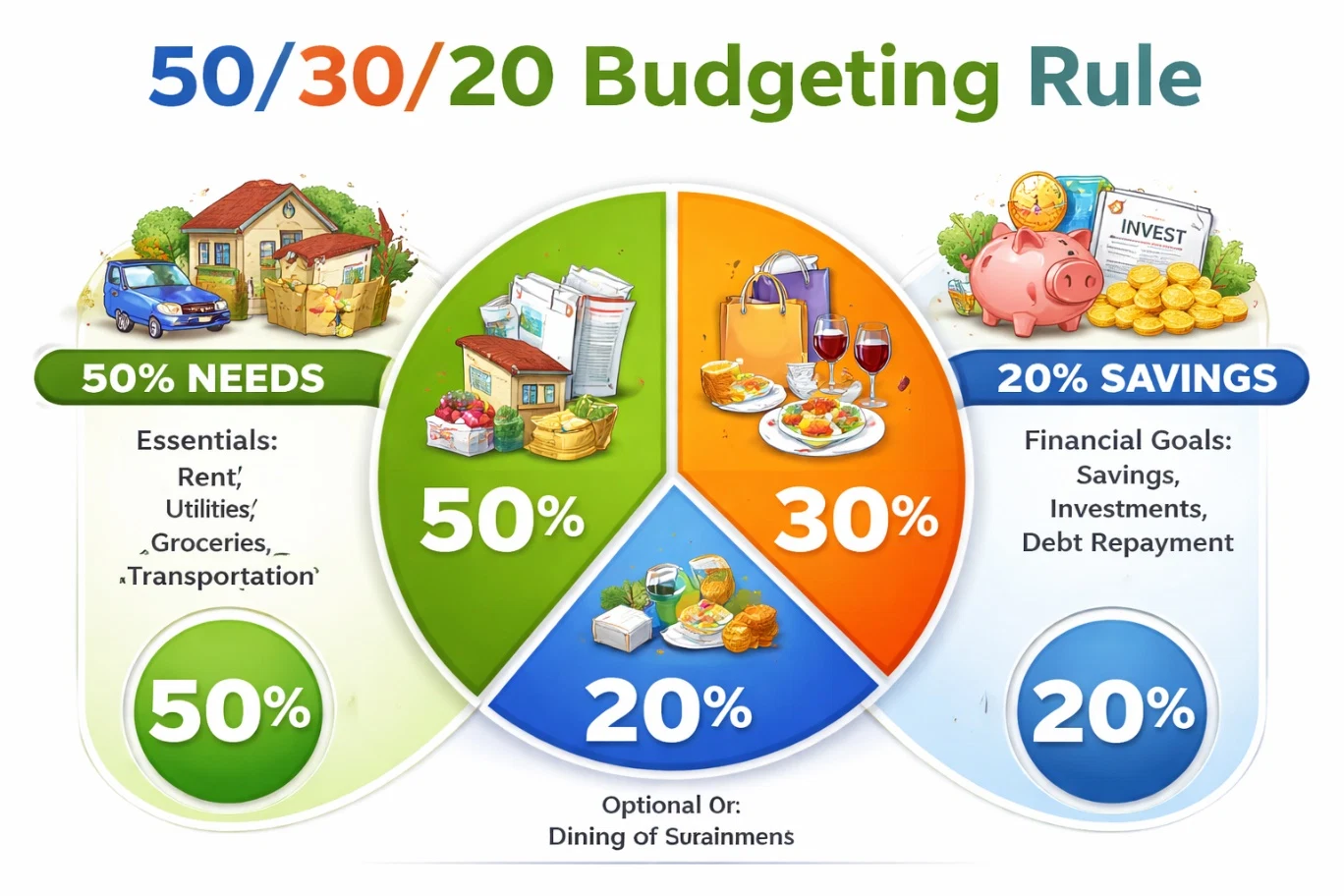
- Use the 50/30/20 Rule as a Guideline:
- 50% of income for Needs (essentials like food, rent, transport).
- 30% for Wants (entertainment, dining out, hobbies).
- 20% for Savings and Debt Repayment.
- "Pay Yourself First": Treat savings as a non-negotiable expense. Transfer money to savings immediately after receiving income, before spending on other things.
- Track Every Shilling: For one month, write down everything you spend. You will be surprised where small amounts go (e.g., sweets, small airtime top-ups). This awareness is the first step to better control.
- Use Money Boxes or Bank Accounts: Physically separate savings from spending money. A piggy bank or a dedicated bank savings account makes it harder to dip into savings impulsively.