
Learning Outcomes
By the end of this sub-strand, the learner should be able to:
- a) Explain the reasons for saving and investment in financial management
- b) Explore the methods of saving and investment for effective financial management
- c) Prepare a simple saving and investment plan for personal financial management
- d) Analyse ethical and unethical practices in saving and investing money
- e) Practice saving and investing for individual financial growth
a) Explain the Reasons for Saving and Investment in Financial Management
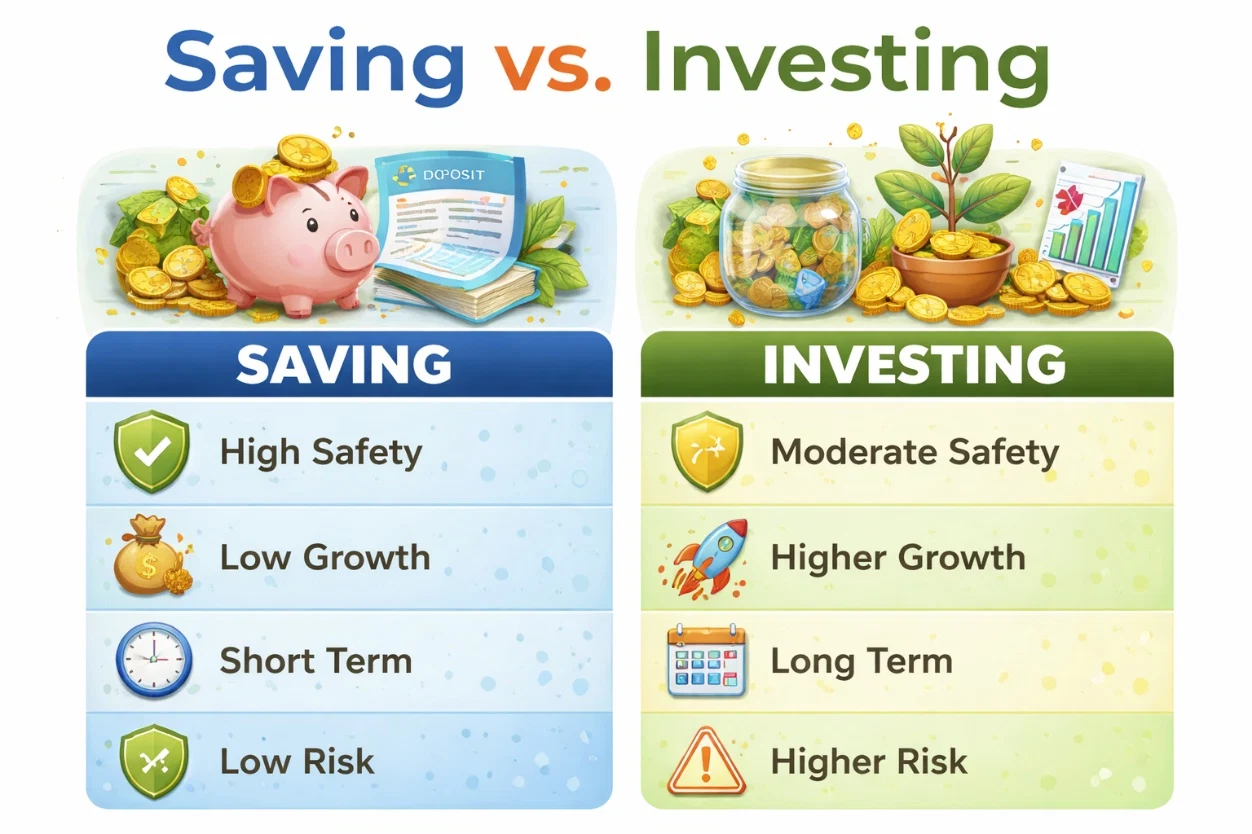
Saving: The act of setting aside a portion of current income for future use. It typically involves putting money in safe, easily accessible places.
Investment: The act of using money to purchase an asset with the expectation that it will generate income or increase in value over time. Investments carry some risk.
|
Reasons for Saving |
Reasons for Investing |
|---|---|
|
Emergency Fund: To cover unexpected expenses like medical bills or car repairs. |
Wealth Creation: To grow money over the long term, faster than inflation. |
|
Short-Term Goals: Saving for a specific purchase in the near future (e.g., a new phone, a holiday). |
Long-Term Goals: To achieve major life goals like buying a house, funding education, or retirement. |
|
Financial Security: Having a cash buffer provides peace of mind in case of job loss or income disruption. |
Generating Passive Income: To earn money without actively working (e.g., dividends from shares, rental income). |
|
Avoiding Debt: Using savings to pay for things instead of borrowing on credit. |
Beating Inflation: Savings account interest may be lower than inflation, eroding purchasing power. Investments aim to provide returns that outpace inflation. |
|
Safety and Liquidity: Savings are generally safe and can be accessed quickly when needed. |
Building a Nest Egg: Accumulating a substantial amount of capital for future financial independence. |
Key Difference:
|
Feature |
Saving |
Investment |
|---|---|---|
|
Goal |
Preserve capital, short-term goals |
Grow capital, long-term goals |
|
Risk |
Very low |
Low to high (depending on the investment) |
|
Return |
Low (interest) |
Potentially higher (dividends, capital gains, rent) |
|
Liquidity |
High (easy to access) |
Varies (some investments are harder to sell quickly) |
|
Time Horizon |
Short-term (months to 2 years) |
Long-term (3+ years) |
b) Explore the Methods of Saving and Investment for Effective Financial Management
Methods of Saving:
|
Method |
Description |
Advantages |
Disadvantages |
|---|---|---|---|
|
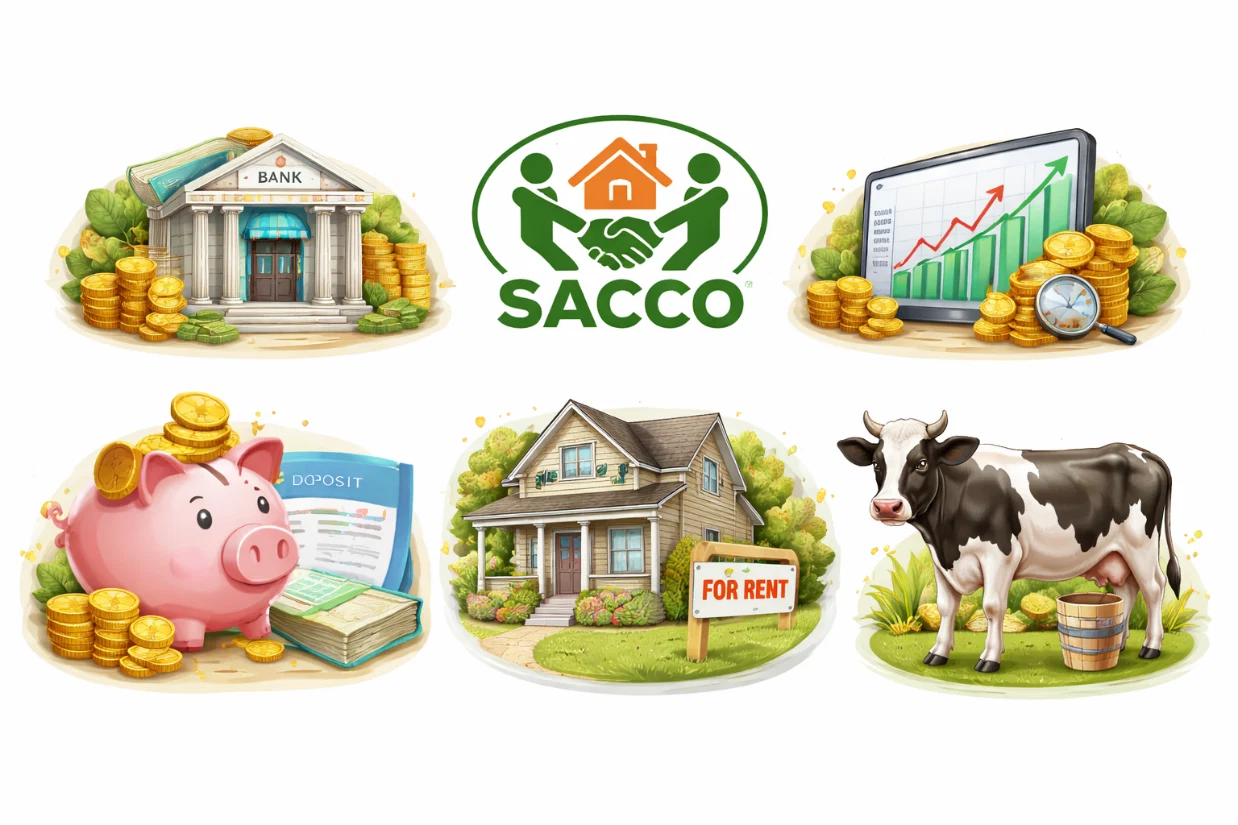
Piggy Bank / Money Box |
Keeping cash in a secure container at home. |
Simple, tangible, good for small amounts and children. |
No interest earned, risk of theft, temptation to spend. |
|
Savings Account at a Bank |
Depositing money in a bank account that earns interest. |
Safe, earns interest, easily accessible via withdrawal/ATM. |
Interest rates may be low, minimum balance requirements. |
|
Fixed Deposit Account |
Depositing a lump sum for a fixed period (e.g., 6 months, 1 year) at a higher interest rate. |
Higher interest than savings account, disciplined saving. |
Money is locked in; penalties for early withdrawal. |
|
Mobile Money Savings (e.g., M-Shwari, KCB M-Pesa) |
Saving through mobile phone platforms linked to M-Pesa. |
Convenient, accessible, often earns interest. |
Transaction fees may apply. |
|
SACCO (Savings and Credit Cooperative) |
A member-owned cooperative where members pool savings and can access loans. |
Higher dividends (interest) on savings, access to affordable loans. |
Savings are not as liquid; may require notice to withdraw. |
Methods of Investment:
|
Method |
Description |
Potential Returns |
Risk Level |
|---|---|---|---|
|
Treasury Bills and Bonds |
Lending money to the government for a fixed period in exchange for interest. |
Moderate, fixed interest. |
Very low (backed by government). |
|
Shares (Stocks) |
Buying a small ownership stake in a publicly traded company (through Nairobi Securities Exchange). |
Dividends and capital gains (selling at a higher price). |
Medium to High (share prices can go up and down). |
|
Unit Trusts / Mutual Funds |
Pooling money with other investors to be professionally managed in a diversified portfolio of shares, bonds, etc. |
Varies based on fund type; professional management. |
Varies (low to high depending on fund type). |
|
Real Estate |
Buying land or buildings to earn rental income or sell at a profit. |
Rental income and capital appreciation. |
Medium (property values can fluctuate; illiquid). |
|
Starting or Expanding a Business |
Investing capital into a business venture to generate profit. |
Potentially high (profit). |
High (business may fail). |
|
Investing in a SACCO |
Buying shares in a SACCO to become a member and earn dividends. |
Dividends paid on share capital. |
Low to Medium (depends on SACCO management). |
|
Agriculture (e.g., Livestock) |
Buying a cow, goats, or chickens that produce milk, eggs, or offspring for sale. |
Income from sale of produce or animals. |
Medium (risk of disease, drought, market price fluctuations). |
c) Prepare a Simple Saving and Investment Plan for Personal Financial Management
A saving and investment plan is a roadmap for achieving financial goals.
Steps to Create a Plan:
Step 1: Define Your Financial Goals
Be specific, measurable, achievable, relevant, and time-bound (SMART).
|
Goal |
Type |
Timeframe |
Estimated Cost (Ksh) |
|---|---|---|---|
|
Emergency Fund |
Saving |
6 months |
10,000 |
|
New Bicycle |
Saving |
1 year |
8,000 |
|
School Trip Next Year |
Saving |
14 months |
15,000 |
|
Start a Small Poultry Project |
Investment |
2 years |
20,000 |
Step 2: Assess Your Current Financial Situation
- What is your current income (e.g., monthly pocket money, gifts)?
- What are your regular expenses?
- How much can you realistically save each month?
Step 3: Determine Your Saving/Investment Strategy
Using the example goals above, and assuming a student can save Ksh 1,000 per month:
|
Month |
Action |
Amount (Ksh) |
Balance Towards Goals |
|---|---|---|---|
|
1-10 |
Save for Emergency Fund (in M-Shwari) |
1,000/month |
10,000 (Goal Met after 10 months) |
|
11-18 |
Save for Bicycle (in Bank Savings Account) |
1,000/month |
8,000 (Goal Met after 8 months) |
|
19-33 |
Save for School Trip (in SACCO savings) |
1,000/month |
15,000 (Goal Met after 15 months) |
|
34-53 |
Save for Poultry Project (Fixed Deposit or SACCO) |
1,000/month |
20,000 (Goal Met after 20 months) |
Step 4: Choose Specific Products/Accounts
- Emergency Fund: M-Shwari (easy access).
- Bicycle Savings: Bank Savings Account (safe, earns small interest).
- School Trip: SACCO (higher interest, but less accessible until trip).
- Poultry Investment: Fixed Deposit or SACCO Shares (to earn higher returns before starting the project).
Step 5: Implement and Monitor
- Set up automatic transfers if possible (e.g., from M-Pesa to M-Shwari).
- Review progress every 3 months.
- Adjust the plan if income or goals change.
Sample Simple Saving Plan Template:
|
Month |
Income |
Planned Savings |
Actual Savings |
Cumulative Savings |
Notes |
|---|---|---|---|---|---|
|
Jan |
2,000 |
500 |
500 |
500 |
On track |
|
Feb |
2,000 |
500 |
400 |
900 |
Spent more on transport |
|
Mar |
2,500 |
500 |
600 |
1,500 |
Received extra gift money |
Key Inquiry Question: How do I create a personal saving and investment plan?
d) Analyse Ethical and Unethical Practices in Saving and Investing Money
Ethical behavior in saving and investing is about honesty, prudence, and responsibility.
|
Ethical Practices |
Unethical Practices |
|---|---|
|
Saving money from legitimate sources of income. |
Saving money obtained through illegal or unethical means (e.g., theft, corruption). |
|
Investing in legal and legitimate businesses or schemes. |
Investing in or promoting pyramid schemes, Ponzi schemes, or other fraudulent investments. |
|
Being honest about investment risks and potential returns. |
Promising guaranteed, unrealistic returns to lure investors. |
|
Paying taxes on investment income as required by law. |
Hiding investment income to evade taxes. |
|
Using savings for intended goals, not diverting them impulsively. |
Dipping into long-term savings for non-emergency, frivolous purchases. |
|
Researching and understanding an investment before committing money. |
Investing blindly based on rumors or pressure from friends/family without understanding the risks. |
|
Diversifying investments to manage risk (not putting all eggs in one basket). |
Gambling with all savings on a single high-risk venture hoping for a quick fortune. |
|
Seeking professional financial advice when needed. |
Giving financial advice without proper qualifications or knowledge. |
Warning Signs of Unethical Investment Schemes (Red Flags):
- Promises of guaranteed high returns with no risk.
- Pressure to invest quickly before the "opportunity" disappears.
- Complex or secretive strategies that are not clearly explained.
- Unlicensed individuals or companies soliciting investments.
- Returns that seem too good to be true (they usually are).

e) Practice Saving and Investing for Individual Financial Growth
Putting principles into practice is how financial growth happens.
Practical Ways to Start Saving as a Student:
- Use a Money Box: Start by saving all coins. It adds up surprisingly fast.
- Open a Junior Savings Account: Many banks in Kenya offer accounts for minors with no or low fees. Go with a parent/guardian to open one.
- Set a Savings Goal: Make it visual. Draw a thermometer chart and color it in as you save.
- Avoid Impulse Buying: Before buying a snack or small item, ask yourself: "Do I really need this, or can this money go towards my bigger goal?"
- Save Windfalls: When you receive unexpected money (gifts, bonuses), save at least half of it.
- Earn Extra Income: Find age-appropriate ways to earn small amounts, like washing the family car, helping with chores for neighbors, or selling handmade items.
Practical Ways to Start Investing (for future or with small amounts):
- Learn First: Read books, watch educational videos, and attend financial literacy sessions before investing significant money.
- Start Small with Government Bonds: M-Akiba is a government bond that can be bought via M-Pesa for as little as Ksh 3,000. It's a safe way to learn about earning interest.
- Join a SACCO: Many families belong to SACCOs. Learn how they work and consider opening a junior membership if available.
- Invest in Skills: Sometimes the best investment is in yourself—paying for a short course or workshop that can increase your future earning potential.
- Consider a Small Livestock Project: With family support, raising a few chickens for eggs can be a practical introduction to investing in an income-generating asset.
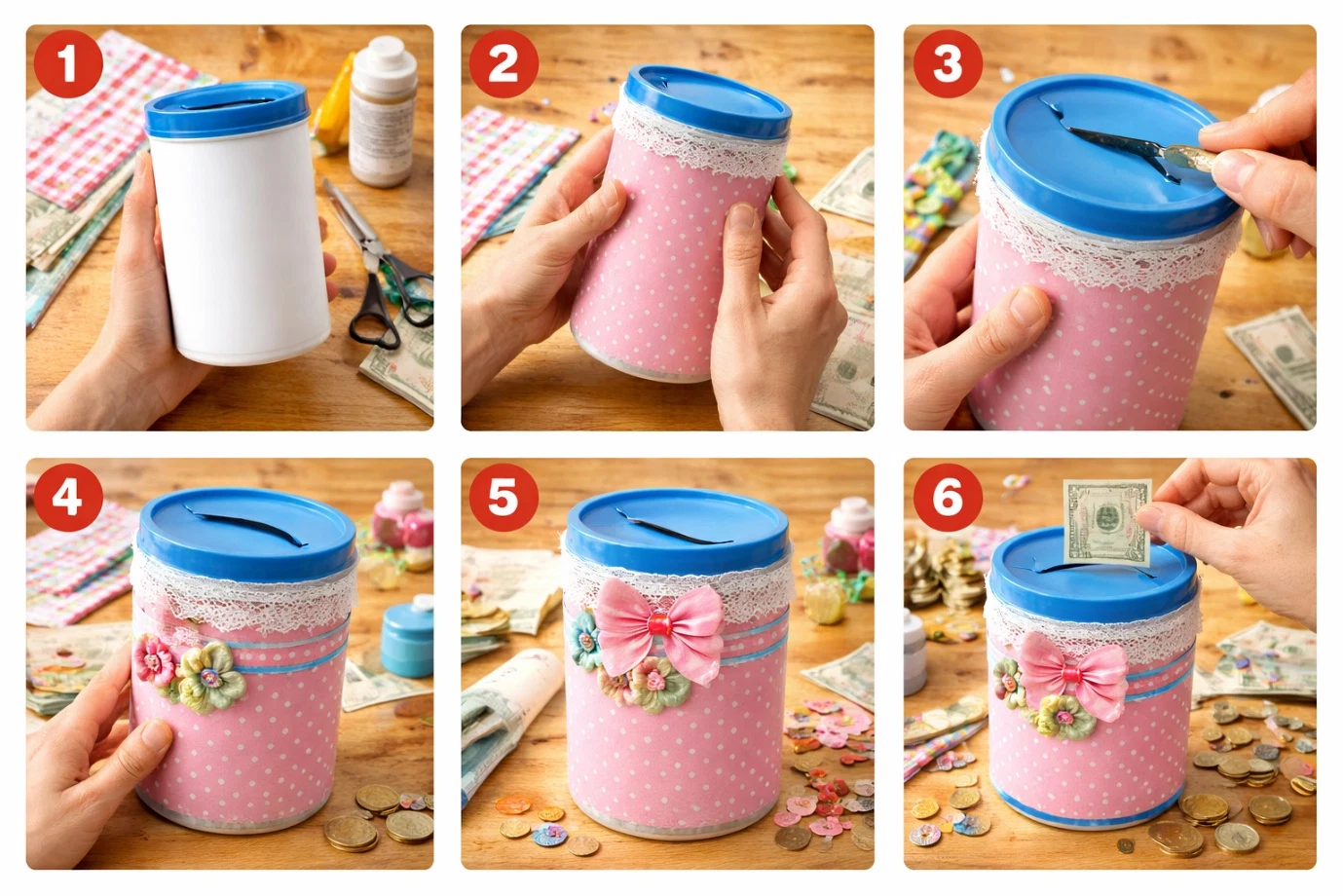
Making a Money Box from Locally Available Materials:
Materials:
- An empty plastic container with a lid (e.g., a large yogurt tub, margarine container).
- Wrapping paper, old magazine cutouts, or paint for decoration.
- Glue.
- A sharp knife or scissors (to be used with adult supervision).
Procedure:
- Clean and dry the container thoroughly.
- Ask an adult to cut a rectangular slot in the lid, just large enough for coins and folded notes to pass through.
- Decorate the container using wrapping paper, colorful magazine pictures, or paint. You can write your savings goal on it (e.g., "School Trip Fund").
- Place the lid on the container. You now have a personalized savings tool!
CONCLUSION
These comprehensive notes cover all five strands of the Grade 8 Pre-Technical Studies curriculum as outlined by the Kenya Institute of Curriculum Development (KICD). The subject integrates essential knowledge from Business, Computer, and Technical Studies to equip learners with practical skills for the modern world. By studying these notes, learners will develop competencies in safety, communication, materials, tools, production, and entrepreneurship—all critical for personal development and future career pathways.