
1. Physical properties of pure water
Water is an important compound that supports life.
At ordinary room conditions, pure water is:
- Colourless.
- Odourless.
- Tasteless.
- Transparent.
- Liquid.
- Able to dissolve many substances.
At standard atmospheric pressure, pure water freezes at approximately 0°C and boils at approximately 100°C.
2. Meaning of water hardness
Hard water is water containing significant amounts of dissolved calcium and magnesium ions.
Soft water contains relatively low concentrations of calcium and magnesium ions and generally forms lather readily with soap.
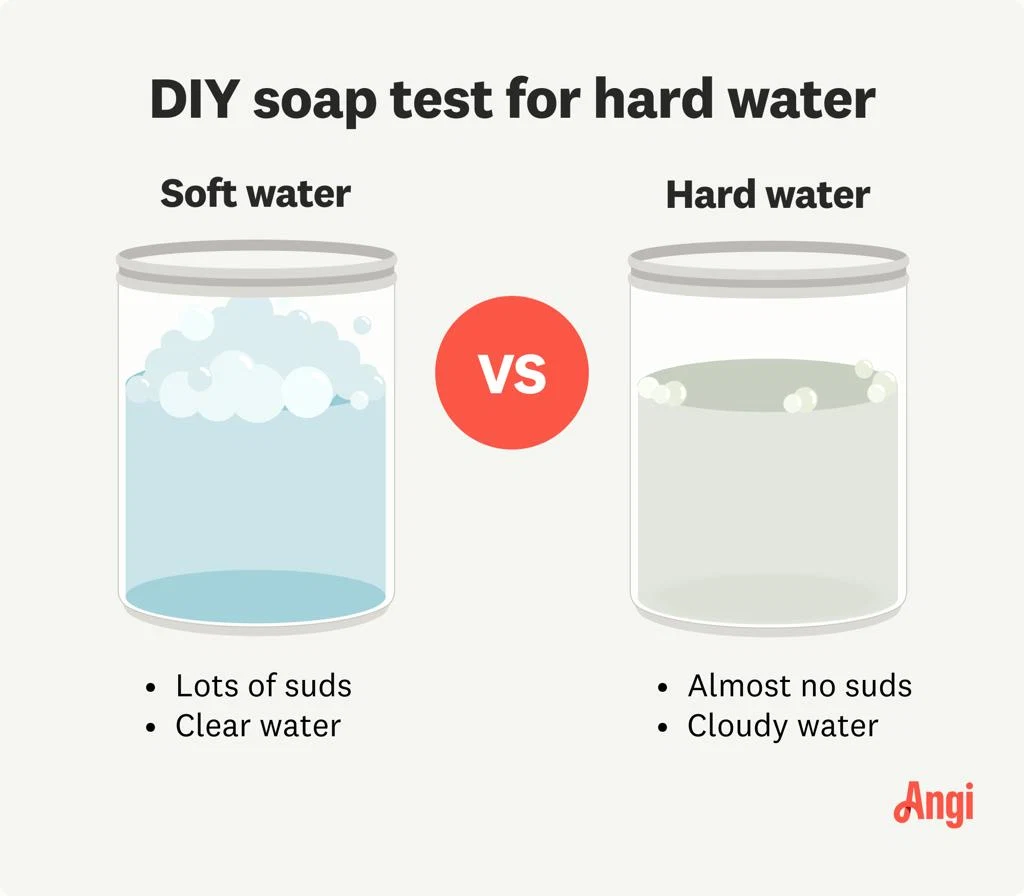
Hard water: Produces little lather with soap
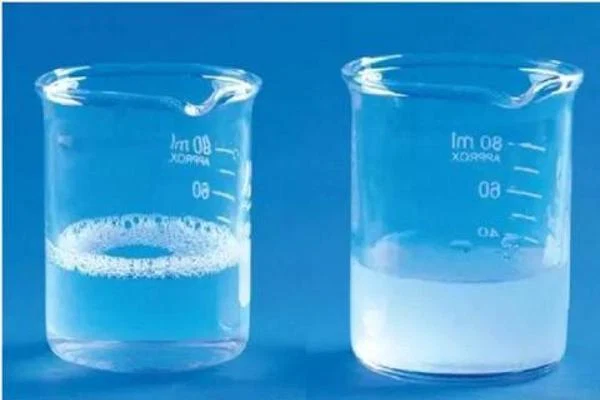
Soft water: Produces lather more readily
3. Types of water hardness
There are two common types.
Temporary hardness is mainly caused by dissolved calcium and magnesium hydrogencarbonates. It can generally be removed by boiling.
Permanent hardness is commonly caused by dissolved calcium and magnesium salts such as sulphates and chlorides. Boiling alone does not remove it effectively.
|
Feature |
Temporary hardness |
Permanent hardness |
|---|---|---|
|
Common cause |
Hydrogencarbonates |
Sulphates and chlorides |
|
Removed by boiling |
Yes, generally |
No |
|
Removed by suitable ion exchange |
Yes |
Yes |
|
Forms soap scum |
Yes |
Yes |
4. Sources of hard and soft water
Hard water often occurs where underground water passes through rocks containing calcium or magnesium compounds, such as limestone.
Rainwater is usually relatively soft when collected without contamination. Surface-water and groundwater hardness depend on the rocks and minerals they have contacted.
5. Methods of softening hard water
Boiling: Removes much temporary hardness by causing certain dissolved salts to form insoluble deposits.
Adding washing soda: Sodium carbonate reacts with calcium ions to form insoluble calcium carbonate, which can then be separated.
Ion exchange: A suitable ion-exchange resin replaces hardness-causing ions with other ions, commonly sodium or hydrogen ions depending on the system.
Distillation: Water is evaporated and the vapour condensed, leaving most dissolved salts behind.
6. Advantages and disadvantages of hard water
|
Advantages |
Disadvantages |
|---|---|
|
Can provide calcium and magnesium minerals |
Uses more soap |
|
May be acceptable and pleasant as drinking water |
Produces soap scum |
|
Some mineral deposits can reduce certain kinds of pipe corrosion |
Forms scale in kettles and heating systems |
|
Useful for certain industrial applications where minerals are desired |
Scale reduces heating efficiency |
7. Advantages and disadvantages of soft water
|
Advantages |
Disadvantages |
|---|---|
|
Forms lather easily |
May contain fewer calcium and magnesium minerals |
|
Uses less soap |
Some softening methods add sodium |
|
Reduces scaling in pipes and appliances |
Softening systems require maintenance |
|
Useful for laundry and cleaning |
Some treated waters may be more corrosive to certain pipes |
8. Experiment: Comparing hard and soft water
Materials: Two test tubes, equal volumes of water samples and a standard soap solution.
Procedure
- Label the test tubes A and B.
- Put equal volumes of each water sample in the tubes.
- Add equal quantities of soap solution.
- Shake both tubes equally.
- Compare the amount of lather formed.
- Add measured drops of soap solution until a stable lather forms and record the quantities needed.
Observation: Water requiring more soap to produce lasting lather is generally harder.
Activity 1.3
- State three physical properties of pure water.
- Differentiate between hard and soft water.
- Explain temporary and permanent hardness.
- Name three ways of softening water.
- State two disadvantages of hard water.