
1. Meaning of reproduction
Reproduction is the biological process through which organisms produce new individuals of their kind.
Flowering plants reproduce sexually through flowers, pollination, fertilisation and seed formation.
2. Structure of a flower
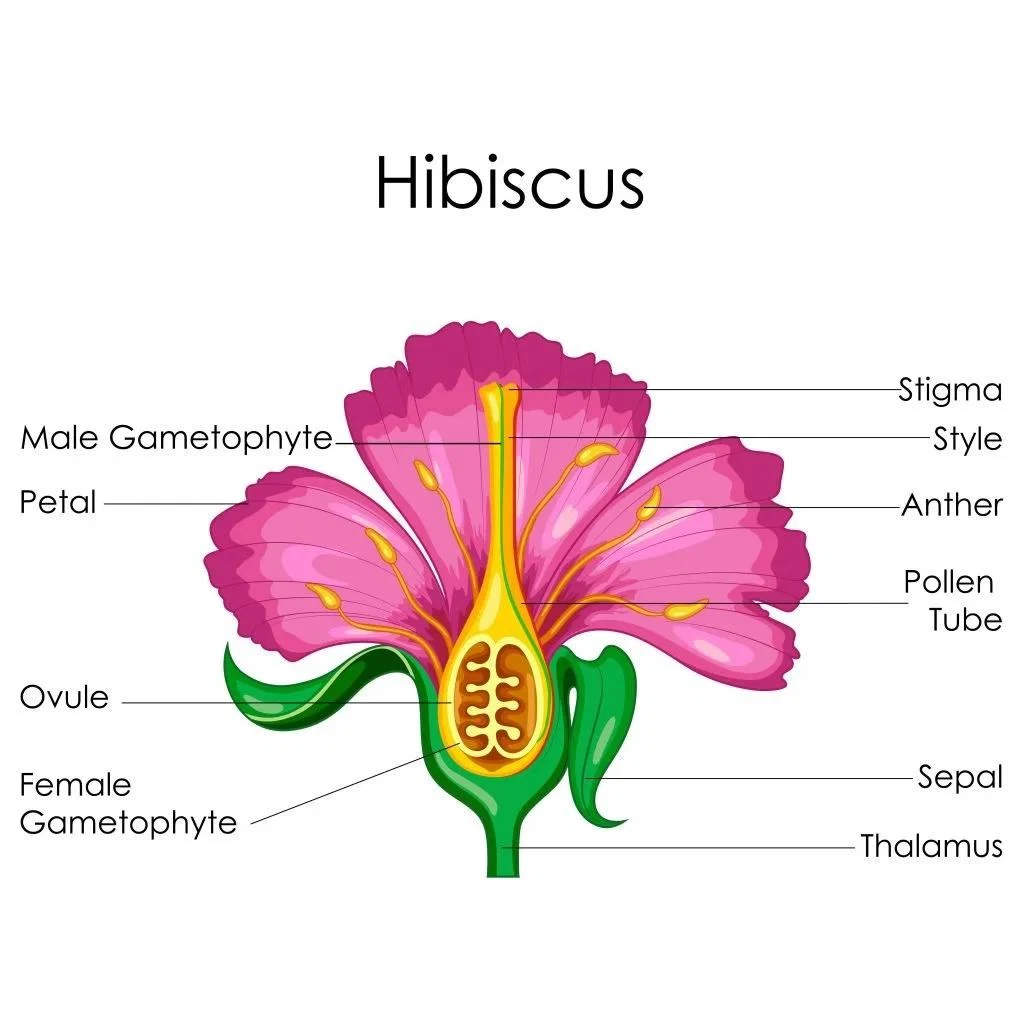
plantspecialists.com
|
Flower part |
Function |
|---|---|
|
Sepal |
Protects the developing flower bud |
|
Petal |
May attract pollinators through colour or scent |
|
Anther |
Produces pollen grains |
|
Filament |
Supports the anther |
|
Stigma |
Receives pollen grains |
|
Style |
Connects stigma to ovary and provides a route for the pollen tube |
|
Ovary |
Contains ovules |
|
Ovule |
Contains the female reproductive structure and develops into a seed after fertilisation |
|
Receptacle |
Supports flower structures |
The male reproductive structure is the stamen, consisting of anther and filament.
The female reproductive structure is the carpel or pistil, consisting of stigma, style and ovary.
3. Meaning of pollination
Pollination is the transfer of pollen grains from an anther to a stigma of a flower of the same species.
Two major types are:
Self-pollination: Transfer of pollen to the stigma of the same flower or another flower on the same plant.
Cross-pollination: Transfer of pollen between flowers on different plants of the same species.
4. Agents of pollination
Pollination can occur through wind, insects, birds, bats and other animals.
Some plants also use water.
5. Adaptations of flowers for pollination
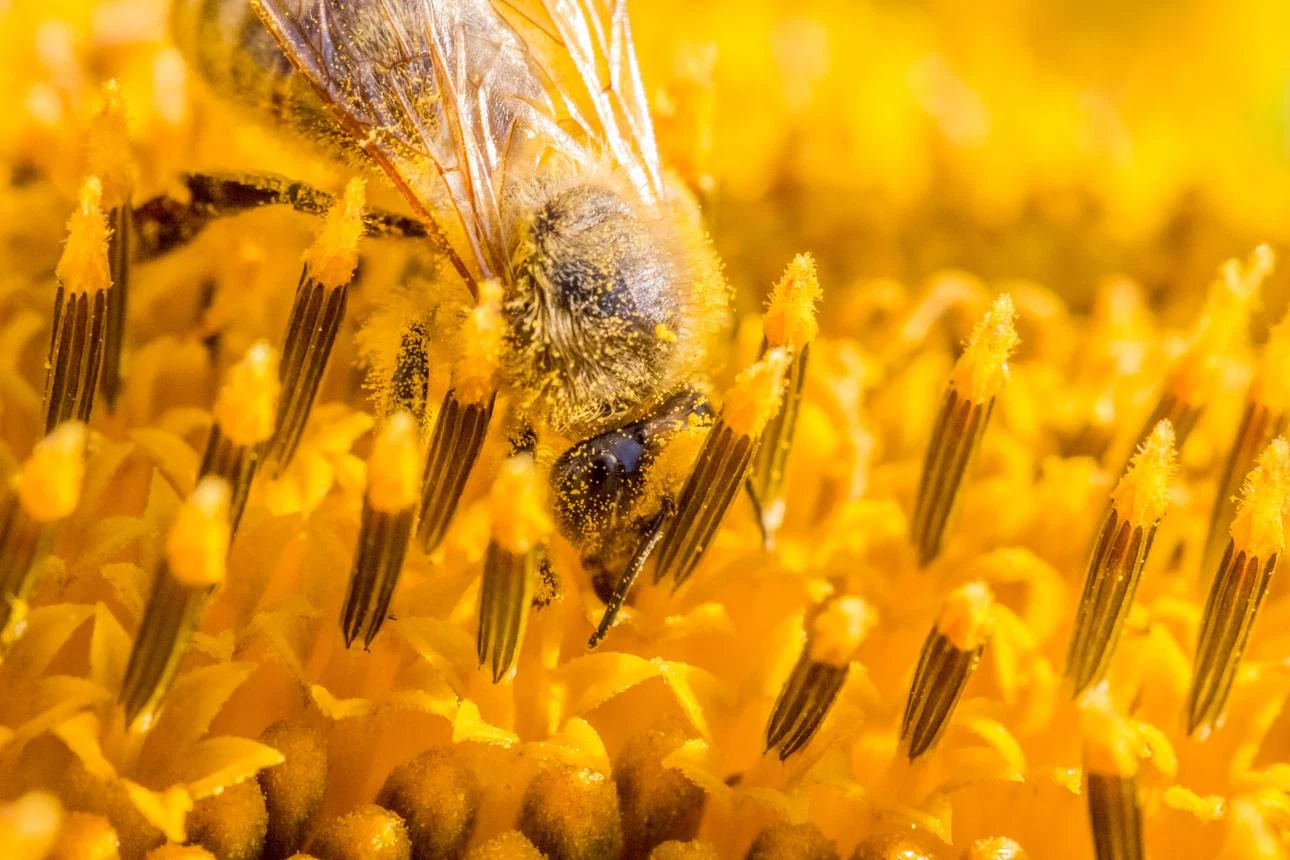
Insect-pollinated flowers
Often colourful, scented and nectar-producing.
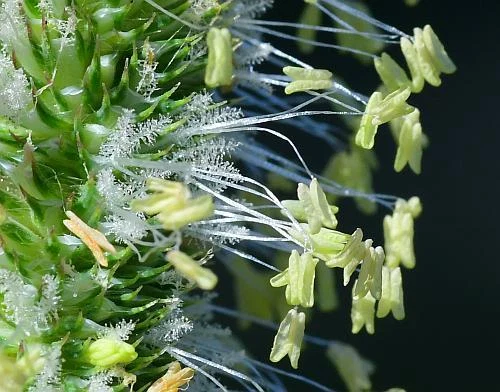
Wind-pollinated flowers
Often small, less showy, with exposed reproductive parts.
|
Feature |
Insect-pollinated flowers |
Wind-pollinated flowers |
|---|---|---|
|
Petals |
Often large and colourful |
Usually small or inconspicuous |
|
Scent |
Often present |
Usually absent |
|
Nectar |
Common in many species |
Usually absent |
|
Pollen |
Often sticky or textured |
Usually light and produced abundantly |
|
Stigma |
Often positioned to contact visiting insects |
Often large or feathery |
|
Anthers |
Positioned to contact pollinators |
Often exposed and dangling |
6. Meaning of fertilisation
Fertilisation is the fusion of male and female gametes to form a zygote.
In flowering plants, a pollen grain may germinate on a compatible stigma and grow a pollen tube down the style towards an ovule.
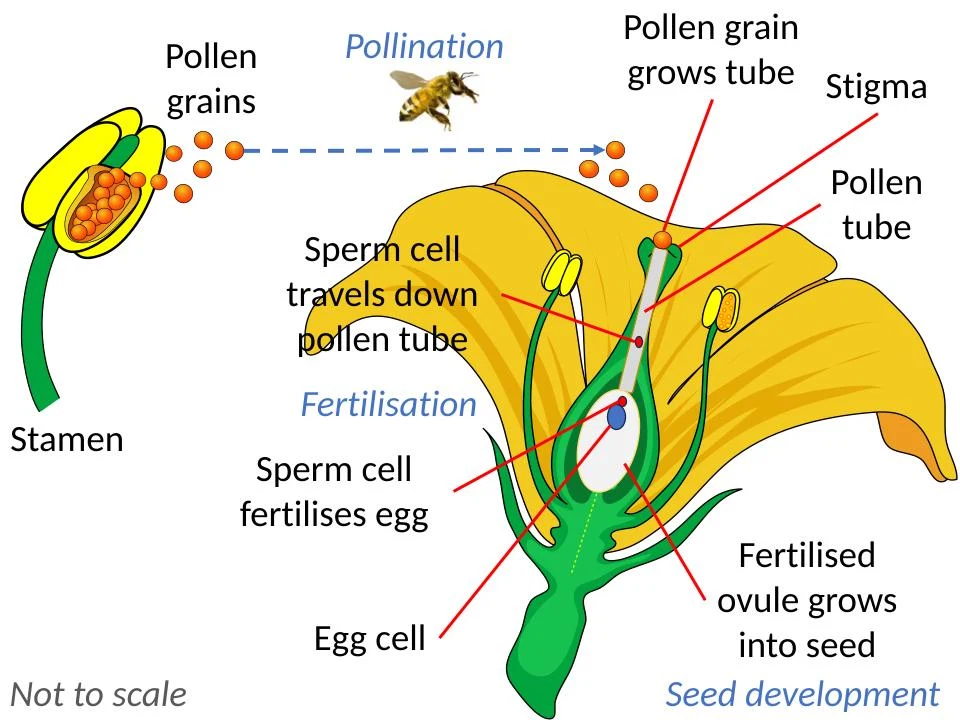
Main steps
- A compatible pollen grain lands on the stigma.
- The pollen grain germinates.
- A pollen tube grows through the style.
- Male gametes travel through the pollen tube to the ovule.
- One male gamete fuses with the egg cell to produce a zygote.
- The fertilised ovule develops into a seed.
Flowering plants also undergo a second fertilisation event that produces nutritive endosperm. This is called double fertilisation.
7. Fruit and seed formation
After successful fertilisation:
- The zygote develops into an embryo.
- The ovule usually develops into a seed.
- The ovary usually develops into a fruit.
- The ovary wall develops into the fruit wall, or pericarp.
- Other flower parts may dry up and fall off.
8. Seed and fruit dispersal
Seed dispersal is the movement of seeds away from their parent plant.
It helps reduce overcrowding, competition and the risk of all offspring being affected by the same unfavourable conditions.
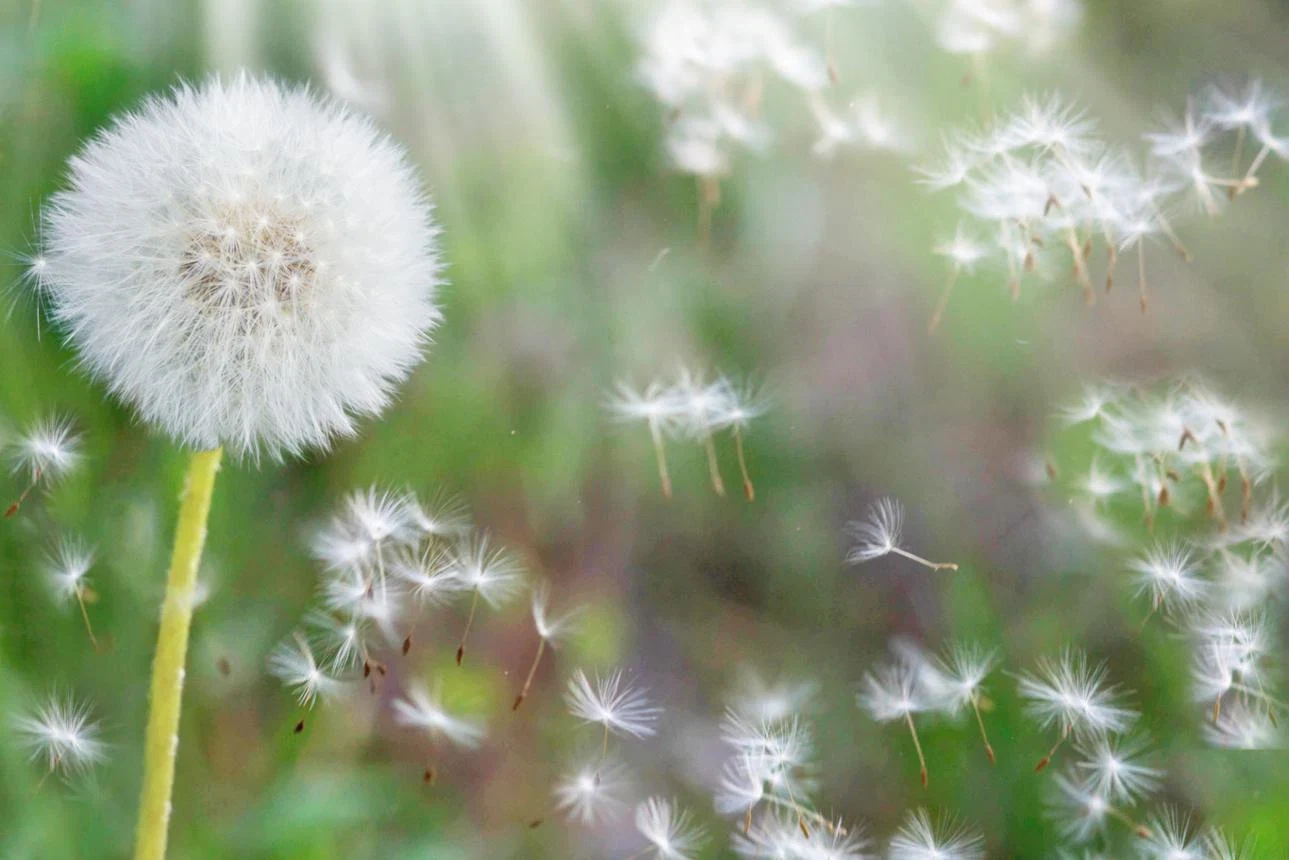
Wind dispersal
Light seeds with hairs or wings.
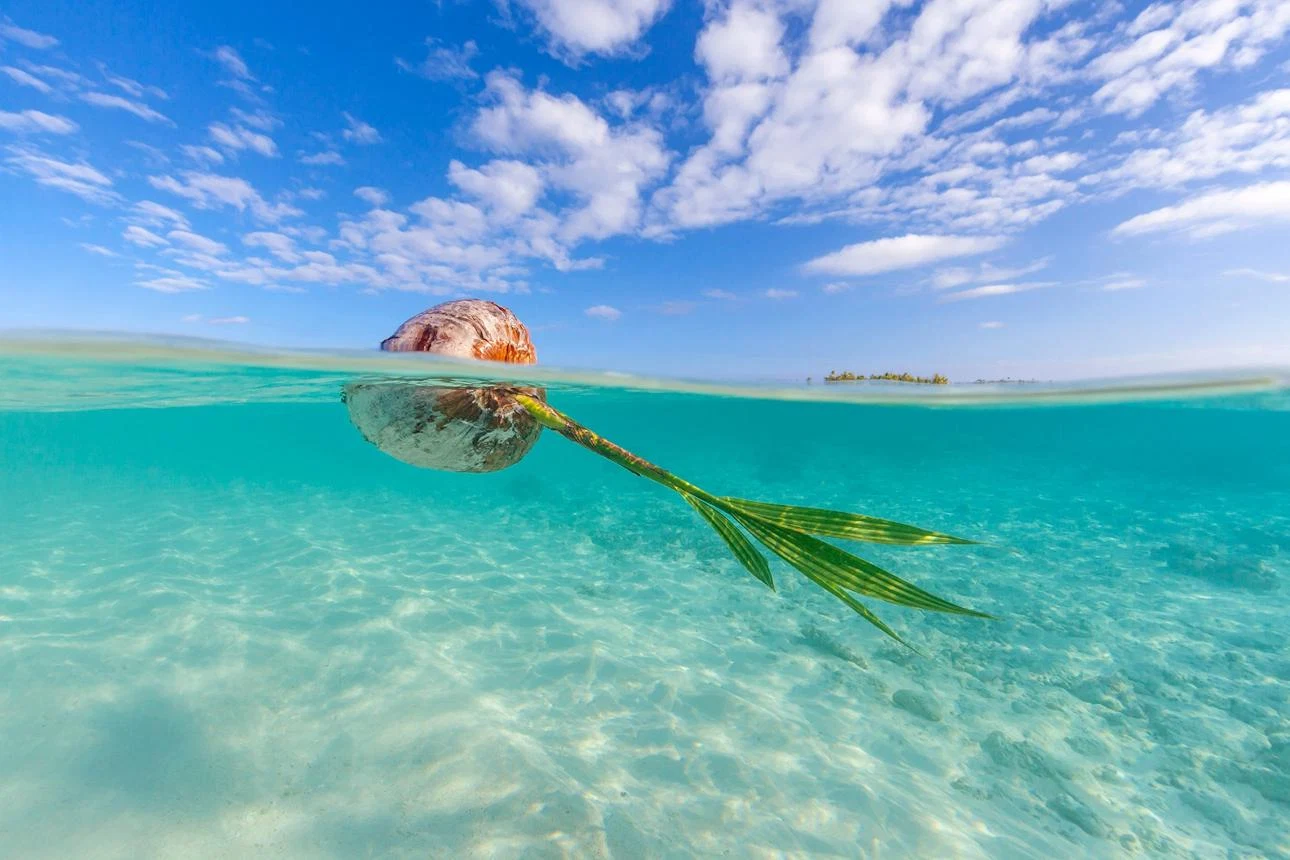
Water dispersal
Buoyant fruits with protective coverings.
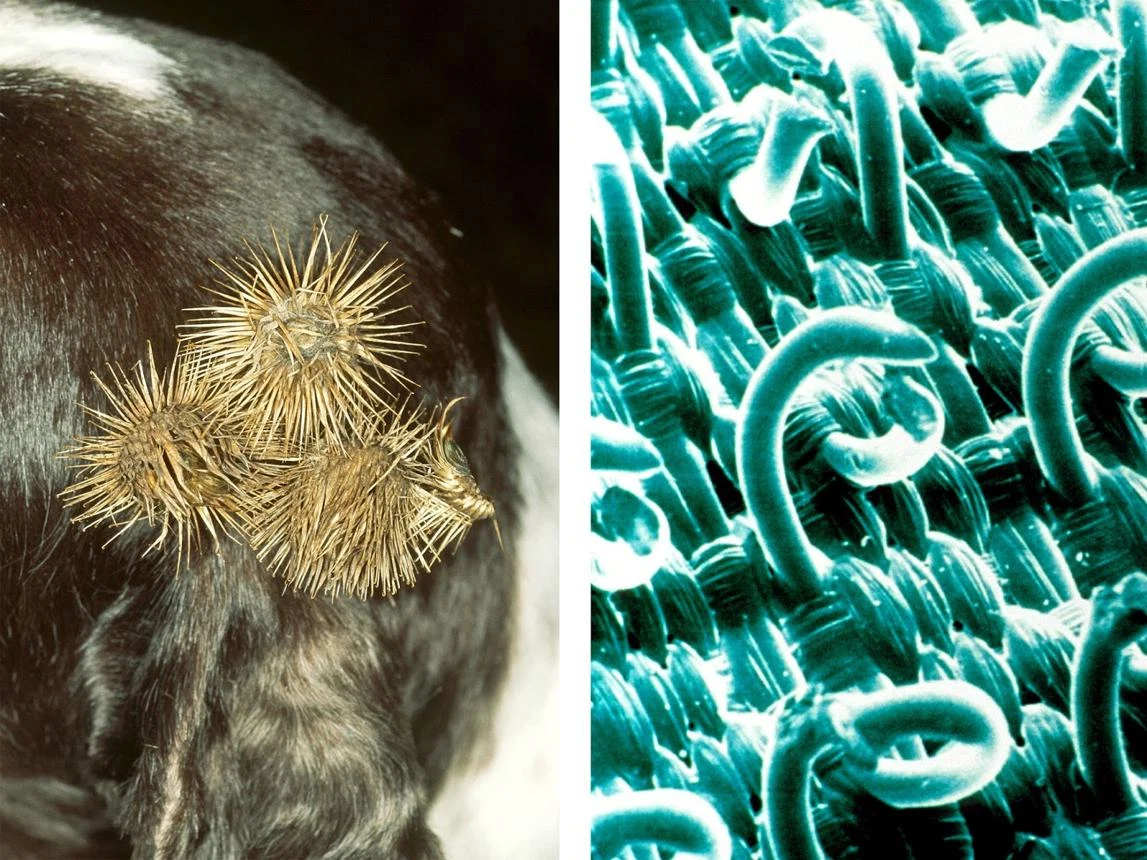
Animal dispersal
Hooks attach to fur, or animals eat fleshy fruits.
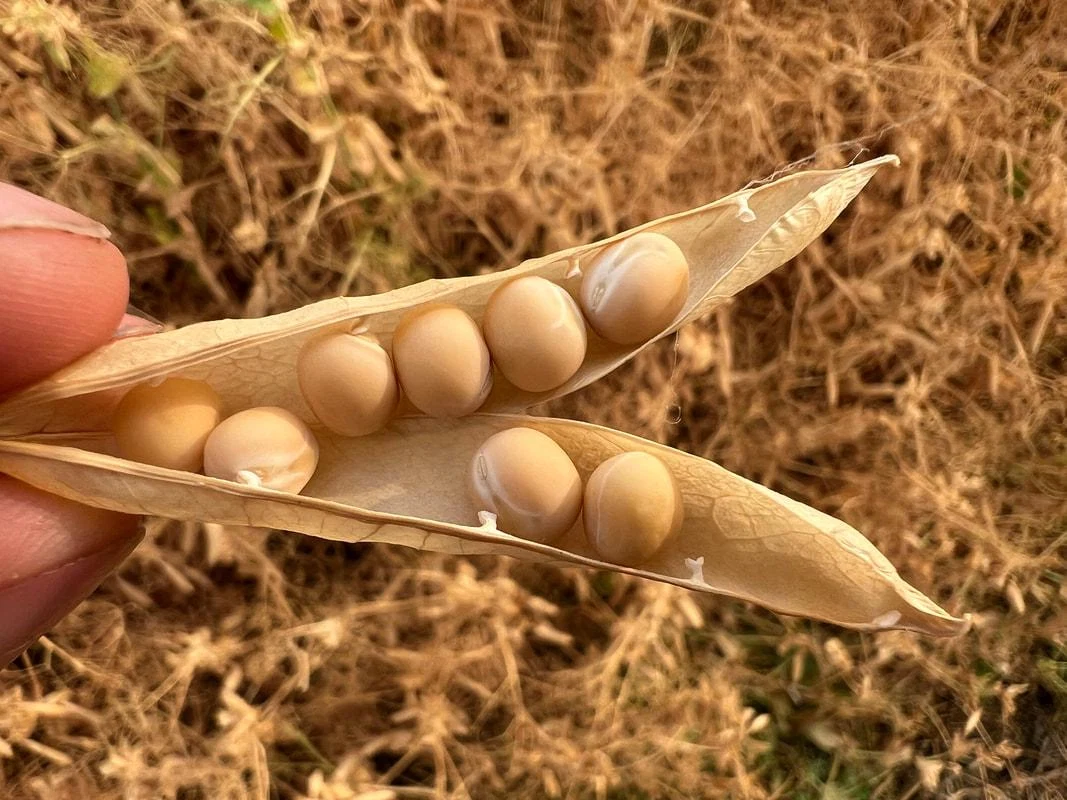
Explosive dispersal
Dry pods split suddenly and scatter seeds.
|
Method |
Adaptation |
Examples |
|---|---|---|
|
Wind |
Wings, hairs, low mass |
Dandelion, jacaranda |
|
Water |
Buoyant fruit, waterproof covering |
Coconut |
|
Animals |
Fleshy fruits or hooked structures |
Mango, blackjack |
|
Explosive splitting |
Pods that burst when ripe |
Balsam, some beans |
|
Gravity |
Heavy fruits that fall |
Mango, avocado |
Some seeds have more than one means of dispersal. For example, fleshy fruits may fall due to gravity and later be carried by animals.
9. Importance of flowers
Flowers are important because they:
- Enable sexual reproduction in flowering plants.
- Support fruit and seed production.
- Supply nectar and pollen to many organisms.
- Support agriculture and food production.
- Provide ornamental value.
- Promote genetic variation through cross-pollination.
Activity 2.3
- Draw a labelled longitudinal section of a flower.
- Differentiate between pollination and fertilisation.
- Compare insect-pollinated and wind-pollinated flowers.
- Explain how an ovary develops into a fruit.
- State four methods of seed dispersal with examples.