
1. Meaning of a Project
A project is a planned activity undertaken to produce a particular item, provide a service, or solve a specific problem within a given period.
In Pre-Technical Studies, projects enable learners to apply the knowledge and skills acquired in different sub-strands.
2. Examples of Problems Found in the Locality
- Lack of suitable waste collection containers.
- Poor organization of learning materials.
- Lack of storage for small tools.
- Inadequate book stands.
- Scattered stationery on classroom desks.
- Poor organization of reusable materials.
- Lack of simple plant-support structures.
- Difficulty organizing small household items.
3. Items That Can Be Made to Solve Problems
|
Identified problem |
Possible project |
|---|---|
|
Scattered stationery |
Desk organizer |
|
Poor waste sorting |
Labeled waste bins |
|
Difficulty supporting books |
Book stand |
|
Small tools stored carelessly |
Tool holder |
|
Seedlings needing protection |
Simple plant guard |
|
Untidy reusable materials |
Storage box |
|
Lack of classroom display space |
Display board |
4. Stages of Project Development
Stage 1: Problem Identification
Identify a challenge that affects people in the school, home, or community.
Stage 2: Generating Possible Solutions
Suggest different items or approaches that may solve the problem.
Stage 3: Selecting a Suitable Solution
Choose an item based on:
- Availability of materials.
- Cost.
- Safety.
- Ease of production.
- Usefulness.
- Time required.
- Environmental impact.
Stage 4: Designing the Item
Prepare sketches showing the shape, dimensions, and main features.
Stage 5: Selecting Materials and Tools
Identify suitable materials and tools required for production.
Stage 6: Production
Follow the design and use the selected materials to make the item.
Stage 7: Testing and Evaluation
Check whether the item works as intended.
Stage 8: Improvement
Correct identified weaknesses.
Stage 9: Presentation
Present the completed item and explain how it solves the identified problem.
5. Sample Project: Making a Wooden Desk Organizer
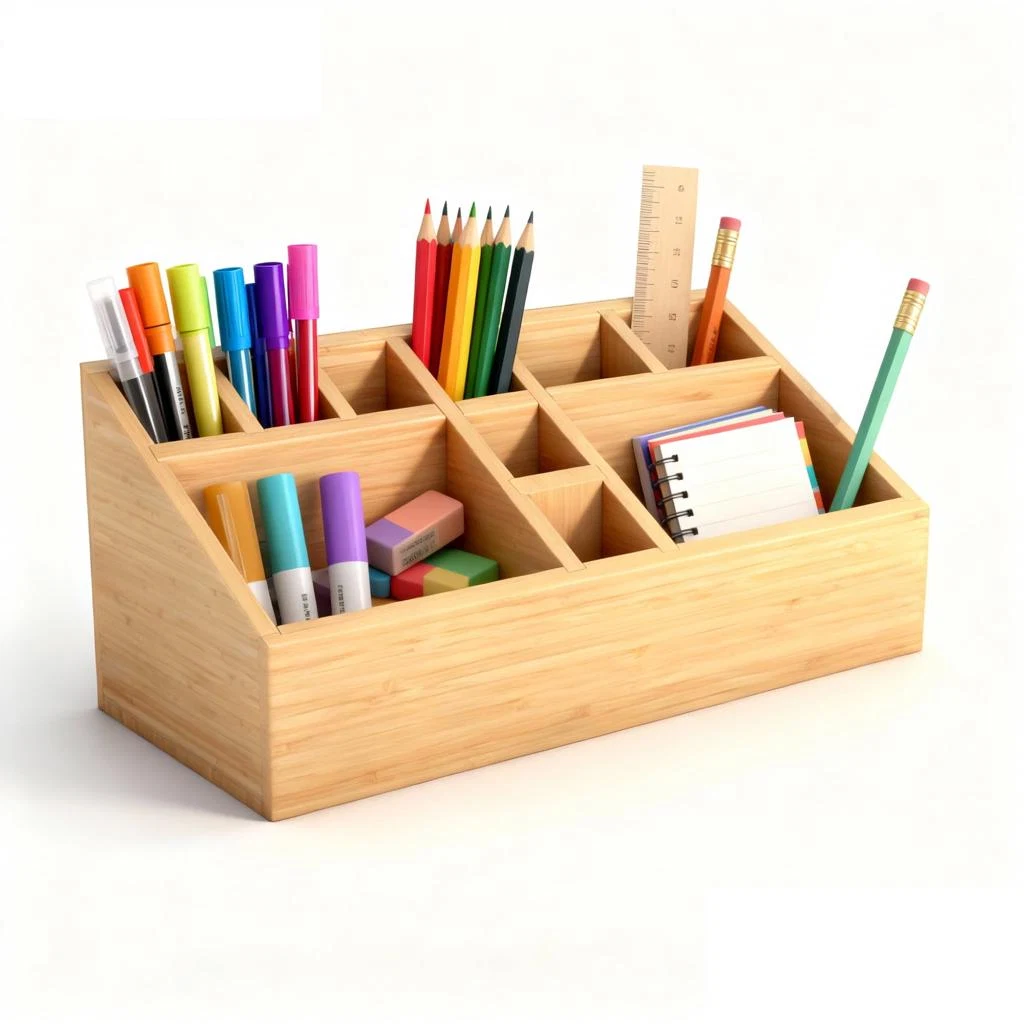
Problem identified: Pens, pencils, and rulers are often scattered on desks.
Proposed solution: A wooden desk organizer.
Materials required:
- Smooth wood offcuts.
- Suitable wood glue.
- Small nails, if needed.
- Sandpaper.
- Suitable finishing material.
Tools required:
- Measuring tape or ruler.
- Pencil.
- Try square.
- G-clamp.
- Hammer.
- Saw, operated under appropriate supervision.
Procedure:
- Sketch the design of the organizer.
- Determine its dimensions.
- Select suitable smooth wood offcuts.
- Measure and mark the pieces.
- Have the pieces safely cut to size under supervision.
- Smooth rough surfaces and edges.
- Arrange the pieces into the required compartments.
- Join the pieces using glue and appropriate fasteners.
- Secure the parts while the glue cures.
- Apply a suitable finish if necessary.
- Allow the item to dry.
- Test it by arranging stationery in the compartments.
6. Evaluating the Completed Project
The following questions can be used:
- Does the item solve the identified problem?
- Is it strong and stable?
- Is it safe to use?
- Are the dimensions suitable?
- Is it attractive?
- Were the materials used economically?
- Can the item be repaired?
- Is it environmentally responsible?
7. Importance of Projects
- Develop creativity.
- Encourage innovation.
- Strengthen problem-solving skills.
- Improve practical abilities.
- Promote teamwork.
- Encourage responsible use of materials.
- Build self-confidence.
- Develop planning skills.
- Promote environmental conservation.
- Prepare learners for future technical careers.
Learning Activities
- Identify problems affecting the school community.
- Suggest items that could solve the problems.
- Prepare a design sketch.
- Select suitable tools and materials.
- Make a simple useful item.
- Test and evaluate the completed item.
- Present the project to classmates.
Revision Questions
- Define a project.
- Identify five problems that can be solved using Pre-Technical Studies skills.
- State seven stages of developing a project.
- List five factors to consider when selecting a project.
- Explain how to evaluate a completed project.
- State six benefits of undertaking projects.