
Suggested duration: 32 lessons
Introduction
The periodic table reveals patterns in the physical and chemical properties of elements. These patterns are known as periodic trends.
Elements within the same group frequently show similar chemical behaviour, while properties change systematically across periods.
Understanding periodicity enables chemists to predict reactions, explain differences in reactivity and identify useful applications of elements.
Specific Learning Outcomes
By the end of the sub-strand, learners should be able to:
- Describe trends in the physical properties of elements.
- Investigate chemical properties of selected periodic-table groups.
- Explain changes in properties across a period.
- Identify uses of selected elements.
- Appreciate the practical importance of periodicity.
Key Inquiry Questions
- Why is the study of chemical families important?
- How does an element's position in the periodic table influence its properties?
1.5.1 Meaning of Periodicity
Periodicity refers to the recurrence of patterns in the properties of elements when arranged in order of increasing atomic number.
These patterns arise primarily from the systematic arrangement of electrons.
Elements with similar outer electron configurations often display similar chemical behaviour.
1.5.2 Important Periodic Properties
The properties investigated include:
- Atomic radius.
- Ionic radius.
- First ionisation energy.
- Electron affinity.
- Electronegativity.
- Melting point.
- Boiling point.
- Electrical conductivity.
- Malleability.
- Ductility.
- Physical appearance.
- Chemical reactivity.
1.5.3 Atomic Radius
Atomic radius is a measure of atomic size, commonly based on specified distances between nuclei of bonded or neighbouring atoms.
Because atoms do not have perfectly defined outer boundaries, several definitions of atomic radius are used.
Trend Down a Group
Atomic radius generally increases down a main group.
Explanation:
Additional occupied electron shells increase the size of the electron distribution.
For example:
in terms of general atomic radius.
Trend Across a Period
Atomic radius generally decreases from left to right across a period.
Explanation:
Nuclear charge increases, while electrons are added largely to the same principal energy level.
The stronger effective attraction generally pulls the electron distribution closer to the nucleus.
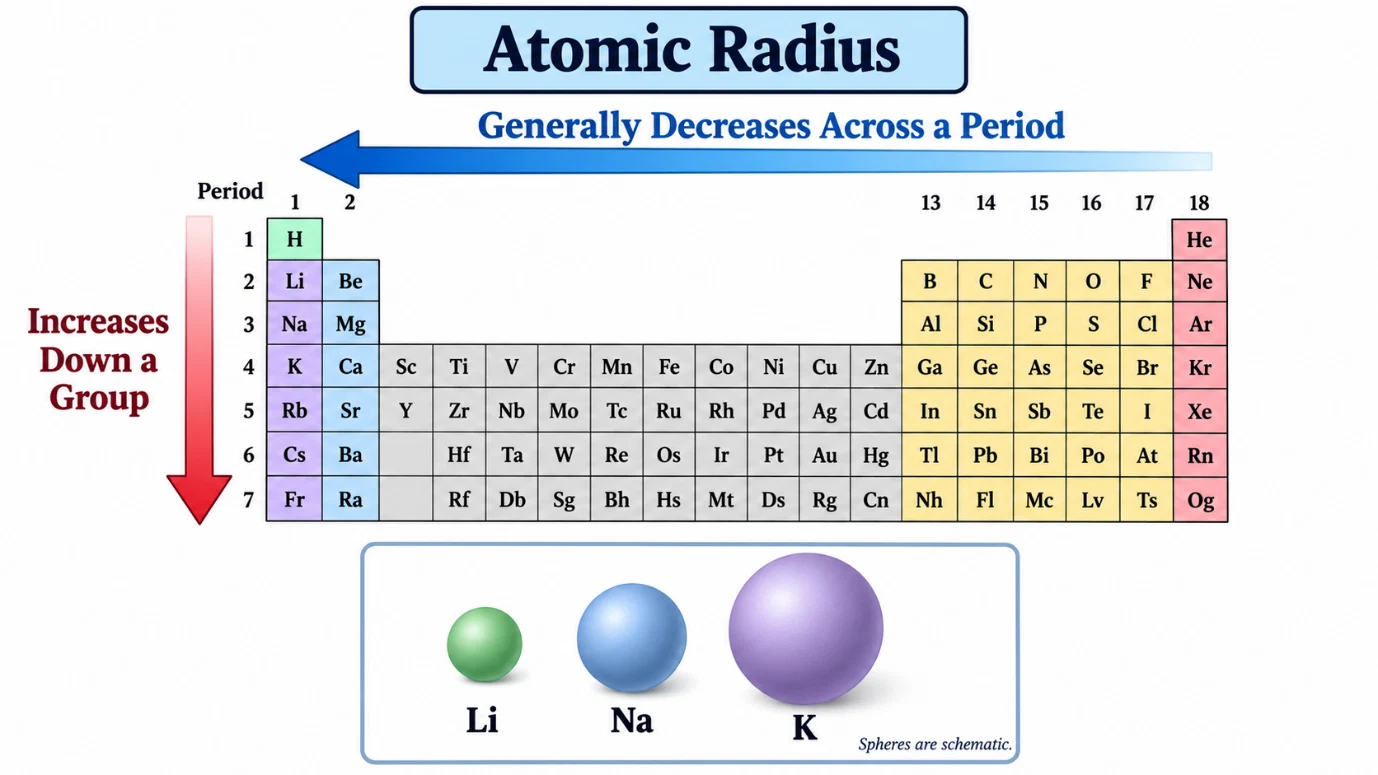
Figure 1.20: Atomic Radius Trends
1.5.4 Ionic Radius
Ionic radius describes the effective size of an ion within a suitable ionic environment.
Cations
A positive ion is generally smaller than its parent neutral atom.
For example:
r(Na⁺)<r(Na)
Sodium loses its outer 3s electron when forming Na⁺, leaving the level as the highest occupied shell.
Anions
A negative ion is generally larger than its parent neutral atom.
For example:
r(Cl⁻)>r(Cl)
The additional electron increases electron-electron repulsion within the valence shell.
Isoelectronic Species
Isoelectronic species have the same number of electrons.
Examples include:
O²⁻,\ F⁻,\ Ne,\ Na⁺,\ Mg²⁺
Each has ten electrons.
Within this series, radius generally decreases as nuclear charge increases:
O²⁻>F⁻>Ne>Na⁺>Mg²⁺
The comparison uses conventional qualitative size relationships; exact values depend on the radius definition.
1.5.5 First Ionisation Energy
The first ionisation energy is the energy required to remove one electron from each atom in one mole of isolated gaseous atoms to form one mole of gaseous ions with a charge of +1.
General equation:
X(g) → X⁺(g)+e⁻
Trend Down a Group
First ionisation energy generally decreases down a main group.
The outer electron is typically farther from the nucleus and more strongly shielded by inner electrons.
Trend Across a Period
First ionisation energy generally increases across a period.
Increasing effective nuclear attraction makes electron removal more difficult.
However, exceptions occur because of subshell energies and electron pairing.
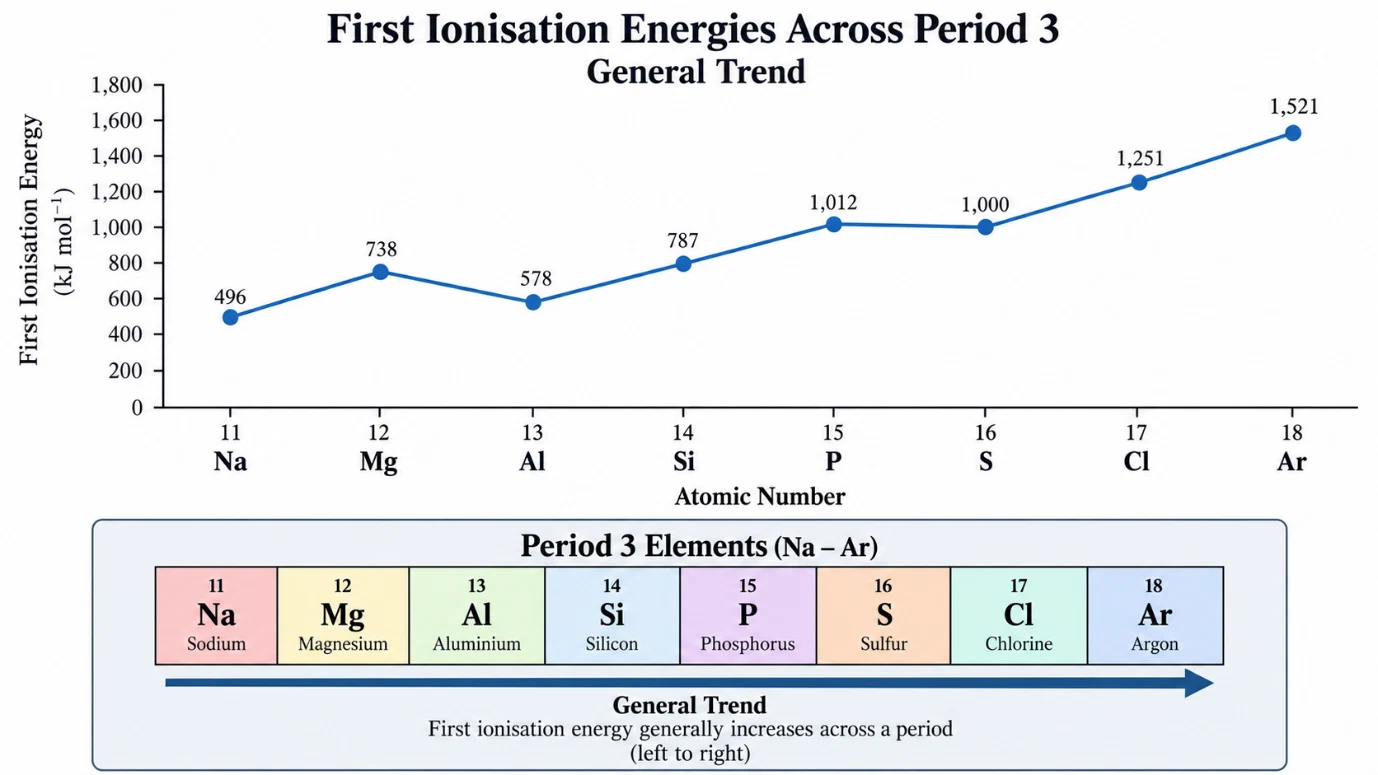
Figure 1.21: First Ionisation Energy Trends
1.5.6 Electron Affinity
Electron affinity concerns the energy change associated with adding an electron to a gaseous atom.
General process:
X(g)+e⁻ → X⁻(g)
Electron affinity trends are less straightforward than atomic-radius trends.
For many non-metals, electron gain is energetically favourable, but several exceptions occur because of orbital arrangements and electron repulsion.
A single simple rule should therefore not be applied to every element.
1.5.7 Electronegativity
Electronegativity describes an atom's tendency to attract shared electrons within a chemical bond.
General Trend
Electronegativity generally increases across a period.
It generally decreases down a group.
Fluorine has the highest electronegativity on the commonly used Pauling scale.
Electronegativity is useful in predicting the polarity of chemical bonds.
1.5.8 Melting and Boiling Points
Melting and boiling points depend strongly on bonding and structure.
Consequently, they do not necessarily change uniformly across a period.
For example, the melting points of Period 3 elements show a characteristic pattern associated with metallic structures, a giant covalent silicon network and simple molecular or atomic substances.
Period 3 Melting-Point Pattern
Moving from sodium towards silicon, melting points generally increase, although the increase is not uniform.
Silicon has a particularly high melting temperature because of its giant covalent structure.
Phosphorus, sulfur, chlorine and argon are molecular or monatomic substances with substantially lower melting temperatures than silicon.
The differences reflect the forces that must be overcome during melting.
1.5.9 Group 1: Alkali Metals
Group 1 includes lithium, sodium and potassium, among others.
Physical Properties
- Silvery appearance when freshly cut.
- Relatively soft compared with many other metals.
- Good conductors of heat and electricity.
- Relatively low melting points for metals.
- Atomic size generally increases down the group.
Chemical Properties
Alkali metals commonly react by losing one electron.
They form ions with a charge of +1.
Reaction with Oxygen
For example:
4Li+O₂ → 2Li₂O
Different alkali metals can form different oxides, peroxides or superoxides depending on reaction conditions.
Reaction with Water
For sodium:
2Na+2H₂O → 2NaOH+H₂
The reaction produces sodium hydroxide and hydrogen.
Reactivity Trend
For lithium, sodium and potassium, reactivity with water generally increases down the group.
The outer electron becomes easier to remove as atomic size and electron shielding increase.
Safety: Reactions of alkali metals with water can be vigorous and dangerous. Learners should use approved videos, simulations or teacher-controlled demonstrations rather than independently handling reactive alkali metals.

Figure 1.22: Reactivity of Alkali Metals with Water
1.5.10 Group 2: Alkaline Earth Metals
Group 2 includes beryllium, magnesium and calcium.
General Properties
- They possess two outer s electrons.
- They commonly form +2 ions.
- They conduct electricity in the metallic state.
- Their chemical reactivity varies down the group.
Reaction of Magnesium with Oxygen
2Mg+O₂ → 2MgO
Magnesium burns with an intense white light.
Magnesium oxide is a white solid.
Reaction of Calcium with Water
Ca+2H₂O → Ca(OH)₂+H₂
Calcium reacts with cold water, producing calcium hydroxide and hydrogen.
Reaction of Magnesium with Dilute Hydrochloric Acid
Mg+2HCl → MgCl₂+H₂
The gas produced is hydrogen.
Testing for Hydrogen
In a suitably controlled school experiment, a small sample of hydrogen may be tested by a qualified teacher using an approved procedure.
Hydrogen produces a characteristic squeaky pop with a flame under the appropriate controlled conditions.
Safety: Hydrogen forms flammable mixtures with air. Gas testing must only be carried out under supervision with appropriate small quantities and safety controls.
1.5.11 Group 17: Halogens
Group 17 includes fluorine, chlorine, bromine and iodine.
General Properties
Halogens are reactive non-metals.
They generally form diatomic molecules in their elemental states.
Examples:
Physical Appearance at Room Temperature
|
Halogen |
Physical state |
Typical appearance |
|---|---|---|
|
Chlorine |
Gas |
Greenish-yellow |
|
Bromine |
Liquid |
Reddish-brown |
|
Iodine |
Solid |
Grey-black crystals |
Bromine produces hazardous vapour, and chlorine is a toxic gas.
Chemical Reactivity
Halogen reactivity generally decreases down Group 17.
For example, chlorine is generally more reactive than bromine and iodine in typical halogen-displacement reactions.
Displacement Reaction
Chlorine can displace bromine from a suitable bromide solution:
Cl₂+2KBr → 2KCl+Br₂
Net ionic equation:
Cl₂+2Br⁻ → 2Cl⁻+Br₂
Bleaching Action of Chlorine
Chlorine can form oxidising species in water that are responsible for bleaching and disinfection.
A simplified equilibrium is:
Cl₂+H₂O ⇌ HCl+HClO
Hypochlorous acid, HClO, contributes to the oxidising action.
Safety: Chlorine must not be generated by learners without specialised facilities and authorised supervision. Preparation and handling should be taught through approved demonstrations or digital simulations where safety cannot be assured.
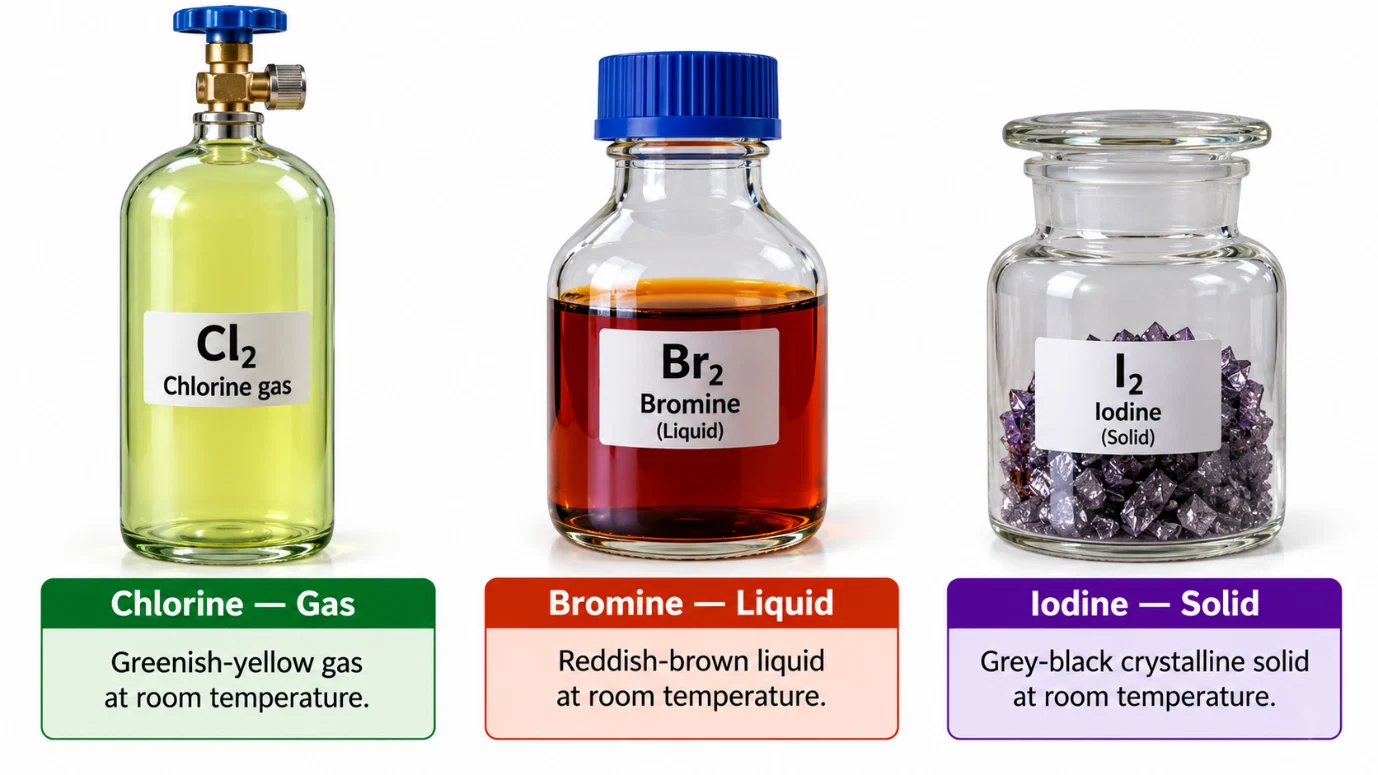
Figure 1.23: Physical States and Colours of Halogens
1.5.12 Group 18: Noble Gases
Noble gases include helium, neon and argon.
General Properties
- They are gases under normal room conditions.
- They consist of individual atoms rather than diatomic molecules.
- They have low boiling points.
- Their chemical reactivity is generally very low.
- Their valence shells are filled in their ground-state electronic configurations.
Uses of Noble Gases
Helium: Used in suitable balloons and certain low-temperature and industrial applications.
Neon: Used in specialised discharge lighting.
Argon: Used as a shielding gas in welding and in suitable lighting applications.
Noble gases are not completely incapable of chemical reactions; some heavier noble gases form compounds under suitable conditions.
1.5.13 Trends Across Period 3
Period 3 contains:
Metallic Character
Metallic character generally decreases from sodium towards chlorine and argon.
Atomic Radius
Atomic radius generally decreases across the period.
First Ionisation Energy
First ionisation energy generally increases, with recognised exceptions.
Electronegativity
Electronegativity generally increases among the relevant bonding elements.
Oxide Behaviour
Oxides generally change from strongly basic through amphoteric to acidic character.
Examples:
- Sodium oxide — basic.
- Magnesium oxide — basic.
- Aluminium oxide — amphoteric.
- Silicon dioxide — acidic oxide.
- Sulfur oxides — acidic oxides.
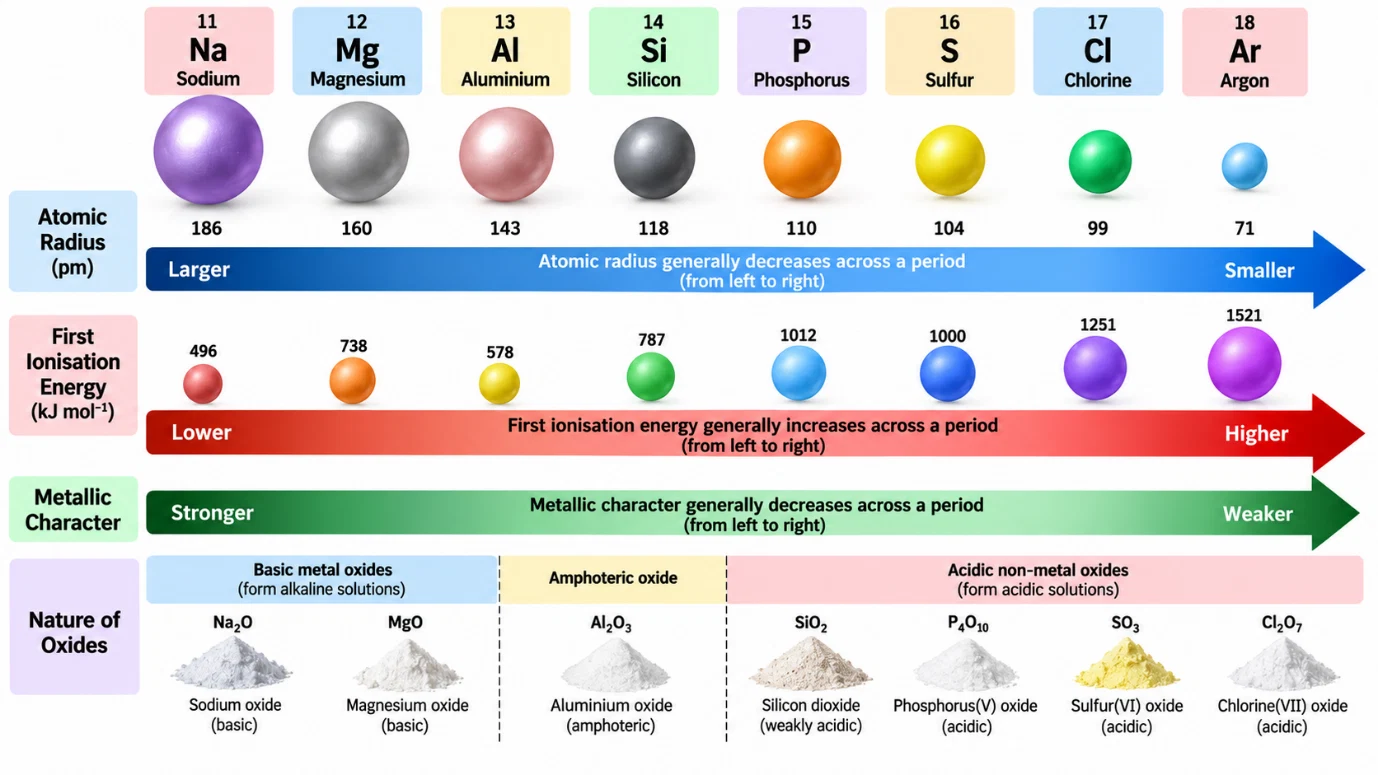
Figure 1.24: Trends Across Period 3
1.5.14 Reactions of Period 3 Elements
Sodium with Water
2Na+2H₂O → 2NaOH+H₂
Magnesium with Oxygen
2Mg+O₂ → 2MgO
Aluminium with Oxygen
4Al+3O₂ → 2Al₂O₃
Aluminium develops a protective oxide layer that reduces further corrosion under many ordinary conditions.
Magnesium with Dilute Acid
Mg+2HCl → MgCl₂+H₂
Silicon with Oxygen
Under suitable high-temperature conditions:
Si+O₂ → SiO₂
The conditions and rates of reactions differ substantially among Period 3 elements.
1.5.15 Uses of Selected Elements
|
Element |
Important use |
|---|---|
|
Lithium |
Rechargeable battery technology |
|
Sodium |
Industrial chemical manufacture |
|
Magnesium |
Lightweight alloys |
|
Calcium |
Metallurgy and selected industrial processes |
|
Chlorine |
Controlled water disinfection and chemical manufacture |
|
Iodine |
Medical and nutritional applications |
|
Helium |
Cryogenic and specialised industrial applications |
|
Neon |
Discharge lighting |
|
Argon |
Welding-shielding atmospheres |
|
Aluminium |
Building materials and electrical conductors |
|
Silicon |
Semiconductor technology |
Practical Activity 1.5: Investigating Periodic Trends
Aim: To identify changes in properties across a period and down a group.
Materials: Periodic-table chart, approved reference data, graph paper and a scientific calculator.
Procedure:
- Obtain atomic-radius and first-ionisation-energy data for selected elements from an approved reference.
- Arrange the elements in atomic-number order.
- Plot atomic radius against atomic number.
- Plot first ionisation energy against atomic number.
- Describe the trends.
- Identify any irregularities.
- Relate the findings to atomic structure.
Expected Product: Correctly labelled graphs and a short scientific interpretation.
Practical Activity 1.6: Comparing Chemical Families
Aim: To compare selected Group 1, Group 2, Group 17 and Group 18 elements.
Prepare a table showing their electron arrangements, physical states, common ionic charges where relevant, chemical behaviour and applications.
Use reference materials and simulations for hazardous reactions.
Summary of Sub-strand 1.5
Periodicity describes repeating patterns in the properties of chemical elements.
Atomic radius generally increases down a group and decreases across a period.
Ionisation energy generally decreases down a group and increases across a period, with exceptions.
Groups 1, 2, 17 and 18 show characteristic chemical behaviour.
Physical and chemical properties are determined by atomic structure, bonding and electron arrangement.
Periodicity helps explain chemical reactions and practical applications of elements.
Revision Questions
- Define periodicity.
- Explain the trend in atomic radius down Group 1.
- Describe the general change in atomic radius across Period 3.
- Define first ionisation energy.
- Explain why first ionisation energy generally decreases down a group.
- Differentiate between atomic radius and ionic radius.
- Define electronegativity.
- Describe the properties of alkali metals.
- Write the balanced equation for sodium reacting with water.
- Explain the reactivity trend down Group 1.
- Describe the physical properties of Group 2 elements.
- Write a balanced equation for magnesium reacting with oxygen.
- Compare chlorine, bromine and iodine.
- Write an ionic equation for chlorine displacing bromine from bromide ions.
- State four characteristics of noble gases.
- Explain the trend in metallic character across Period 3.
- Explain why silicon has a much higher melting point than phosphorus.
- Describe three uses of selected elements based on their properties.
END-OF-STRAND 1: INTEGRATED ASSESSMENT
Section A: Knowledge and Understanding
- Define Chemistry and explain four applications in society.
- Identify three subatomic particles and describe their properties.
- Explain the importance of isotopes.
- Differentiate between groups and periods.
- Explain ionic, covalent and metallic bonding.
- Describe three important periodic trends.
Section B: Calculations and Chemical Equations
Question 1: Atomic Structure
An atom has atomic number 13 and mass number 27.
Calculate the number of protons, neutrons and electrons in the neutral atom.
Worked Answer
Protons:
Neutrons:
Electrons:
Question 2: Relative Atomic Mass
An element has two isotopes:
- Isotope-63: abundance 70%.
- Isotope-65: abundance 30%.
Calculate the approximate relative atomic mass.
Question 3: Electron Configuration
Write the electronic configurations of:
a) Oxygen.
b) Sodium.
c) Aluminium.
d) Calcium.
Answers
a)
b)
c)
d)
Question 4: Formulae
Write the correct formulae for:
a) Sodium oxide.
b) Magnesium chloride.
c) Aluminium sulfate.
d) Calcium nitrate.
Answers
a)
b)
c)
d)
Question 5: Balancing Equations
Balance the following:
a) Mg+O₂ → MgO
b) Al+Cl₂ → AlCl₃
c) Na+H₂O → NaOH+H₂
Answers
a) 2Mg+O₂ → 2MgO
b) 2Al+3Cl₂ → 2AlCl₃
c) 2Na+2H₂O → 2NaOH+H₂
Section C: Competency-Based Project
Project: Investigating the Relationship Between Atomic Structure and Chemical Properties
Aim: To demonstrate how electron arrangement influences bonding and chemical behaviour.
Learners should:
- Select six elements from the first 20.
- Determine their atomic numbers.
- Write their electron configurations.
- Identify their groups and periods.
- Predict common ions where appropriate.
- Prepare models of selected compounds.
- Explain the bonding involved.
- Identify relevant periodic trends.
- Present the findings.
- Reflect on safety, teamwork and the responsible use of materials.