
1. Introduction
Alcohol, drugs and other substances can affect the physical, mental, emotional and social wellbeing of individuals.
Some substances are used appropriately for medical purposes.
However, misuse and abuse can lead to serious health and social problems.
Young people may be exposed to alcohol, drugs and other substances through peer pressure, curiosity, family influence and other circumstances.
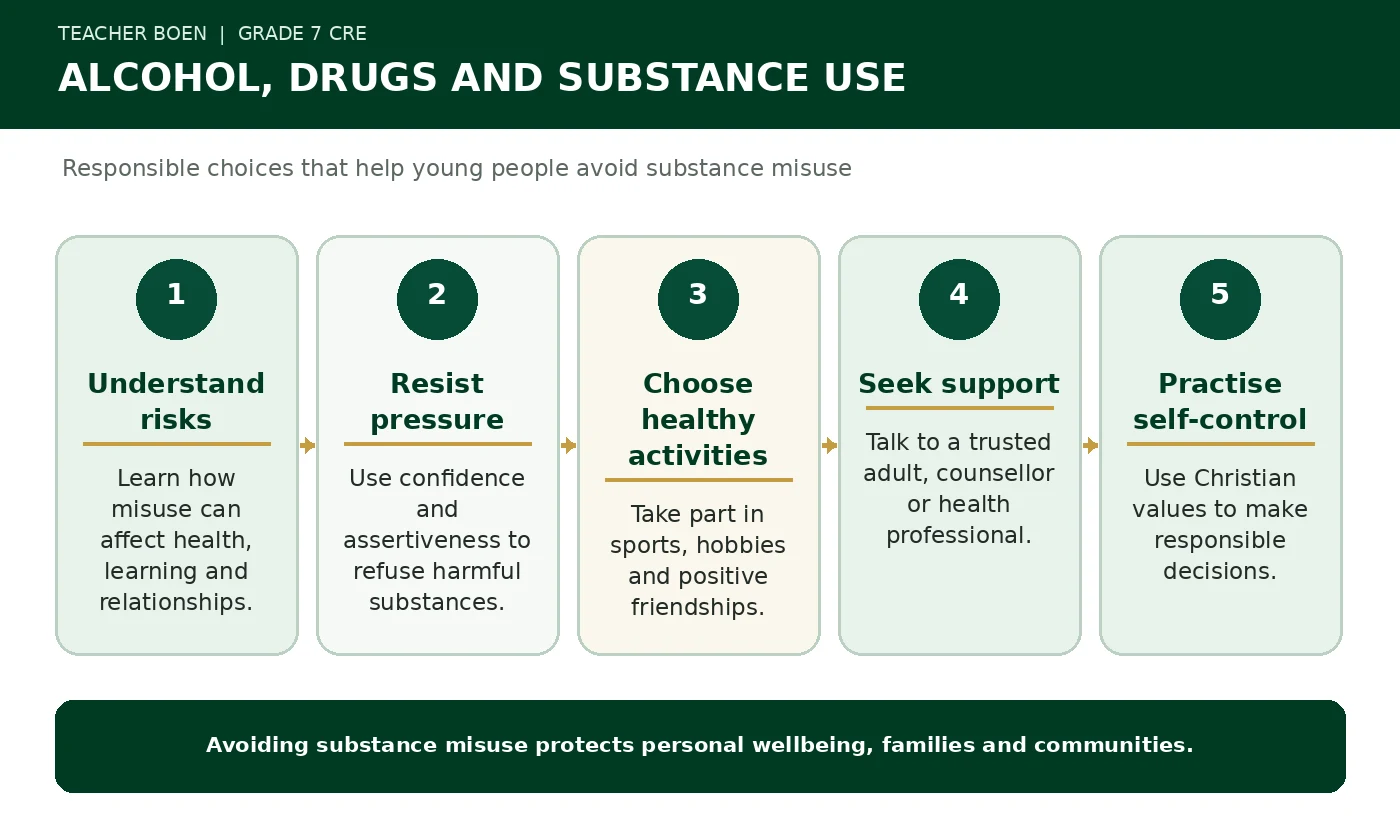
Healthy decisions and support systems that help prevent substance misuse.
Christian Religious Education encourages young people to practise self-control, make responsible decisions and protect their bodies.
The Bible warns against drunkenness, harmful behaviour and lack of self-control.
2. Meaning of important terms
Drug: A substance that changes how the body or mind functions.
Medicine: A substance used to prevent, diagnose or treat illness under appropriate medical guidance.
Substance abuse: Harmful or inappropriate use of substances such as alcohol, drugs or certain medicines.
Alcohol: A psychoactive substance found in alcoholic beverages that can affect the brain and body.
Addiction: A condition involving a strong and difficult-to-control desire to continue using a substance or engaging in an activity despite harmful consequences.
Dependence: A condition in which the body or mind becomes reliant on a substance.
Peer pressure: Influence from friends or people of the same age group to behave in a particular way.
Rehabilitation: Support and treatment aimed at helping people recover from harmful substance use.
3. Difference between proper drug use and drug abuse
Not every use of drugs is harmful.
Some drugs are prescribed by qualified healthcare professionals to treat illnesses.
The difference lies in how the substances are used.
|
Proper use of medicine |
Drug misuse or abuse |
|---|---|
|
Follows medical instructions. |
Involves inappropriate use. |
|
Uses the correct dose. |
May involve excessive or incorrect doses. |
|
Is guided by qualified healthcare professionals. |
May occur without proper medical guidance. |
|
Has a medical purpose. |
May involve seeking harmful or non-medical effects. |
|
Includes following safety instructions. |
May expose the user to serious harm. |
Important: Learners should never share prescription medicines, experiment with drugs or take medication without appropriate adult and medical guidance.
4. Drugs and substances commonly abused by youths in Kenya
Examples include:
A. Alcohol
Alcoholic beverages can affect judgement, coordination and behaviour.
B. Tobacco and nicotine products
These include cigarettes and other nicotine-containing products.
C. Cannabis (bhang)
Cannabis is a psychoactive substance that affects brain functioning and behaviour.
D. Khat (miraa)
Khat contains stimulant substances that affect the nervous system.
E. Inhalants
Some people misuse substances such as glue and certain chemical vapours by inhaling them.
This can cause serious health problems.
F. Misused prescription medicines
Some people misuse medicines intended for medical treatment.
G. Other illegal drugs
Some individuals misuse other prohibited substances that can cause serious harm.
5. Reasons why young people abuse drugs and alcohol
There are several reasons why young people may begin using harmful substances.
A. Peer pressure
Friends may encourage young people to experiment with alcohol and drugs.
B. Curiosity
Some young people may want to experience the effects of substances because they are unfamiliar with them.
C. Family influence
Growing up around people who misuse substances may influence young people's behaviour.
D. Stress
Some individuals may turn to substances when experiencing emotional or social difficulties.
E. Lack of parental guidance
Limited guidance and supervision may increase vulnerability to harmful influences.
F. Desire for acceptance
Some young people use substances to fit into a particular social group.
G. Media influence
Some entertainment content may portray substance use as fashionable or attractive.
H. Easy availability
Access to harmful substances can increase the risk of experimentation.
I. Unemployment and poverty
Difficult social and economic circumstances may increase vulnerability to substance misuse.
J. Lack of awareness
Some young people may not understand the consequences of substance abuse.
K. Poor decision-making
Inability to resist temptation or negative pressure may contribute to substance misuse.
6. Effects of alcohol, drugs and substance abuse on individuals
Substance abuse can affect different parts of a person's life.
A. Physical health effects
- Damage to important body organs.
- Poor coordination.
- Increased risk of accidents.
- Reduced physical wellbeing.
- Increased risk of certain diseases.
- Poisoning from harmful substances.
B. Mental and emotional effects
- Poor judgement.
- Difficulty concentrating.
- Anxiety and emotional distress.
- Changes in behaviour.
- Dependence and addiction.
- Difficulty making responsible decisions.
C. Educational effects
- Poor academic performance.
- Absenteeism.
- Loss of concentration.
- Failure to complete assignments.
- School disciplinary problems.
- Reduced interest in education.
D. Social effects
- Conflicts with friends and family.
- Loss of trust.
- Social isolation.
- Involvement in irresponsible activities.
- Poor relationships.
- Increased vulnerability to exploitation.
E. Economic effects
- Wastage of money.
- Financial difficulties.
- Reduced productivity.
- Increased healthcare expenses.
- Loss of employment opportunities in adulthood.
7. Effects of substance abuse on families
Substance abuse does not affect only the person using the substance. It can also affect other family members.
A. Family conflicts
Substance misuse may cause disagreements and tension.
B. Financial difficulties
Money may be spent on substances instead of household needs.
C. Neglect of responsibilities
An affected family member may fail to fulfil important duties.
D. Emotional distress
Other family members may experience fear, sadness and worry.
E. Loss of trust
Repeated dishonesty may damage relationships.
F. Domestic violence
Substance misuse can contribute to situations involving aggression and violence.
G. Poor parental care
Affected parents may struggle to provide appropriate guidance and support.
H. Family instability
Severe substance misuse may contribute to separation and other family problems.
I. Poor academic support
Children may lack adequate support for their education.
J. Social stigma
Families may experience discrimination or embarrassment.
8. Biblical teachings on alcohol, drugs and substance abuse
The curriculum identifies several Bible passages that guide Christians on substance use and self-control.
A. 1 Corinthians 3:17
Paul teaches that a person should not destroy God's temple.
The passage encourages believers to respect what belongs to God.
Lessons:
- Christians should respect their bodies.
- People should avoid harmful behaviour.
- Believers should practise responsible living.
- Human life should be valued.
- Christians should protect their physical and spiritual wellbeing.
B. 1 Corinthians 6:10
This passage warns against various forms of wrongdoing.
It reminds Christians that immoral behaviour has spiritual consequences.
Lessons:
- Christians should avoid harmful activities.
- People should practise self-control.
- Believers should live according to God's teachings.
- Responsible behaviour is important.
C. Ephesians 5:18
Paul warns Christians against drunkenness and encourages them to be filled with the Spirit.
Lessons:
- Christians should avoid drunkenness.
- People should control their behaviour.
- Believers should seek spiritual guidance.
- Young people should make responsible decisions.
- Self-control is important in Christian living.
D. Proverbs 20:1
This passage warns that wine can lead to mockery and strong drink can result in uncontrolled behaviour.
Lessons:
- Alcohol can affect judgement.
- People should avoid irresponsible drinking.
- Christians should practise self-control.
- Young people should avoid harmful influences.
E. Proverbs 23:29–35
This passage describes the harmful effects associated with excessive drinking.
It refers to sorrow, conflict, injuries and confusion.
Lessons:
- Excessive alcohol consumption causes harm.
- Alcohol misuse can lead to poor decisions.
- People should avoid behaviours that damage their lives.
- Christians should exercise self-control.
- Young people should protect their wellbeing.
F. Proverbs 31:6
This passage mentions strong drink in the context of people experiencing severe suffering.
It should be understood within its wider biblical context, not as encouragement for young people to use alcohol.
Lessons:
- Christians should consider the needs of people suffering.
- Believers should show compassion.
- People should seek responsible ways of dealing with difficulties.
- Young people should avoid substance misuse.
G. Isaiah 5:11
Isaiah warns against those who pursue drinking from early morning until late in the day.
Lessons:
- Excessive drinking is harmful.
- People should avoid irresponsible behaviour.
- Christians should use their time productively.
- Self-control is important.
- People should prioritise their responsibilities.
9. Christian values needed to avoid substance abuse
A. Self-control
It helps young people resist pressure to use harmful substances.
B. Responsibility
Responsible people consider the consequences of their actions.
C. Courage
Courage helps learners reject negative peer pressure.
D. Honesty
Honesty encourages people to admit problems and seek assistance.
E. Respect for life
Christians should value and protect their bodies.
F. Faith
Faith encourages believers to seek God's guidance.
G. Discipline
Discipline helps people follow positive routines and avoid harmful behaviour.
H. Patience
Patience helps young people resist the desire for immediate satisfaction.
I. Wisdom
Wisdom helps individuals distinguish between good and harmful choices.
J. Integrity
Integrity encourages people to maintain good behaviour even when others are acting irresponsibly.
10. Life skills needed to avoid substance abuse
A. Decision-making
Young people should consider the consequences of their choices before acting.
B. Refusal skills
They should learn to say no when friends encourage them to use harmful substances.
C. Assertiveness
They should express their decisions confidently and respectfully.
D. Problem-solving
They should develop healthy ways of dealing with difficulties.
E. Stress management
They should use positive activities such as sports, prayer and talking to trusted people.
F. Communication
They should communicate their concerns and seek help when necessary.
G. Critical thinking
They should question misleading information about alcohol and drugs.
H. Self-awareness
They should understand their weaknesses and situations that may expose them to temptation.
11. Ways young people can avoid alcohol, drugs and substance abuse
- Choose responsible friends.
- Avoid environments associated with substance misuse.
- Participate in positive recreational activities.
- Seek guidance from parents and teachers.
- Read and understand biblical teachings.
- Practise self-control.
- Avoid experimenting with harmful substances.
- Develop healthy ways of managing stress.
- Participate in sports and other school activities.
- Avoid misleading media influences.
- Seek help when facing substance-related problems.
- Encourage friends to make responsible choices.
12. How to help someone affected by substance abuse
People experiencing substance-related problems need appropriate support.
Learners can help by:
- Avoiding discrimination.
- Encouraging the person to seek professional assistance.
- Informing a trusted adult when safety is at risk.
- Providing emotional support.
- Avoiding encouragement of harmful behaviour.
- Supporting participation in positive activities.
- Encouraging rehabilitation where necessary.
- Treating the person with dignity.
Substance dependence is not simply a lack of discipline. People affected may require professional treatment and continued support.
13. Practical activities
Activity 1: Identifying commonly abused substances
List substances commonly abused by young people in Kenya.
Discuss their possible effects.
Activity 2: Bible study
Read Ephesians 5:18, Proverbs 20:1 and Proverbs 23:29–35.
Identify the teachings about alcohol.
Activity 3: Group discussion
Discuss reasons why young people abuse substances and suggest ways of preventing the problem.
Activity 4: Interview
Listen to a qualified resource person explain how young people can overcome substance abuse.
Activity 5: Personal reflection
Write a journal explaining how you can live a healthy, responsible and substance-free life.
14. Summary
Alcohol, drugs and other substances can affect physical, mental, emotional and social wellbeing.
Young people may misuse substances because of peer pressure, curiosity, stress and other social influences.
Substance abuse can cause illness, addiction, poor academic performance, family conflicts and financial difficulties.
The Bible encourages Christians to avoid drunkenness, respect their bodies and practise self-control.
Young people should make responsible choices and seek help when necessary.
15. Revision questions and answers
Q1. What is substance abuse?
It is the harmful or inappropriate use of substances such as alcohol, drugs or certain medicines.
Q2. State five substances commonly abused by young people in Kenya.
Alcohol, tobacco, cannabis, khat and inhalants.
Q3. Give five reasons why young people abuse drugs and alcohol.
Peer pressure, curiosity, stress, family influence and desire for acceptance.
Q4. State five effects of substance abuse on individuals.
Physical illness, poor judgement, addiction, emotional distress and poor academic performance.
Q5. Identify five effects of substance abuse on families.
Family conflicts, financial difficulties, emotional distress, neglect of responsibilities and loss of trust.
Q6. What does Ephesians 5:18 teach about alcohol?
It warns Christians against drunkenness and encourages them to be filled with the Spirit.
Q7. State five values needed to avoid substance abuse.
Self-control, responsibility, courage, discipline and integrity.
Q8. Give five life skills needed to avoid substance abuse.
Decision-making, refusal skills, assertiveness, problem-solving and stress management.
Q9. State five ways young people can avoid substance abuse.
Choose responsible friends, avoid harmful environments, participate in sports, seek guidance and practise self-control.
Q10. How can learners help someone affected by substance abuse?
They can encourage professional help, provide emotional support, avoid discrimination and inform trusted adults when necessary.