
1. Introduction to gambling
Gambling is an activity in which a person risks money or something valuable on an uncertain outcome in the hope of winning more.
The outcome may depend on chance, predictions or a combination of chance and skill.
Examples include sports betting, lotteries, casino games and online betting.
Gambling has become accessible to many people through mobile phones and internet services.
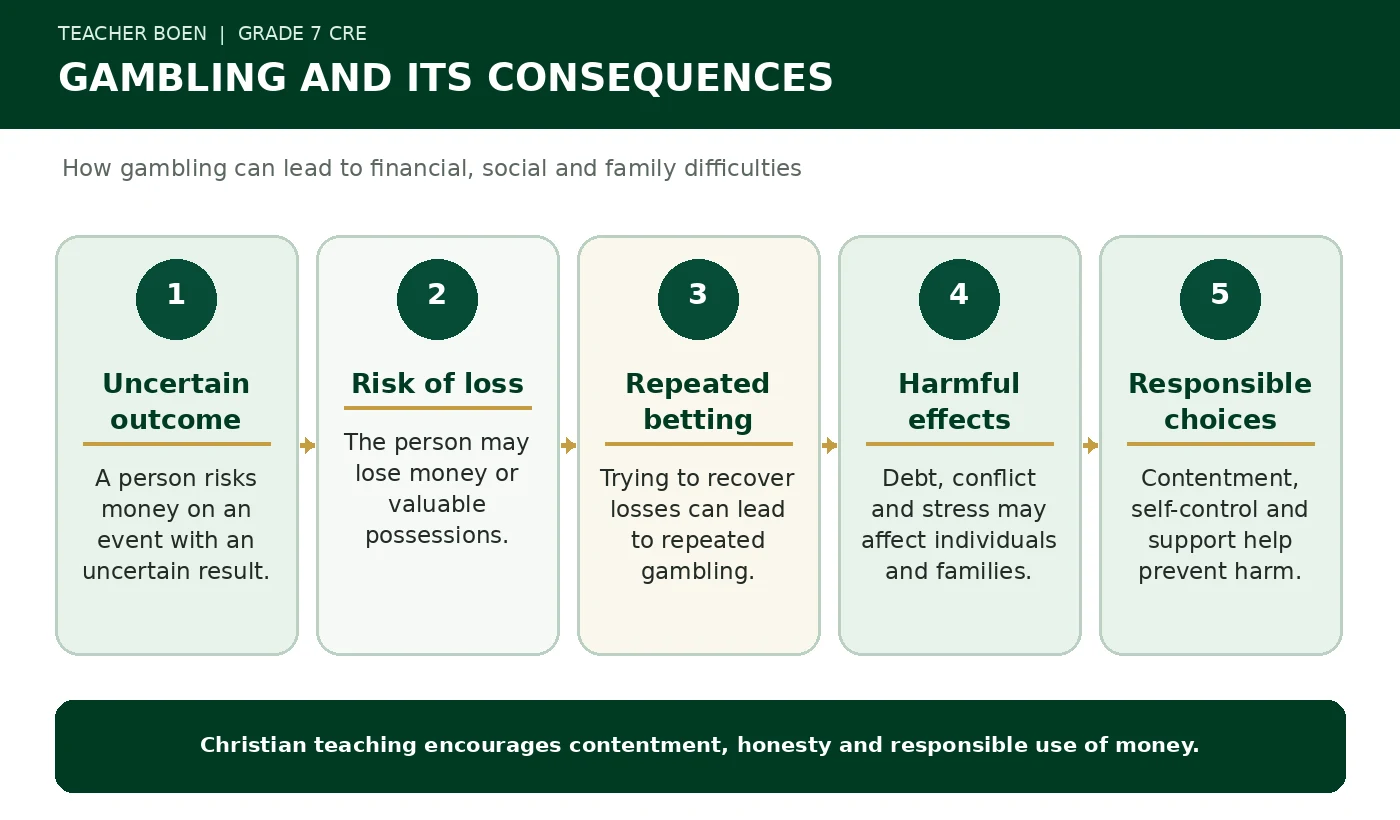
A diagram showing risks and possible consequences associated with gambling.
Some young people are attracted to gambling because they believe it provides an easy way to make money.
However, gambling can lead to financial losses, addiction, family conflicts and irresponsible behaviour.
Christian teachings encourage people to work honestly, manage money responsibly and avoid greed.
2. Meaning of important terms
Gambling: Risking money or something valuable on an uncertain outcome with the expectation of winning.
Betting: Wagering money on the outcome of an event.
Lottery: A game in which winners are selected through a random process.
Addiction: A condition in which a person develops a strong, difficult-to-control urge to continue an activity.
Greed: An excessive desire to acquire money or possessions.
Wealth: Valuable possessions, money and other resources owned by a person.
Contentment: Being satisfied with what one has while working responsibly to improve one's circumstances.
Peer pressure: Influence from friends or other people to participate in a particular activity.
3. Types of gambling in Kenya today
Gambling occurs in different forms.
A. Sports betting
This involves placing money on the expected outcome of sporting events.
Examples include predicting:
- The winning football team.
- The number of goals scored.
- The final match result.
- The performance of a sporting team.
B. Online gambling
This involves gambling through websites or mobile applications.
It may include betting, casino games and other online wagering activities.
C. Casino gambling
This involves playing games in which money is wagered against a casino or other players.
Examples include roulette, blackjack and slot machines.
D. Lotteries
A lottery involves purchasing a ticket or participating in a draw where winners are selected randomly.
E. Card games involving money
Some card games become gambling activities when participants stake money or valuable items on the outcome.
F. Dice games involving money
These involve wagering money on the outcome of throwing dice.
G. Slot machine gambling
This involves using machines or digital games that generate outcomes through chance.
4. Reasons why young people engage in gambling
There are several reasons why young people may become involved in gambling.
A. Desire for quick money
Some young people believe gambling can make them wealthy within a short period.
B. Peer pressure
Friends may encourage others to participate in betting and other gambling activities.
C. Unemployment and financial difficulties
Some people turn to gambling because they are experiencing financial challenges.
D. Curiosity
Young people may participate because they want to experience something new.
E. Influence of advertisements
Some advertisements present gambling as an exciting or easy way to earn money.
F. Easy access to mobile technology
Internet access and mobile applications make some gambling activities easily accessible.
G. Boredom
Some young people participate in gambling to occupy their free time.
H. Desire for excitement
The possibility of winning money may create excitement and encourage repeated participation.
I. Influence of family members
Young people may copy gambling behaviour observed among adults.
J. Lack of awareness
Some people do not understand the financial and social consequences of gambling.
K. Misleading beliefs about winning
Some gamblers believe they can predict every outcome or recover all their previous losses.
5. Biblical teachings on money and wealth
The Bible provides guidance on earning, saving and using money responsibly.
The curriculum identifies the following passages.
A. 1 Timothy 6:10
This passage teaches that the love of money is a root of all kinds of evil.
It warns against allowing the desire for wealth to control one's life.
Lessons:
- Christians should not become greedy.
- Money should not become the most important thing in life.
- People should earn money honestly.
- Wealth should be used responsibly.
- Christians should value good character above material possessions.
Important: The passage does not say that money itself is evil. It warns against excessive love of money.
B. Proverbs 13:11
This passage teaches that wealth gained dishonestly or hastily may diminish, while money gathered gradually through responsible effort can grow.
Lessons:
- Christians should avoid seeking shortcuts to wealth.
- Hard work is important.
- People should practise patience.
- Money should be earned honestly.
- Responsible saving is encouraged.
C. Proverbs 28:20–22
These verses warn against dishonesty, greed and rushing to become wealthy.
They encourage faithfulness and responsible conduct.
Lessons:
- Honesty is important when earning money.
- Greed can lead to harmful decisions.
- People should avoid dishonest financial activities.
- Christians should practise patience.
- Wealth should not be pursued at the expense of good character.
D. Ephesians 4:28
Paul encourages people who previously stole to stop stealing and work honestly.
He teaches that people should work so that they can support themselves and help those in need.
Lessons:
- People should earn money through honest work.
- Christians should avoid theft.
- Hard work promotes independence.
- People should share with those in need.
- Money should be used to support good activities.
6. Effects of gambling on individuals
Gambling can have serious consequences.
A. Financial losses
A person may lose money that was intended for important needs.
B. Debt
Repeated gambling losses may cause individuals to borrow money and accumulate debts.
C. Addiction
Some people develop a strong urge to gamble even when they are experiencing losses.
D. Poor academic performance
Young people who become involved in gambling may neglect their studies.
E. Emotional distress
Gambling losses can cause anxiety, frustration, shame and disappointment.
F. Dishonesty
Some gamblers may begin lying to hide their activities or losses.
G. Poor decision-making
The desire to recover lost money may lead to irresponsible choices.
H. Loss of valuable time
Excessive gambling can interfere with education, work and other responsibilities.
I. Risk of engaging in crime
Some individuals may resort to theft or other dishonest activities to obtain money for gambling.
J. Loss of self-control
Repeated gambling may make it difficult for a person to manage their behaviour and finances.
7. Effects of gambling on families
- Family conflicts.
- Loss of household savings.
- Failure to meet basic family needs.
- Increased financial debts.
- Loss of trust among family members.
- Emotional stress.
- Neglect of parental responsibilities.
- Reduced resources for children's education.
- Family separation in severe cases.
- Increased financial insecurity.
8. Biblical teachings on true riches
The Bible teaches that true riches are not measured by money alone.
Christian wealth includes spiritual growth, good character, love, generosity and a right relationship with God.
The curriculum identifies the following passages.
A. Matthew 6:19–21
Jesus teaches His followers not to store up treasures on earth where they can be destroyed or stolen.
He encourages believers to store up treasures in heaven.
He also explains that where a person's treasure is, their heart will also be.
Lessons:
- Material possessions should not control people's lives.
- Christians should value spiritual growth.
- People should practise generosity.
- Good character is more important than material wealth.
- Believers should use their resources responsibly.
B. Hebrews 13:5
This passage encourages believers to avoid the love of money and be content with what they have.
Lessons:
- Christians should practise contentment.
- Greed should be avoided.
- People should trust God.
- Material possessions should not determine personal worth.
- Believers should appreciate what they have.
C. 1 Timothy 6:17–19
Paul instructs wealthy believers not to become proud or place their hope in uncertain riches.
He encourages them to do good, be generous and share with others.
Lessons:
- Wealth should be used responsibly.
- Rich people should not look down upon others.
- Generosity is important.
- Christians should help needy people.
- Good deeds are more valuable than selfish accumulation of wealth.
9. Difference between material wealth and true riches
|
Material wealth |
True riches |
|---|---|
|
Refers to money and possessions. |
Refers to spiritual and moral blessings. |
|
Can be lost or destroyed. |
Includes lasting values and faith. |
|
May encourage pride when misused. |
Encourages humility and generosity. |
|
Does not guarantee happiness. |
Promotes spiritual fulfilment. |
|
Can create competition and greed. |
Encourages love and service. |
10. Values and life skills needed to avoid gambling
A. Contentment
Being satisfied with what one has helps reduce the desire for quick wealth.
B. Self-control
It helps young people resist the temptation to participate in gambling.
C. Honesty
Honesty encourages people to earn money responsibly.
D. Patience
People should understand that financial progress requires time and effort.
E. Responsibility
Responsible individuals manage money carefully.
F. Hard work
Hard work encourages people to earn through productive activities.
G. Decision-making
Young people should evaluate the consequences of their actions before making decisions.
H. Refusal skills
Learners should be able to reject pressure to participate in gambling.
I. Financial literacy
Financial literacy helps people budget, save and manage money.
J. Assertiveness
It helps young people communicate their decision not to participate in gambling.
11. Ways of avoiding gambling
- Avoid gambling activities.
- Choose responsible friends.
- Avoid negative peer pressure.
- Use free time productively.
- Develop saving habits.
- Participate in sports and other positive activities.
- Avoid misleading gambling advertisements.
- Seek guidance from parents and teachers.
- Practise contentment.
- Develop honest ways of earning money.
- Learn to manage personal finances.
- Seek appropriate support if gambling has become difficult to control.
12. How to help someone affected by gambling
- Encourage the person to recognise the problem.
- Avoid insulting or humiliating them.
- Encourage honest communication with family members.
- Seek help from a qualified counsellor.
- Encourage responsible financial management.
- Support participation in positive activities.
- Encourage the person to avoid gambling environments.
- Seek professional assistance where necessary.
13. Practical activities
Activity 1: Bible study
Read 1 Timothy 6:10, Proverbs 13:11 and Ephesians 4:28.
Identify the teachings about money and wealth.
Activity 2: Role-play
Demonstrate how a learner can refuse pressure from friends to participate in gambling.
Activity 3: Bible study
Read Matthew 6:19–21 and Hebrews 13:5.
Explain the meaning of true riches.
Activity 4: Group discussion
Discuss how gambling can affect individuals and families.
14. Summary
Gambling involves risking money or valuable possessions on uncertain outcomes.
Young people may engage in gambling because of peer pressure, curiosity, desire for quick money and misleading advertisements.
Gambling can lead to financial losses, addiction, debt and family conflicts.
The Bible encourages Christians to earn money honestly, practise contentment and avoid greed.
True riches include good character, faith, generosity and responsible living.
15. Revision questions and answers
Q1. What is gambling?
Gambling is risking money or something valuable on an uncertain outcome in the hope of winning.
Q2. State five types of gambling.
Sports betting, lotteries, casino games, online gambling and slot machine gambling.
Q3. Give five reasons why young people engage in gambling.
Peer pressure, curiosity, desire for quick money, boredom and misleading advertisements.
Q4. State five effects of gambling on individuals.
Financial losses, debt, addiction, emotional distress and poor academic performance.
Q5. Identify five effects of gambling on families.
Family conflicts, loss of savings, debts, emotional stress and loss of trust.
Q6. What does 1 Timothy 6:10 teach about money?
It warns against the love of money and the evil that may result from greed.
Q7. What is the meaning of contentment?
It is being satisfied with what one has while working responsibly to improve one's circumstances.
Q8. State five values needed to avoid gambling.
Contentment, self-control, honesty, patience and responsibility.
Q9. What does Matthew 6:19–21 teach about true riches?
It teaches Christians to value heavenly treasures and spiritual matters above material possessions.
Q10. State four ways of avoiding gambling.
Choosing responsible friends, avoiding gambling activities, managing money carefully and using free time productively.