
1. Meaning of Indigenous Crafts
Indigenous crafts are artistic or functional objects and techniques associated with the traditional knowledge, skills, and cultural practices of a community.
Examples of indigenous Kenyan crafts include:
- Pottery.
- Basket weaving.
- Beadwork.
- Wood carving.
- Mat weaving.
- Leatherwork.
- Traditional textile production.
A. POTTERY
2. Meaning of Pottery
Pottery is the art and process of making objects from clay by shaping, drying, and sometimes firing them.
Examples of pottery items include:
- Pots.
- Bowls.
- Cups.
- Water containers.
- Decorative vessels.
- Flower vases.
3. Meaning of Coil Technique
Coil technique is a method of pottery construction in which long rolls of clay are placed one above another and joined to form a vessel.
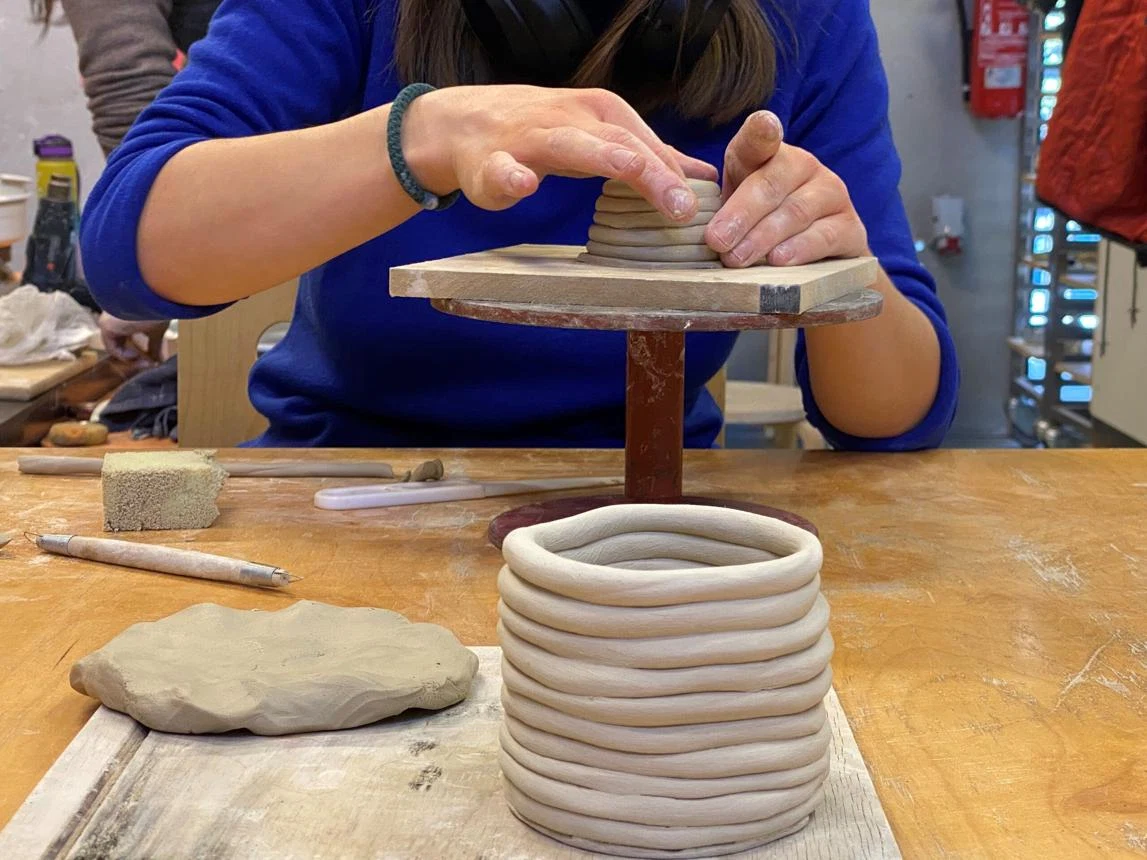
4. Characteristics of Coil Pottery
- Made using rolled clay strands.
- Coils are arranged in layers.
- Coils are joined to form the walls.
- Allows different vessel shapes.
- Can produce decorative textures.
- May be smoothed or left with visible coil patterns.
5. Tools and Materials for Coil Pottery
- Suitable clay.
- Water.
- Modeling board.
- Clay modeling tools.
- Sponge.
- Scraper.
- Suitable containers.
- Safe cutting tool where required.
6. Procedure for Making a Vessel Using the Coil Method
- Prepare suitable clay.
- Knead the clay to make it workable.
- Form a flat circular base.
- Roll clay into long, even coils.
- Place the first coil around the edge of the base.
- Join the coil firmly.
- Add more coils in layers.
- Shape the vessel gradually.
- Smooth or decorate the surface.
- Allow the vessel to dry slowly and evenly.
- Fire it using appropriate pottery facilities if required.
7. Importance of Coil Pottery
- Develops creativity.
- Preserves cultural skills.
- Produces useful household items.
- Creates income opportunities.
- Encourages use of locally available materials.
- Develops hand coordination.
B. WEAVING
1. Meaning of Weaving
Weaving is the process of interlacing two sets of yarns, threads, or flexible materials to produce fabric or other woven items.
2. Meaning of Warp and Weft
Warp: Threads arranged lengthwise on a loom.
Weft: Threads passed across the warp threads.
3. Meaning of a Loom
A loom is a device or structure used to hold warp threads in position during weaving.
4. Meaning of a Frame Loom
A frame loom is a simple rectangular or square structure used to support warp threads during weaving.
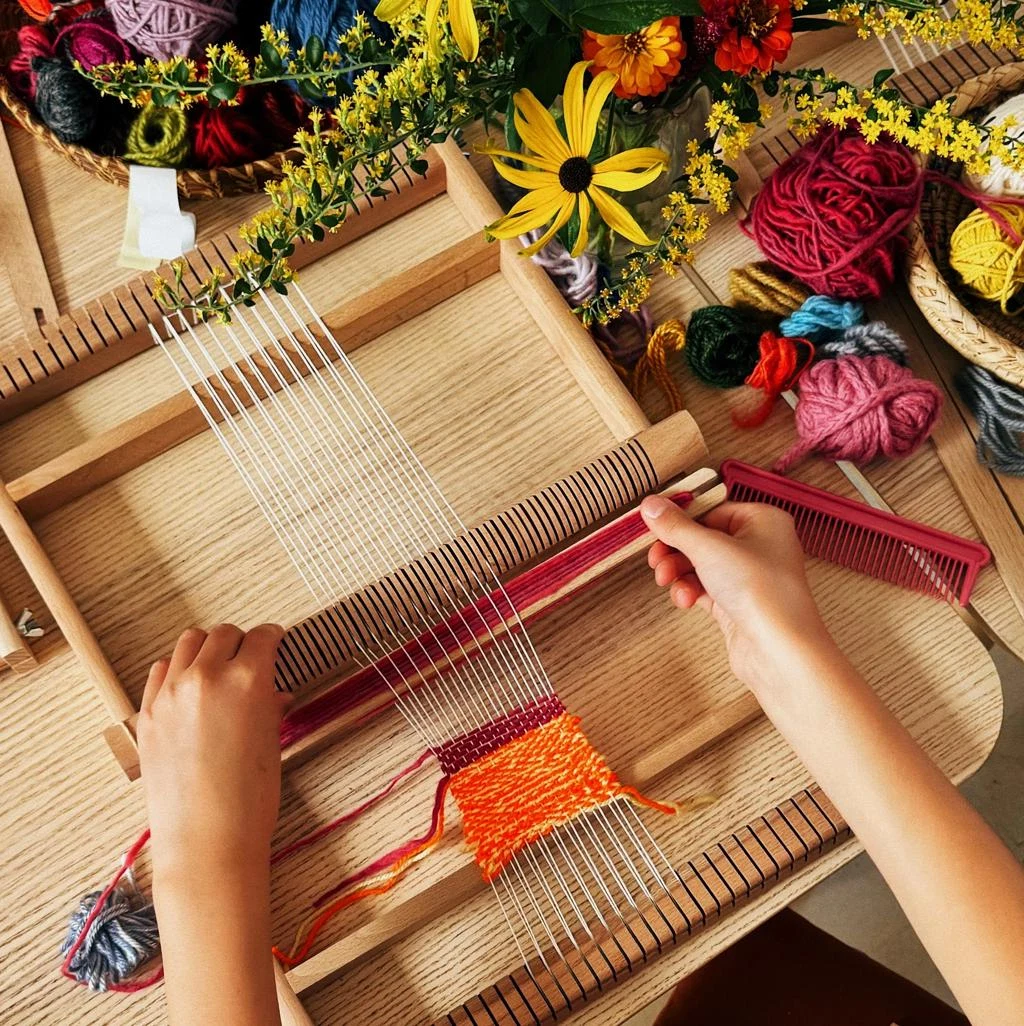
5. Materials for Making a Frame Loom
- Wooden strips or a strong cardboard frame.
- Suitable nails, pegs, or slots.
- Strong yarn.
- Ruler.
- Pencil.
- Hammer, where required.
- Suitable cutting tools.
6. Procedure for Making a Frame Loom
- Select a suitable frame size.
- Prepare the frame material.
- Construct or cut out the frame.
- Mark equal positions along opposite sides.
- Insert suitable pegs or create slots.
- Secure the frame.
- Attach the warp yarn.
- Check that the warp is evenly spaced.
- Test the frame loom.
C. 2/1 TWILL WEAVING
1. Meaning of Twill Weaving
Twill weaving is a weaving structure that produces a diagonal pattern by changing the arrangement of warp and weft interlacings.
2. Meaning of 2/1 Twill
In a basic 2/1 twill, a weft yarn passes over two warp yarns and under one warp yarn, with the pattern shifted between successive rows.
This forms a diagonal appearance.
Simplified 2/1 twill pattern
The shifted interlacing arrangement creates diagonal lines characteristic of twill weave.
3. Procedure for Producing a 2/1 Twill Fabric
- Prepare the frame loom.
- Arrange warp threads.
- Select suitable weft yarn.
- Pass the weft over two warp threads and under one.
- Shift the pattern appropriately on the next row.
- Continue weaving.
- Beat the weft gently into position.
- Maintain even tension.
- Complete the required fabric length.
- Secure the ends and remove the finished fabric.
4. Characteristics of Twill Weaving
- Produces diagonal lines.
- Has a distinctive pattern.
- Can produce strong fabrics.
- Allows different designs.
- Usually has a less rigid appearance than comparable plain weaves.
- Can be used in clothing and decorative textiles.
5. Importance of Indigenous Kenyan Crafts
- Preserve cultural heritage.
- Create employment.
- Generate income.
- Develop artistic skills.
- Encourage creativity.
- Promote cultural identity.
- Support tourism.
- Make use of local materials.
6. Displaying and Critiquing Woven Articles
Critiquing involves examining an artwork and giving a reasoned judgment about its strengths and areas for improvement.
Consider:
- Neatness.
- Pattern.
- Color combination.
- Strength.
- Consistency of weaving.
- Creativity.
- Functionality.
- Finishing.
Revision Questions
- Define indigenous crafts.
- Identify six indigenous Kenyan crafts.
- Explain the meaning of coil pottery.
- State six tools and materials used in pottery.
- Describe how to make a coil vessel.
- Define weaving.
- Differentiate between warp and weft.
- Explain how to make a frame loom.
- Define 2/1 twill weaving.
- Describe the procedure for producing 2/1 twill fabric.
- State six benefits of indigenous crafts.
- Explain five factors used in critiquing woven articles.