
1. Meaning of Indigenous Games
Indigenous games are traditional games that originate from or have been played within particular communities over generations.
They are often passed from older members of society to younger generations.
Indigenous games may be physical, mental, recreational, or competitive.
2. Meaning of Indigenous Board Games
Indigenous board games are traditional games played using boards, marked surfaces, counters, seeds, stones, or other suitable objects.
They often involve counting, strategy, planning, and decision-making.
3. Examples of Indigenous Board Games Played in Kenya
- Bao.
- Ajua.
- Traditional mancala-type games.
- Other locally recognized board games played in different Kenyan communities.
Names and rules may vary among communities.
4. Meaning of Bao
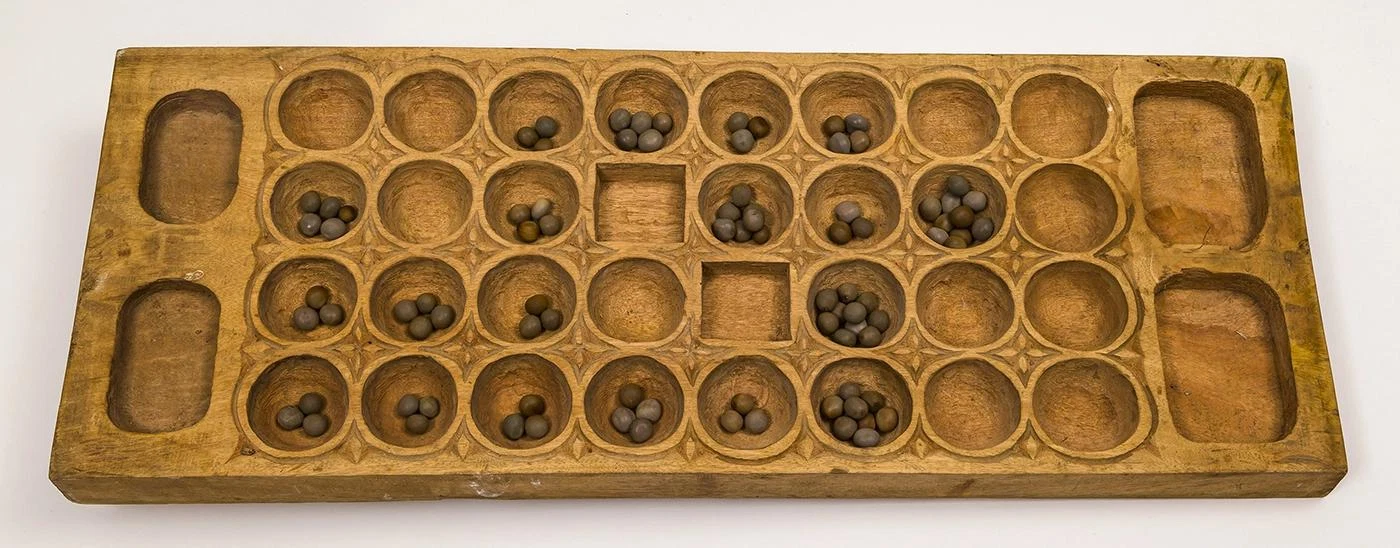
Bao is a traditional strategy board game associated with East African communities.
It is commonly played using a wooden board with rows of small holes or pits and counters such as seeds or stones.
5. Materials Used in Indigenous Board Games
- Wooden game boards.
- Stones.
- Seeds.
- Small shells.
- Counters.
- Boards drawn on paper or cardboard.
- Suitable marked ground surfaces.
6. Skills Developed Through Indigenous Board Games
- Counting.
- Planning.
- Strategic thinking.
- Concentration.
- Problem-solving.
- Decision-making.
- Patience.
- Communication.
- Cooperation.
- Respect for rules.
7. General Procedure for Playing a Traditional Board Game
- Identify the game to be played.
- Assemble the board and counters.
- Learn the rules used by the local community.
- Arrange the counters in the required starting positions.
- Decide which player begins.
- Take turns according to the rules.
- Use suitable strategies.
- Follow the rules until the game ends.
- Determine the result.
- Congratulate the participants.
Different games and local variants have different arrangements and rules.
8. Playing Indigenous Board Games with Background Music
Background music may be used during recreational board games to make the activity enjoyable.
Suitable music should:
- Be played at a comfortable volume.
- Respect the cultural setting.
- Avoid distracting players excessively.
- Encourage a pleasant atmosphere.
- Be appropriate for the learners.
9. Importance of Indigenous Board Games
- Preserve cultural heritage.
- Encourage social interaction.
- Develop problem-solving skills.
- Improve concentration.
- Promote strategic thinking.
- Provide enjoyment.
- Encourage cooperation.
- Develop patience.
- Support mental stimulation.
- Promote respect for others.
10. Indigenous Board Games and Mental Health
Indigenous board games may support mental well-being by:
- Providing enjoyable recreation.
- Encouraging friendly social interaction.
- Helping some individuals relax.
- Reducing feelings of isolation through group participation.
- Encouraging concentration.
- Providing opportunities for positive relationships.
Board games can support well-being but are not a substitute for professional mental health care when needed.
11. Ethical Practices in Indigenous Board Games
- Follow agreed rules.
- Avoid cheating.
- Respect opponents.
- Accept results fairly.
- Avoid insults.
- Take care of gaming materials.
- Encourage participation.
- Show good sportsmanship.
Revision Questions
- Define indigenous games.
- Explain the meaning of indigenous board games.
- Identify indigenous board games played in Kenya.
- State five materials used in traditional board games.
- Explain six skills developed through board games.
- Describe how a traditional board game is played.
- Explain five benefits of using suitable background music.
- State six benefits of indigenous board games.
- Explain five ways board games may support mental well-being.
- State six ethical practices in indigenous board games.