
1. Meaning of Swimming
Swimming is the activity of moving through water using coordinated movements of the arms, legs, and body.
Swimming may be performed for recreation, fitness, competition, or water safety.
2. Importance of Swimming
- Develops physical fitness.
- Improves cardiovascular endurance.
- Strengthens muscles.
- Improves coordination.
- Encourages confidence in water.
- Provides recreation.
- Develops useful water-safety skills.
- Creates sporting opportunities.
3. Basic Safety Rules in Swimming
- Swim only in a safe and supervised environment.
- Follow the instructor's directions.
- Avoid swimming alone.
- Do not run near swimming pools.
- Avoid pushing others into water.
- Do not swim during thunderstorms.
- Know the depth of the water.
- Avoid swimming when seriously fatigued or unwell.
- Use appropriate swimming equipment.
- Report emergencies immediately.
A. STANDING DIVE
4. Meaning of a Standing Dive
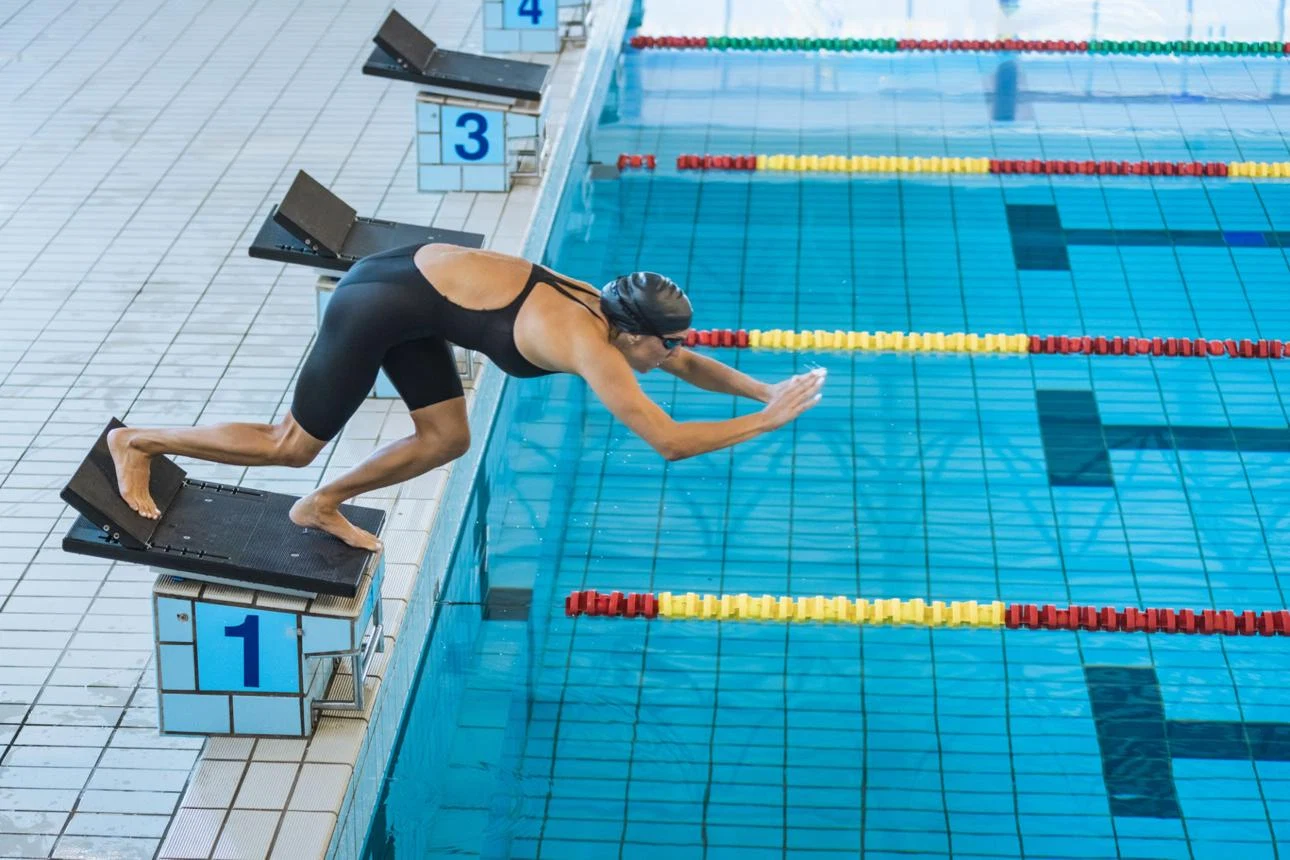
A standing dive is an entry into water from a standing position in which the swimmer moves forward, usually entering the water hands first.
Standing dives should only be taught by qualified instructors in designated diving areas where the depth and conditions are verified as safe. They must not be attempted in shallow or unfamiliar water.
5. Phases of a Standing Dive
- Starting position.
- Take-off.
- Flight.
- Entry into water.
- Streamlining and recovery.
6. Description of Standing Dive Phases
Starting position: The swimmer adopts a balanced position at the designated diving location.
Take-off: The swimmer pushes away from the starting surface in a controlled manner.
Flight: The body moves forward through the air.
Entry: The swimmer enters the water in a controlled, streamlined position, normally hands first.
Recovery: The swimmer moves safely into swimming position and returns to the surface.
7. Importance of Good Body Position in Diving
- Supports controlled entry.
- Reduces unnecessary water resistance.
- Improves movement efficiency.
- Supports balance.
- Helps maintain body alignment.
8. Safety Precautions During Standing Dives
- Follow a qualified swimming instructor.
- Dive only where diving is permitted.
- Confirm that water depth is suitable.
- Keep the diving area clear.
- Avoid diving into unfamiliar water.
- Do not dive near other swimmers.
- Use proper progressions before full dives.
- Never practise headfirst diving in shallow water.
B. BUTTERFLY STROKE
1. Meaning of Butterfly Stroke
Butterfly stroke is a swimming technique in which the arms move forward and backward together while the legs perform coordinated dolphin kicks.
It is one of the four main competitive swimming strokes.
2. Body Position in Butterfly Stroke
The swimmer maintains a generally horizontal, streamlined body position near the water surface.
The body moves in a controlled wave-like motion.
3. Main Components of Butterfly Stroke
A. Arm Movement
Both arms move simultaneously.
The movement includes:
- Entry.
- Catch.
- Pull.
- Push.
- Recovery.
B. Leg Movement
The legs move together in a dolphin kick.
The movement begins with coordinated action through the trunk and hips, followed by the legs and feet.
C. Breathing
The swimmer lifts the head enough to breathe during the stroke cycle while attempting to maintain efficient body alignment.
D. Body Coordination
The arms, legs, trunk, and breathing movements must be coordinated to produce smooth swimming.
4. Procedure for Performing Butterfly Stroke
- Begin in a streamlined position.
- Perform controlled dolphin kicks.
- Extend both arms forward.
- Pull the arms through the water together.
- Coordinate the body wave and leg movements.
- Recover both arms forward over the water.
- Breathe at suitable points.
- Continue the coordinated stroke cycle.
All butterfly practice should be supervised by a qualified swimming instructor.
5. Common Errors in Butterfly Stroke
- Poor timing between arms and legs.
- Excessive lifting of the head.
- Asymmetrical arm movements.
- Weak or poorly coordinated dolphin kicks.
- Excessive body movement.
- Poor breathing rhythm.
- Loss of streamlined position.
6. Importance of Butterfly Stroke
- Develops muscular strength and endurance.
- Improves coordination.
- Develops swimming skills.
- Encourages discipline.
- Improves body control.
- Supports competitive swimming.
7. Swimming as a Life Skill
Swimming is an important life skill because it:
- Improves confidence in suitable aquatic environments.
- Develops water awareness.
- Encourages recreational participation.
- Provides fitness opportunities.
- Supports learning of water survival skills.
- Encourages respect for water safety.
Knowing how to swim does not eliminate drowning risk. Safe supervision, suitable facilities, and water-safety knowledge remain essential.
Revision Questions
- Define swimming.
- State six benefits of swimming.
- Explain five basic swimming safety rules.
- Define a standing dive.
- Name the five phases of a standing dive.
- Describe the importance of body position during diving.
- Define butterfly stroke.
- Explain the main components of butterfly stroke.
- State six common mistakes in butterfly stroke.
- Explain why swimming is considered a life skill.