
A. TRIPLE JUMP
1. Meaning of Athletics
Athletics is a collection of sporting activities that include running, jumping, throwing, and walking events.
2. Meaning of Triple Jump
Triple jump is an athletics field event in which an athlete performs three connected actions: a hop, a step, and a jump, before landing in a sandpit.
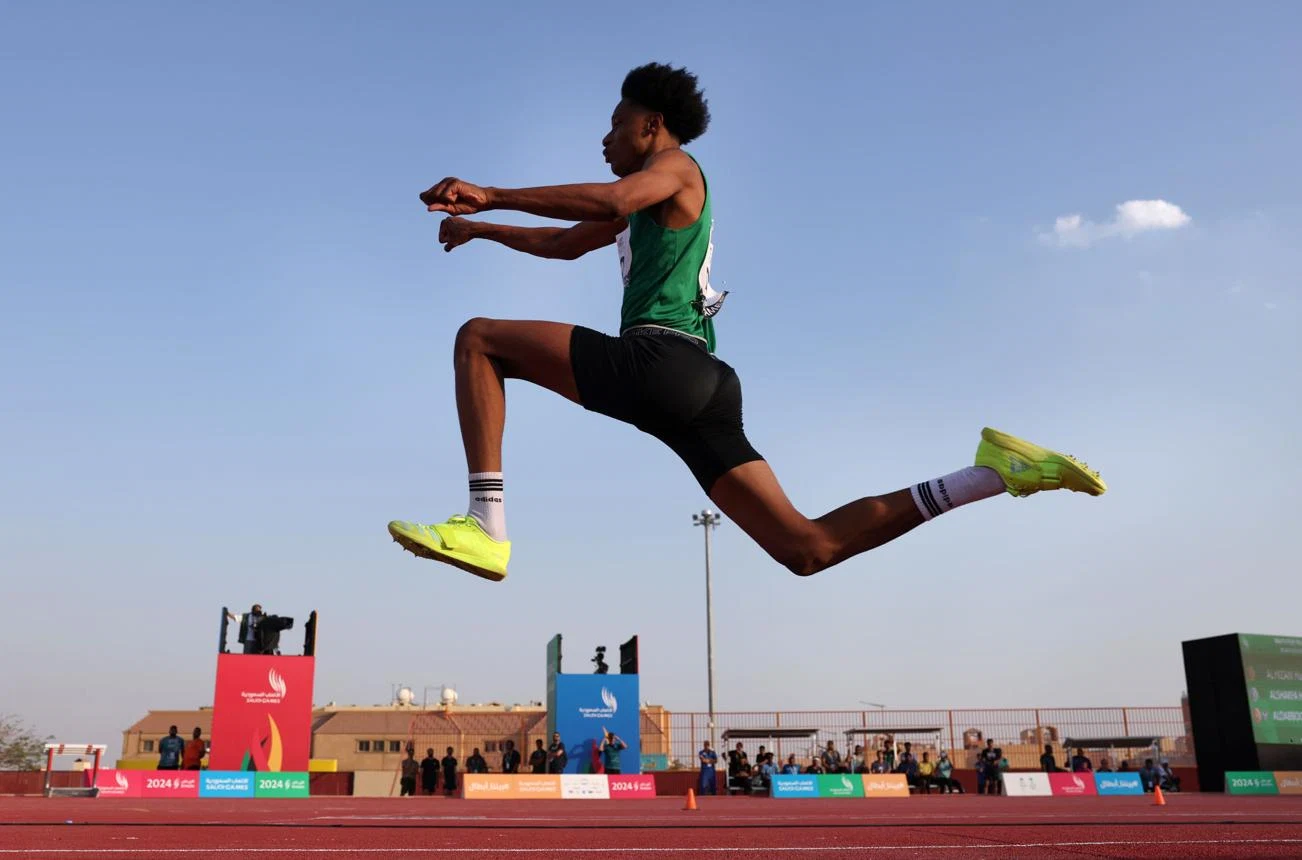
3. Phases of Triple Jump
Triple jump consists of:
- Approach run.
- Take-off and hop.
- Step.
- Jump.
- Landing.
4. Explanation of the Triple Jump Phases
A. Approach Run
The athlete runs toward the take-off board with controlled speed.
The purpose is to develop suitable horizontal momentum.
B. Hop Phase
The athlete takes off from one foot and lands on the same foot.
For example, a right-foot take-off is followed by a right-foot landing.
C. Step Phase
The athlete pushes off from the hopping foot and lands on the opposite foot.
For example, the athlete changes from the right foot to the left foot.
D. Jump Phase
The athlete takes off from the step landing foot and jumps toward the sandpit.
E. Landing
The athlete lands in the sandpit, usually with both feet brought forward, and attempts to avoid falling backward.
5. Triple Jump Foot Sequence
R
Take-off
R
Hop landing
L
Step landing
Both
Final landing
Example starting from the right foot. The reverse sequence also applies when taking off from the left foot.
6. Safety Precautions in Triple Jump
- Warm up before jumping.
- Use an appropriate take-off surface.
- Ensure the sandpit is clear of dangerous objects.
- Wear suitable sports shoes.
- Start with short, controlled practice jumps.
- Avoid jumping when injured.
- Follow the coach's instructions.
- Allow enough space between athletes.
- Use age-appropriate practice distances.
B. LONG-DISTANCE RUNNING
1. Meaning of Long-Distance Running
Long-distance running refers to running events that require sustained physical endurance over relatively long distances.
Examples in athletics include:
- 5,000 metres.
- 10,000 metres.
- Marathon (42.195 km).
Middle-distance races such as 800 m and 1,500 m are usually classified separately.
2. Techniques for Long-Distance Running
A. Starting: Begin in a controlled manner and avoid using too much energy at the start.
B. Body posture: Maintain a generally upright, relaxed running posture with a slight natural forward lean.
C. Arm movement: Swing the arms naturally to support balance and rhythm.
D. Breathing: Maintain controlled, rhythmic breathing appropriate to the running intensity.
E. Stride: Use comfortable strides without unnecessarily overreaching.
F. Pacing: Distribute effort across the race to avoid early exhaustion.
G. Finishing: Maintain effort toward the finishing line according to available energy and race strategy.
3. Importance of Long-Distance Running
- Improves cardiovascular endurance.
- Develops muscular endurance.
- Builds discipline.
- Improves fitness.
- Encourages perseverance.
- Develops pacing skills.
- Supports mental well-being.
C. MOSAIC
1. Meaning of Mosaic
Mosaic is an art technique in which small pieces of materials are arranged and attached to a surface to create a picture, pattern, or design.
These pieces are commonly called tesserae.

2. Characteristics of Mosaic
- Made using small pieces of materials.
- Pieces are arranged to form images or patterns.
- Different colors may be used.
- Pieces are attached to a supporting surface.
- Small gaps may appear between pieces.
- Patterns and textures are important.
- Materials may have different shapes.
3. Materials Used in Mosaic
- Colored paper.
- Cardboard.
- Clean fabric pieces.
- Small suitable tiles.
- Seeds.
- Dried leaves.
- Suitable recycled materials.
- Glue.
- Mounting board.
Sharp glass and ceramic pieces require special precautions and are not necessary for classroom paper mosaics.
4. Procedure for Creating an Athletics-Inspired Mosaic
- Select an athletics event.
- Sketch an athlete or sporting scene.
- Choose suitable colors.
- Collect safe mosaic materials.
- Cut or tear materials into small pieces.
- Apply glue to the appropriate areas.
- Arrange pieces to create the image.
- Allow the artwork to dry.
- Present it for appreciation.
5. Importance of Mosaic
- Develops creativity.
- Improves hand-eye coordination.
- Encourages use of recycled materials.
- Develops patience.
- Provides decorative artwork.
- Helps communicate sporting themes.
Revision Questions
- Define triple jump.
- Name the five phases of triple jump.
- Describe the hop, step, and jump sequence.
- State five precautions in triple jump.
- Identify three long-distance running events.
- Explain five long-distance running techniques.
- Define mosaic.
- State six characteristics of mosaic.
- Describe how to make an athletics-inspired mosaic.
- Explain five benefits of mosaic.