
1. Meaning of a Descant Recorder
A descant recorder, also called a soprano recorder, is a woodwind musical instrument played by blowing air through a mouthpiece while covering and uncovering finger holes to produce different pitches.
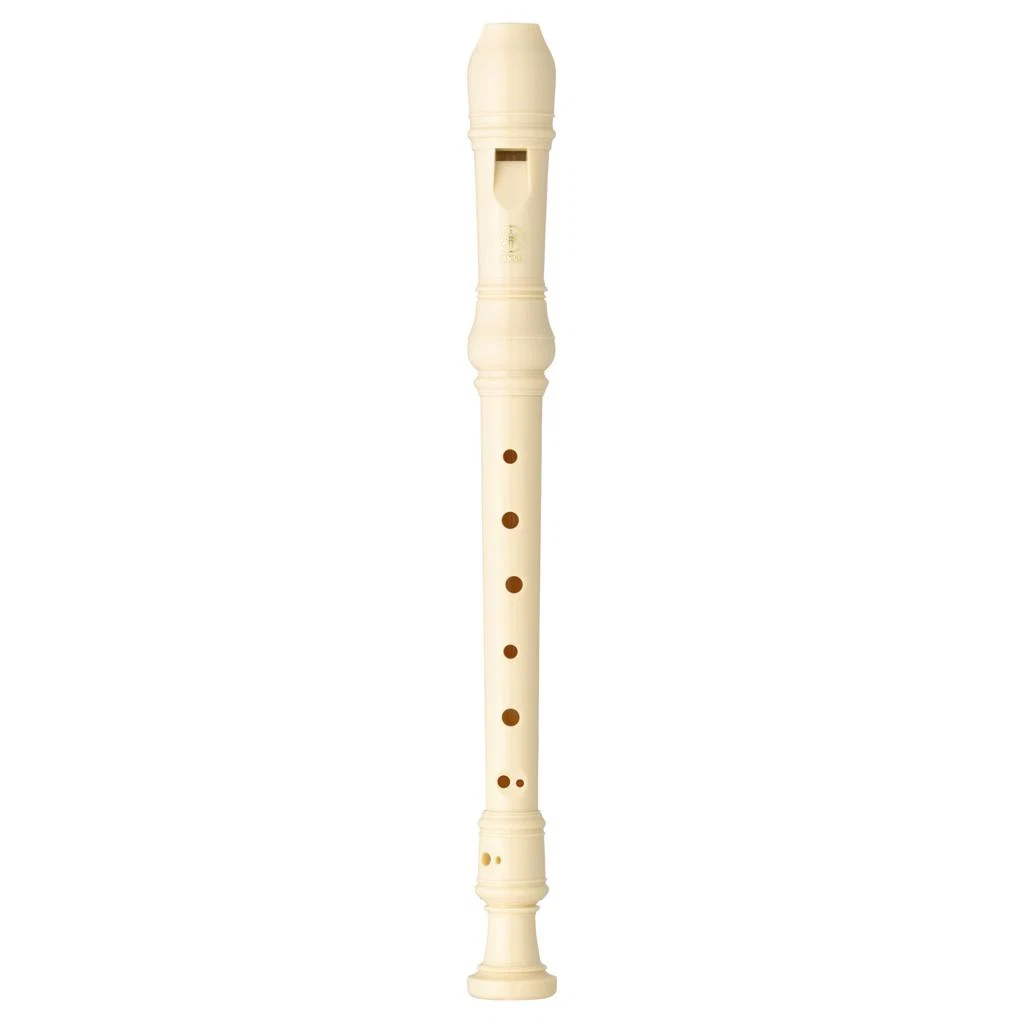
2. Main Parts of a Descant Recorder
- Mouthpiece.
- Windway.
- Window.
- Labium or sharp edge.
- Head joint.
- Middle joint or body.
- Foot joint.
- Finger holes.
- Thumb hole.
3. Correct Posture When Playing the Descant Recorder
- Sit or stand upright.
- Relax the shoulders.
- Hold the recorder at a comfortable angle.
- Use the left hand above the right hand.
- Cover finger holes properly.
- Avoid excessive finger pressure.
- Blow gently and steadily.
4. Correct Breathing Technique
Breathing affects the quality of sound produced.
Good breathing technique involves:
- Taking a comfortable breath.
- Controlling the release of air.
- Avoiding excessively forceful blowing.
- Maintaining a steady airstream.
- Breathing at suitable points in the melody.
5. Meaning of Fingering
Fingering refers to the arrangement of fingers over the holes of a musical instrument to produce particular pitches.
The recorder uses a thumb hole at the back and finger holes on the front.
6. Fingering Notes in F Major
The F major scale contains:
F – G – A – B♭ – C – D – E – F
Recorder fingering may differ according to the instrument's design, particularly between German and Baroque fingering systems.
Learners should follow the fingering chart supplied for their instrument.
For a common Baroque-system soprano recorder, lower-octave fingerings can be summarized as follows. Here, T means the back thumb hole, and 1–7 refer to the front finger holes counted from the top.
|
Note |
Common fingering |
|---|---|
|
F |
T 1 2 3 4 5 6 7 |
|
G |
T 1 2 3 4 5 6 |
|
A |
T 1 2 3 4 5 |
|
B♭ |
T 1 3 4 |
|
C |
T 1 2 3 |
|
D |
T 1 2 |
|
E |
T 1 |
|
High F |
Requires upper-register fingering, including thumb venting |
The B♭ fingering above is one common Baroque-system fingering; alternative fingerings may be used. Confirm fingering with the instrument's chart, especially for high notes.
7. Meaning of Pinching Technique
Pinching is a recorder technique involving partial opening of the thumb hole, often called thumb venting, to help produce higher notes.
It requires careful thumb control.
8. Steps in Playing the F Major Scale
- Hold the recorder correctly.
- Adopt good posture.
- Observe the written notes.
- Identify the F major key signature.
- Check the fingering for each note.
- Play the notes in ascending order.
- Control the air supply.
- Play the notes in descending order.
- Maintain a steady tempo.
- Practise until the scale sounds smooth and accurate.
9. Meaning of Dynamics
Dynamics refers to the degree of loudness or softness in a musical performance.
Common dynamic terms include:
|
Term |
Meaning |
|---|---|
|
Piano (p) |
Soft |
|
Forte (f) |
Loud |
|
Mezzo piano (mp) |
Moderately soft |
|
Mezzo forte (mf) |
Moderately loud |
|
Crescendo |
Gradually getting louder |
|
Diminuendo |
Gradually getting softer |
On the recorder, dynamic changes must be controlled carefully because large changes in blowing pressure may affect pitch.
10. Performing a Solo Piece
A solo is a musical performance by one performer.
Steps in preparing a recorder solo:
- Select a suitable piece in F major.
- Study the key signature.
- Identify the time signature.
- Practise difficult notes.
- Practise rhythmic patterns.
- Use suitable breathing points.
- Observe performance directions.
- Practise the entire piece.
- Perform confidently.
- Evaluate the performance.
11. Care and Maintenance of a Descant Recorder
- Handle it carefully.
- Clean it according to the manufacturer's instructions.
- Allow moisture to dry after playing.
- Avoid excessive force when assembling joints.
- Store it in a suitable case.
- Do not expose it to excessive heat.
- Do not share mouthpieces without proper hygienic cleaning.
- Protect it from dust and damage.
12. Importance of Playing the Descant Recorder
- Develops musical skills.
- Improves pitch recognition.
- Develops breath control.
- Improves coordination.
- Encourages creativity.
- Promotes discipline.
- Supports ensemble participation.
- Provides musical enjoyment.
Revision Questions
- Define a descant recorder.
- Identify six parts of a recorder.
- Explain correct posture when playing.
- Define fingering.
- Write the F major scale.
- Explain the meaning of pinching.
- Differentiate between crescendo and diminuendo.
- Describe how to prepare a recorder solo.
- State six ways of caring for a recorder.